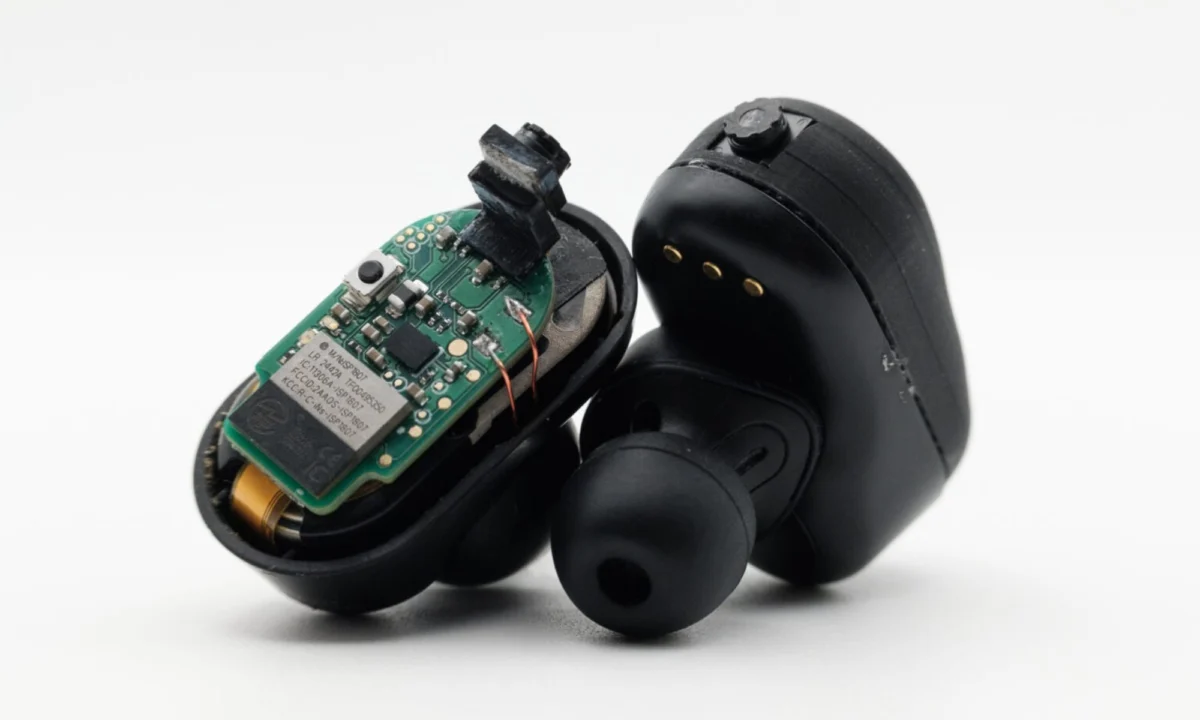
In a significant leap for wearable technology and ambient intelligence, researchers at the University of Washington (UW) have unveiled a groundbreaking prototype system known as VueBuds. This innovative project integrates miniaturized cameras into standard wireless earbuds, effectively providing an artificial intelligence model with a "set of eyes" that align with the user’s perspective. By allowing users to interact with their environment through natural language queries about visual stimuli, VueBuds represent a potential paradigm shift in how humans interface with digital assistants, moving away from screen-based interactions toward a more seamless, hands-free experience.
The development of VueBuds comes at a time when the tech industry is grappling with the "form factor" problem of AI. While large language models (LLMs) have become increasingly sophisticated, the hardware required to make them useful in the physical world has largely been limited to smartphones or controversial smart glasses. The UW team, led by a cohort of computer scientists and engineers, sought to bypass the social and technical hurdles of existing wearables by utilizing a device that billions of people already wear daily: the wireless earbud.
The Engineering Philosophy Behind VueBuds
The core concept of VueBuds is deceptively simple: if an AI can see what a user sees, it can provide context-aware assistance. However, the engineering required to realize this vision within the tiny chassis of an earbud was immense. Unlike smart glasses, which have more surface area for batteries and heat dissipation, earbuds are constrained by extreme space and power limitations.
To address these challenges, the UW researchers opted for a minimalist hardware configuration. Instead of the high-definition, power-hungry sensors found in modern smartphones, VueBuds utilize low-resolution, black-and-white cameras roughly the size of a grain of rice. These sensors are specifically designed to capture still images rather than continuous video streams. This design choice serves two purposes: it drastically reduces power consumption, allowing for longer battery life, and it mitigates the privacy concerns traditionally associated with "always-on" wearable cameras.
The placement of these sensors was equally critical. By angling the cameras slightly outward from the ear canal, the system achieves a combined field of view (FOV) of approximately 98 to 108 degrees. This wide-angle perspective closely mimics the natural human field of vision, ensuring that if a user is looking at an object, the VueBuds are likely capturing it as well. While the researchers noted a small "blind spot" for objects held extremely close to the face, the system proved highly effective for typical arm’s-length interactions, such as reading a menu or identifying a product on a shelf.
Technical Specifications and Performance Data
One of the most impressive feats of the VueBuds prototype is its responsiveness. In a world where cloud-based AI queries can often lag, the UW team prioritized speed through a combination of local processing and optimized data transmission. When a user asks a question—such as "What does this nutritional label say?"—the earbuds capture a grayscale image and transmit it via Bluetooth to a paired smartphone.

On the connected device, a lightweight AI model processes the visual data. The research team discovered that by combining the images from both the left and right earbuds into a single composite frame, they could significantly enhance processing efficiency. According to the study’s findings, this "dual-eye" approach allowed the system to generate an audio response in approximately one second. In contrast, processing images from a single earbud or handling them as separate files increased the latency to over two seconds, a delay that researchers felt broke the "flow" of natural conversation.
In rigorous testing involving 74 participants, VueBuds were put through a series of real-world benchmarks. The system achieved an accuracy rate of 83% to 84% for general object identification and translation tasks. It performed even better in specific text-heavy scenarios, reaching a 93% accuracy rate when identifying book titles and authors. When compared directly against high-end smart glasses, such as Meta’s Ray-Ban models, VueBuds held their own. While the smart glasses performed better at tasks requiring the counting of small, high-contrast objects, participants overwhelmingly preferred VueBuds for translation and contextual information tasks, citing the "unobtrusive" nature of the audio feedback.
A Privacy-First Approach to Wearable Vision
The history of wearable cameras is littered with failures, most notably Google Glass, which faced significant backlash due to the "creepiness factor" of a visible camera lens. The University of Washington team was acutely aware of this hurdle and designed VueBuds with a "privacy-by-design" framework.
First, the use of low-resolution grayscale images ensures that while the AI can recognize shapes, text, and objects, it does not capture the high-detail biometric or environmental data that a 4K color sensor would. Second, the system operates on a "pull" rather than "push" basis; it only captures an image when the user initiates a query. To provide transparency to those around the wearer, the prototype includes a small, visible indicator light that illuminates whenever a capture is in progress.
Perhaps most importantly, VueBuds utilize local, on-device processing. By keeping the visual data on the user’s smartphone rather than uploading it to a centralized cloud server, the system minimizes the risk of data breaches or unauthorized surveillance. The researchers also implemented a feature allowing users to instantly delete any captured images through a simple voice command or a tap on the earbud.
Comparative Analysis: Earbuds vs. Smart Glasses
The emergence of VueBuds invites a broader discussion on the future of the AI wearable market. For years, the industry has assumed that smart glasses would be the ultimate successor to the smartphone. However, glasses face several inherent disadvantages: they are expensive to manufacture, difficult to style for diverse facial shapes, and can be uncomfortable for long-term wear. Furthermore, the social stigma of wearing a camera on one’s face remains a significant barrier to mainstream adoption.
Earbuds, by contrast, are already a ubiquitous part of modern life. In many urban environments, it is more common to see people with wireless buds in their ears than without. By "piggybacking" on this existing habit, VueBuds avoid the social friction of new hardware categories.

From a technical standpoint, the UW research suggests that the "stereo" nature of earbuds provides a unique advantage for computer vision. By having two distinct points of capture separated by the width of the human head, the system can potentially calculate depth and spatial orientation more effectively than a single-lens system. While the current prototype focuses on 2D image recognition, the groundwork has been laid for more complex spatial computing applications.
Implications for Accessibility and Daily Utility
While the general consumer market is a primary target, the implications of VueBuds for the visually impaired community are profound. For individuals with low vision, a device that can instantly read a prescription bottle, identify the value of a currency note, or describe the contents of a room is life-changing. Traditional assistive technologies are often bulky, expensive, and conspicuous. VueBuds offer a discreet, affordable alternative that leverages the power of modern AI to provide "audio sight."
In daily life, the use cases extend to international travel, where instant translation of street signs or menus can navigate language barriers. In a retail environment, a user could look at a product and ask, "Is this cheaper at another store?" or "Does this contain allergens?" without ever having to pull a phone out of their pocket. The hands-free nature of the interaction is particularly beneficial for parents, laborers, or anyone whose hands are frequently occupied.
The Road to Commercialization and Future Research
The findings of the UW team are set to be presented at the prestigious Association for Computing Machinery (ACM) Conference on Human Factors in Computing Systems in Barcelona. This presentation will serve as a call to action for the tech industry to reconsider the earbud as a primary hub for AI interaction.
However, several milestones remain before VueBuds become a commercial reality. The current prototype is still in the "proof-of-concept" stage. Future iterations will need to explore the integration of color sensors, which would expand the AI’s ability to describe clothing, identify ripening fruit, or interpret color-coded signals. Additionally, as on-device AI hardware (such as Neural Processing Units in smartphones) becomes more powerful, the latency of VueBuds is expected to drop even further, potentially reaching sub-500ms response times.
The researchers also plan to refine the specialized AI models used by the system. By training "micro-models" specifically for the low-resolution, wide-angle output of the VueBuds cameras, they hope to push accuracy rates closer to 99%.
As the tech landscape shifts toward "ambient computing"—where technology is integrated so seamlessly into our environment that it becomes invisible—VueBuds represent a logical and highly functional step forward. By turning a common accessory into an intelligent companion, the University of Washington has provided a glimpse into a future where the world around us is constantly "readable," "searchable," and "understandable" through a simple conversation with the air.