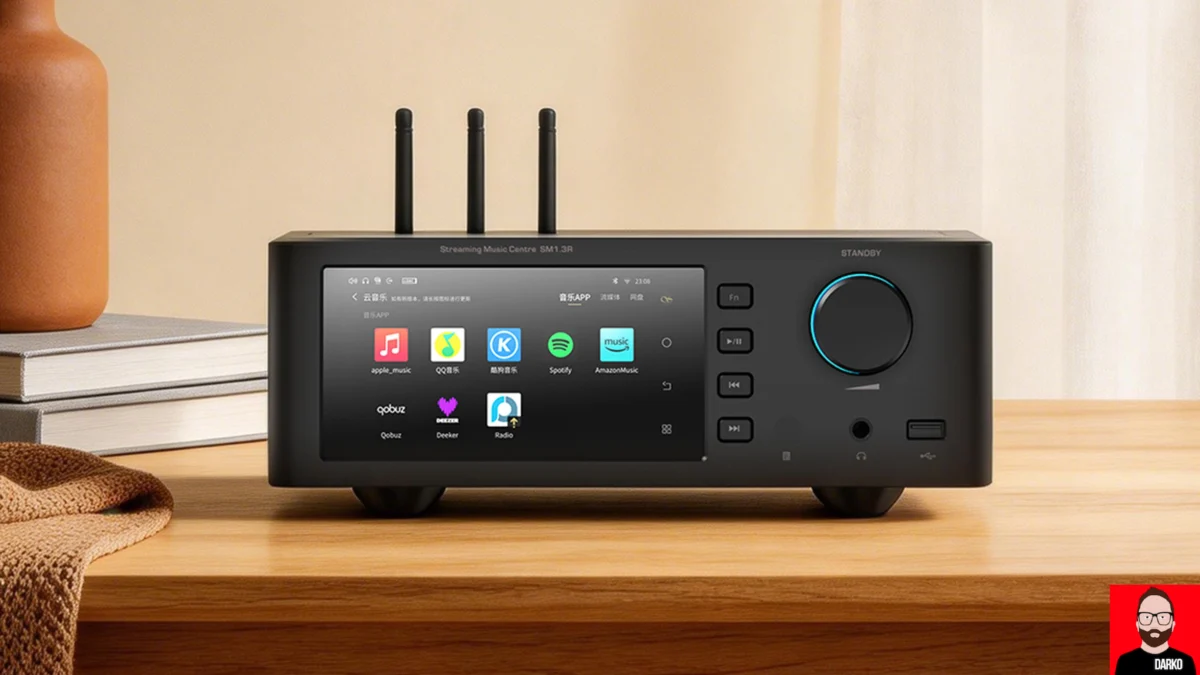
Shanling has unveiled the SM1.3R, a new streaming Digital-to-Analog Converter (DAC) that marks a significant architectural shift from its recently introduced SM1.3 model. While retaining the familiar user interface and extensive connectivity of its predecessor, the SM1.3R distinguishes itself by adopting an R2R conversion architecture, a move that signals Shanling’s intent to cater to audiophiles seeking a distinct sonic signature. This announcement follows the late 2024 release of the SM1.3, which featured a more conventional delta-sigma DAC implementation.
The SM1.3R inherits the robust chassis, the 5.8-inch touchscreen display, and the Android-based streaming platform from the SM1.3. This continuity ensures that users will find a familiar and intuitive operational experience, complete with a comprehensive suite of connectivity options. The decision to carry over these established features suggests a strategic approach by Shanling to build upon a successful foundation, allowing the core technological innovation – the R2R DAC – to take center stage.
At the heart of the SM1.3R lies the fundamental change in its digital-to-analog conversion. The SM1.3 employed a combination of the AKM4499EX DAC and AK4191 pre-processor, a well-regarded delta-sigma chipset. In contrast, the SM1.3R replaces this with an in-house developed 24-bit R2R module. This module is reportedly the same unit found in Shanling’s flagship SCD3.3 SACD player, a component known for its high-fidelity playback capabilities. Shanling has stated that the R2R module utilizes 212 resistors, each specified with an accuracy of 0.01%. The company champions the R2R approach, suggesting it offers a more "analog-like" presentation compared to the sonic characteristics often associated with delta-sigma converters. This differentiation is crucial in a market segment where subtle sonic nuances and subjective listening experiences play a significant role in consumer preference.

A point of note regarding the R2R module’s DSD (Direct Stream Digital) handling is the lack of explicit clarification in the provided press materials. It remains uncertain whether the R2R module processes DSD signals natively or through a PCM (Pulse Code Modulation) conversion process. Based on common industry practices for R2R implementations, it is plausible that DSD signals are converted to PCM before digital-to-analog conversion. This technical detail, while potentially subtle in its audible impact for some listeners, is a point of interest for audiophiles who prioritize native DSD playback.
Streaming Capabilities: A Feature-Rich Ecosystem
The streaming platform integrated into the SM1.3R remains largely unchanged from its SM1.3 counterpart, offering a comprehensive array of popular streaming services and protocols. It is Roon Ready, a designation highly valued by users of the Roon music management software, ensuring seamless integration into existing Roon ecosystems. Furthermore, the device supports Tidal Connect, Qobuz Connect, and Spotify Connect, allowing for direct streaming from these platforms without the need for a separate host device.
Beyond these direct connect options, the SM1.3R also includes dedicated applications for Tidal, Qobuz, and Spotify, providing users with an alternative method of accessing these services. The inclusion of dedicated apps for Apple Music, Apple Classic, and Amazon Music further broadens the device’s appeal to a wider audience. Shanling describes the streaming platform as a "closed Android build." This means that while it runs on an Android operating system, it restricts users from sideloading applications or installing software from the Google Play Store. This approach prioritizes stability and a curated user experience, ensuring that only officially supported and tested applications are available.

For users who prefer to maintain a local music library, the SM1.3R offers an internal SSD slot. This feature allows for the installation of a solid-state drive, enabling users to store their high-resolution audio files directly on the device for quick and convenient access. Network-attached storage (NAS) users are also well-catered for, with Samba and UPnP support carried over from the SM1.3, facilitating seamless playback of music stored on network servers. Notably absent from the feature list are Apple AirPlay 2 and Bluetooth connectivity. The omission of these widely adopted wireless streaming and audio transmission standards raises questions about Shanling’s target audience and the intended primary use cases for the SM1.3R, particularly for users heavily invested in the Apple ecosystem or those who frequently utilize Bluetooth for casual listening.
Extensive Wired Connectivity Options
The rear panel of the SM1.3R is equipped with a comprehensive array of both analog and digital inputs and outputs, enhancing its versatility as a central component in an audio system. For analog output, users have the choice of balanced XLR and single-ended RCA connections, accommodating a wide range of amplifiers and preamplifiers. The digital input section is equally robust, featuring an I²S connection, two coaxial inputs, and two TOSLINK (optical) inputs. These allow the SM1.3R to function as a dedicated DAC for external digital sources such as CD transports, network streamers, or audio servers.
A USB-C input is also present, likely intended for connecting to computers or other digital audio sources. Additionally, a USB-A port is provided, which is typically used for connecting external storage devices like USB drives or portable hard drives, further expanding local playback options. The inclusion of these diverse digital inputs underscores the SM1.3R’s capability to serve as a high-performance DAC for virtually any digital audio source.

On the front panel, a dedicated headphone output is provided, catering to the needs of headphone enthusiasts. This output is rated to deliver 900mW into a 32-ohm load, and 130mW into a 300-ohm load. These specifications suggest that the headphone amplifier section is capable of driving a wide range of headphones, from lower-impedance models to higher-impedance audiophile-grade headphones. The power supply for the headphone output is described as a 31W split power supply, indicating a design that prioritizes clean and stable power delivery to the sensitive audio circuitry.
Pricing and Availability
The Shanling SM1.3R is slated for release in the latter half of April. For international buyers, the suggested retail price has been set at US$1699. European customers will see a price of €1799. Pricing for the United States market remains to be announced at this time. This tiered pricing structure reflects regional variations in import duties, taxes, and distribution costs.
The introduction of the SM1.3R with an R2R architecture represents a strategic move by Shanling. It acknowledges the growing interest among audiophiles in different DAC technologies and their associated sonic characteristics. By offering a device that shares the user interface and streaming capabilities of a known quantity (the SM1.3) but diverges significantly in its core conversion technology, Shanling is providing a clear choice for consumers based on their sonic preferences. The R2R approach is often lauded for its perceived warmth, natural timbre, and smoother treble response, qualities that can appeal to listeners seeking a less "digital" sound.

The decision to use an in-house R2R module, derived from their flagship SACD player, also speaks to Shanling’s commitment to developing proprietary audio technologies. This not only allows for greater control over the final sound signature but also potentially offers a competitive advantage. The inclusion of high-accuracy resistors is a critical factor in R2R DAC performance, as the precision of these components directly impacts the linearity and accuracy of the analog waveform reconstruction.
Background and Context
The evolution of digital-to-analog conversion technology in high-fidelity audio has seen a continuous pursuit of sonic purity and realism. For decades, delta-sigma architectures have dominated the market due to their cost-effectiveness, high resolution, and inherent ability to achieve very low noise floors. However, a segment of the audiophile community has consistently favored R2R ladder DACs, often citing their more organic, natural, and "analog-like" sound. This preference stems from the fundamental difference in how these technologies operate. Delta-sigma converters use oversampling and noise shaping to achieve high resolution, while R2R converters reconstruct the analog waveform by directly switching between discrete voltage levels represented by resistors, akin to the operation of a relay.
Shanling, a company with a long history in the audio industry, has traditionally utilized a range of DAC chipsets in its products. The introduction of the SM1.3 with a high-end AKM delta-sigma solution was a testament to their embrace of modern digital audio technology. However, the subsequent release of the SM1.3R, featuring their proprietary R2R module, indicates a willingness to explore and offer alternative sonic philosophies. This dual approach allows Shanling to cater to a broader spectrum of listener preferences and to demonstrate their engineering prowess across different technological domains.

The timing of the SM1.3R’s announcement, following closely on the heels of the SM1.3, suggests a deliberate product roadmap. It allows for a staggered introduction, giving each product its distinct moment in the market. The SM1.3 likely appealed to those prioritizing the latest in delta-sigma technology and a feature-rich streaming experience. The SM1.3R, conversely, targets audiophiles who are actively seeking the sonic characteristics associated with R2R conversion, perhaps as an upgrade path or an alternative to existing delta-sigma DACs in their systems.
Analysis of Implications
The introduction of the SM1.3R into the competitive streaming DAC market has several implications. Firstly, it strengthens Shanling’s product portfolio by offering a clear technological alternative within a single product line. This can simplify purchasing decisions for consumers who have a preference for R2R sound but still desire the convenience of integrated streaming. Secondly, it positions Shanling as a manufacturer capable of developing both cutting-edge delta-sigma and sophisticated R2R solutions, enhancing their reputation as a versatile and technically adept audio company.
The pricing of the SM1.3R places it in the mid-to-high-end segment of the market, competing with other high-performance streaming DACs. Its success will likely depend on its ability to deliver on the promise of an analog-like sound while maintaining the robust functionality and user experience that consumers have come to expect from modern streaming devices. The R2R architecture, while potentially offering sonic advantages, can also be more challenging to implement flawlessly, particularly concerning linearity and noise performance across the entire audible spectrum. Shanling’s claim of using highly accurate resistors suggests they have addressed these challenges.

The absence of certain wireless features like AirPlay 2 and Bluetooth might be a deliberate choice, focusing the product’s appeal on wired connectivity and established network streaming protocols. However, in an increasingly wireless-centric consumer electronics landscape, this could be a limiting factor for some potential buyers. It suggests that Shanling envisions the SM1.3R primarily as a component within a dedicated hi-fi system, where wired connections are the norm.
Broader Impact on the Audiophile Market
The continued development and introduction of R2R-based streaming DACs by manufacturers like Shanling signal a resurgence of interest in this classic conversion technology. As the market matures, audiophiles are increasingly seeking out devices that offer distinct sonic flavors, moving beyond a one-size-fits-all approach. The SM1.3R contributes to this trend by providing a compelling R2R option that integrates modern streaming conveniences.
This diversification of DAC technologies within a single product line can also encourage greater innovation across the industry. As manufacturers demonstrate the viability and appeal of different conversion architectures, it pushes competitors to refine their own technologies and explore new avenues for sonic improvement. The SM1.3R’s success could encourage other brands to invest further in R2R development or to offer R2R variants of their existing products. Ultimately, this benefits the consumer by providing a wider array of choices, each with its own unique sonic signature and technological underpinnings, allowing for a more personalized and satisfying audio listening experience.