Published April 17, 2026 10:11 AM
The economic landscape has presented a persistent challenge for consumers in recent years, with inflation impacting household budgets across the board. This trend has not spared the outdoor industry, a sector that has witnessed a significant surge in gear prices. In the past twelve months alone, the cost of essential outdoor equipment has climbed by an average of 11 percent, according to industry data, forcing many enthusiasts to re-evaluate their purchasing habits and explore more economical avenues for acquiring their adventure essentials.
While the allure of cutting-edge technology and premium branding remains strong, the escalating prices necessitate a pragmatic approach to outfitting oneself for the wilderness. Fortunately, a growing number of resourceful consumers are discovering that the pursuit of outdoor activities does not have to come with an exorbitant price tag. A range of strategies, from embracing the secondhand market to strategically timing purchases during sales, can significantly mitigate the financial impact of equipping for outdoor pursuits.
The Growing Appeal of Pre-Owned and Discounted Gear
The secondhand market for outdoor gear has experienced a considerable boom, driven by both economic necessity and a growing awareness of sustainability. Online platforms like Facebook Marketplace and specialized secondhand retailers offer a treasure trove of gently used equipment, allowing consumers to acquire high-quality items at a fraction of their original cost. Initiatives like Patagonia’s Worn Wear program and Cotopaxi’s Preloved collection further bolster this trend by offering certified pre-owned items with an added layer of trust and quality assurance. These programs not only provide cost savings but also contribute to reducing textile waste and promoting a more circular economy within the outdoor industry.
For those who prefer or require new items, strategic shopping can yield substantial savings. End-of-season sales at major outdoor retailers often feature significant discounts on last year’s models, allowing consumers to acquire top-tier gear without the premium price. Furthermore, for less technical apparel and accessories, discount retailers such as Target and Walmart have expanded their offerings to include functional and affordable options, catering to a broader spectrum of outdoor enthusiasts.
The Rise of Private-Label Gear: A Competitively Priced Alternative
Beyond the realms of used goods and budget retailers lies a compelling middle ground: private-label gear and apparel developed and sold directly by outdoor retailers. Brands such as REI Co-op, Backcountry’s house labels (including Stoic), and Decathlon’s diverse product lines are increasingly competing with established name brands in terms of design, materials, and overall quality. These offerings span nearly every outdoor category, from technical apparel and footwear to camping equipment and accessories, often at price points that are notably more accessible.
Years of testing and consumer feedback have consistently highlighted the impressive performance and value proposition of these private-label products. The question of how these retailers can match high-end performance while simultaneously undercutting competitors’ prices has led to an in-depth examination of their development and manufacturing processes. The answer, it turns out, lies in a strategic streamlining of the supply chain and a direct-to-consumer (DTC) model that eliminates many of the traditional cost layers.
The Economics of Direct-to-Consumer: How Retailers Offer Savings
The primary driver behind the cost-effectiveness of private-label outdoor gear is the direct sales model. By controlling their own branded products from conception to the retail shelf, these companies can significantly reduce retail markups and eliminate the need for intermediaries. This vertical integration allows for greater control over the entire development and manufacturing process, leading to a more efficient and cost-effective operation.
Isabelle Portilla, Vice President of REI Co-op Brands, articulates this strategy clearly: "We maintain competitive prices by controlling margin outcomes through direct factory relationships." This approach ensures that a portion of the savings generated by these efficiencies can be passed directly on to the consumer.
The typical supply chain for outdoor gear involves multiple stages, each adding to the final cost. A product begins at the factory, where brands incur "landed costs" that include materials, construction, freight, and tariffs. In a traditional model, a third-party retailer purchases this gear at a wholesale price, which is then marked up – often by as much as 100 percent – to reach the final retail price paid by the consumer.
Private-label brands, however, bypass this crucial wholesale-to-retail step. By selling directly through their own websites or flagship stores, they establish a direct channel from their distribution centers to the consumer. This eliminates the third-party markup, allowing them to offer comparable products at a significantly lower price.
Beverly Jacobus, Decathlon US’s director of specialty brands, elaborates on this integrated approach: "We own the entire journey. We built a completely vertical business model and brought research, development, production, and the supply chain entirely inside our own walls." While Decathlon does maintain some third-party retail partnerships, its predominantly internal ecosystem and robust e-commerce presence are key to its ability to pass on overhead savings to customers.
While consumers do not receive wholesale pricing, the savings are substantial, often ranging from 25 to 35 percent off the price of comparable top-shelf items. The exact percentage can vary depending on the complexity of the product’s materials, construction, and whether it incorporates name-brand components.
Quality Assurance: Why Lower Cost Doesn’t Mean Compromised Performance
A common concern when considering less expensive gear is the potential for lower quality materials or inferior construction. However, many private-label brands counter this perception by utilizing the same premium components and adhering to rigorous testing protocols as their higher-priced counterparts.
For instance, REI’s Teris GTX rain jacket employs a PFAS-free Gore-Tex membrane, an industry-standard material found in high-performance gear from renowned brands like Fjallraven and Arc’teryx. Similarly, Decathlon’s Quechua MH500 hiking shoe features a proprietary rubber blend that undergoes laboratory testing for grip, employing methodologies comparable to those used by Vibram.
Furthermore, the in-house control over the design cycle enables these brands to respond rapidly to consumer feedback and market trends. REI, for example, redesigned its Magma sleeping bag line after analyzing over 150,000 body scans, leading to the offering of the bags in nine different width and length options. This streamlined feedback loop, from consumer input to lab testing and manufacturing, allowed for significant savings in time, money, and resources.
The cost savings also extend to customer acquisition. While private-label brands do invest in marketing, their products benefit from prominent placement within their own retail environments and websites. This inherent "shelf-side visibility", coupled with a clearly reduced price point next to comparable items, provides a significant advantage. The consistent stream of organic traffic to their own platforms means they do not need to incur the same external marketing expenses as third-party brands.
The Nuance of Affordability: Outdoor Gear Remains an Investment
Despite the cost-saving advantages of private-label gear, it is important to acknowledge that high-quality outdoor equipment remains an investment. Even with savings of 25-35 percent, the initial purchase price can still be beyond the reach of many consumers. For example, a pair of name-brand shorts might cost $85, while a comparable REI Co-op version could be priced at $65. Similarly, Backcountry’s ski bibs, priced at $400, offer a significant reduction from the industry standard of $500, and Decathlon’s $109 cycling shorts present a notable saving compared to the typical $160 price tag.
While these savings are substantial, individuals with extremely limited budgets may still find used gear or items from non-specialty retailers to be a more accessible option. The target demographic for private-label gear generally comprises core outdoor enthusiasts who are seeking premium performance at a more manageable cost. For casual users, such as infrequent campers or recreational runners, more budget-friendly alternatives from brands like Coleman or less specialized athletic wear may suffice.
Private-label gear thus represents a compelling compromise – a middle ground between the ultra-budget options and the high-end, premium brands. While the investment is still significant, consumers are benefiting from the expertise of developers deeply embedded in the outdoor community, backed by in-house research and development facilities like REI’s Magnusson Lab, which rigorously tests product performance and durability. This offers a way to acquire advanced gear at a discount without the extended wait for end-of-season sales.
Tested and Recommended: Standout Private-Label Offerings
The growing quality and diversity of private-label outdoor gear are evident across numerous categories. Based on extensive testing and consumer feedback, several brands and product lines stand out for their exceptional value and performance:
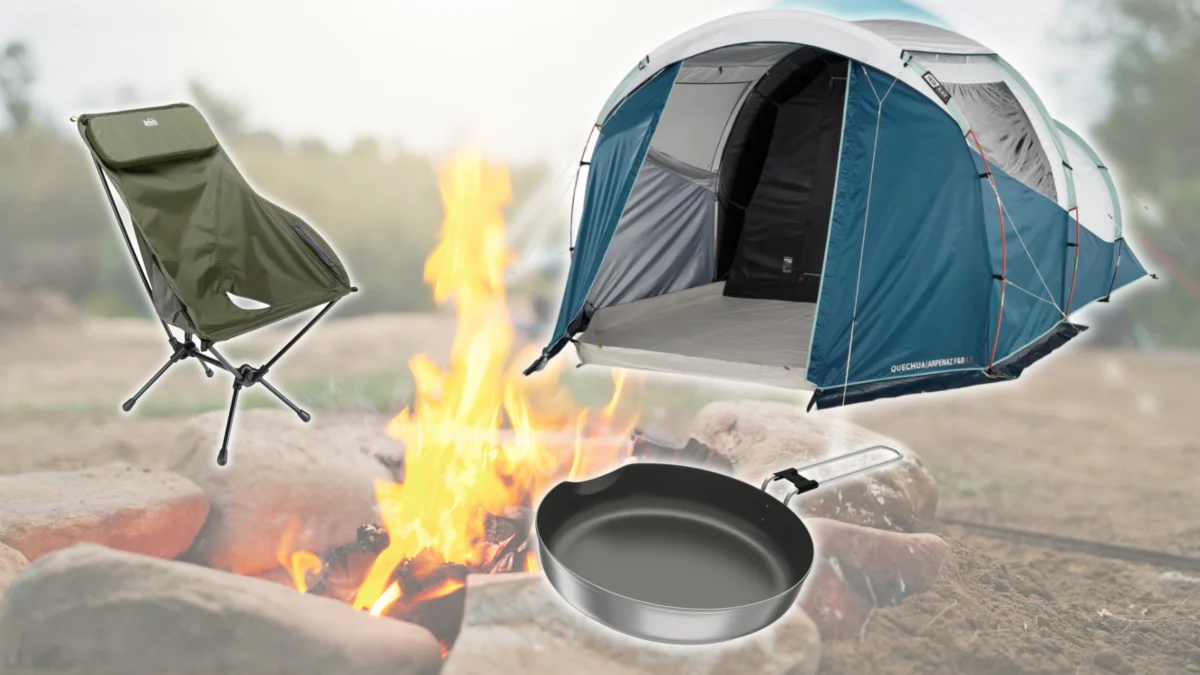
REI Co-op: The Swiftland running line, including compression shorts and windshells, has garnered praise for its comfort and functionality. The Flexlite Camp Dreamer Chair has emerged as a top pick for its blend of portability and comfort. REI has also demonstrated a commitment to consumer needs by redesigning its sun protection layers based on feedback, resulting in lighter-weight options like the Flash Shade Hoodie.
Decathlon: Decathlon excels in providing affordable yet reliable gear for front-country camping, with notable offerings including the four-person Quechua tent and a comprehensive 15-piece camp cookware set. Their Simond MT100 jacket serves as a highly packable and effective down layer. Decathlon has also entered the cycling market with entry-level gravel bikes, such as the Van Rysel models, which offer commendable geometry and durable components, proving capable even on demanding terrain.
Backcountry: For snow sports enthusiasts, Backcountry’s house-brand jackets and bibs, including Gore-Tex models under their Cottonwoods line, provide excellent protection and a range of fit options catering to diverse body types. The brand has also expanded its travel bag lineup, offering durable and practical duffels suitable for various adventures.
As economic pressures continue to shape consumer spending, the rise of high-quality, competitively priced private-label outdoor gear offers a welcome solution for adventurers seeking to explore the great outdoors without breaking the bank. This trend signifies a maturing outdoor market that is increasingly prioritizing value and accessibility alongside performance and innovation.