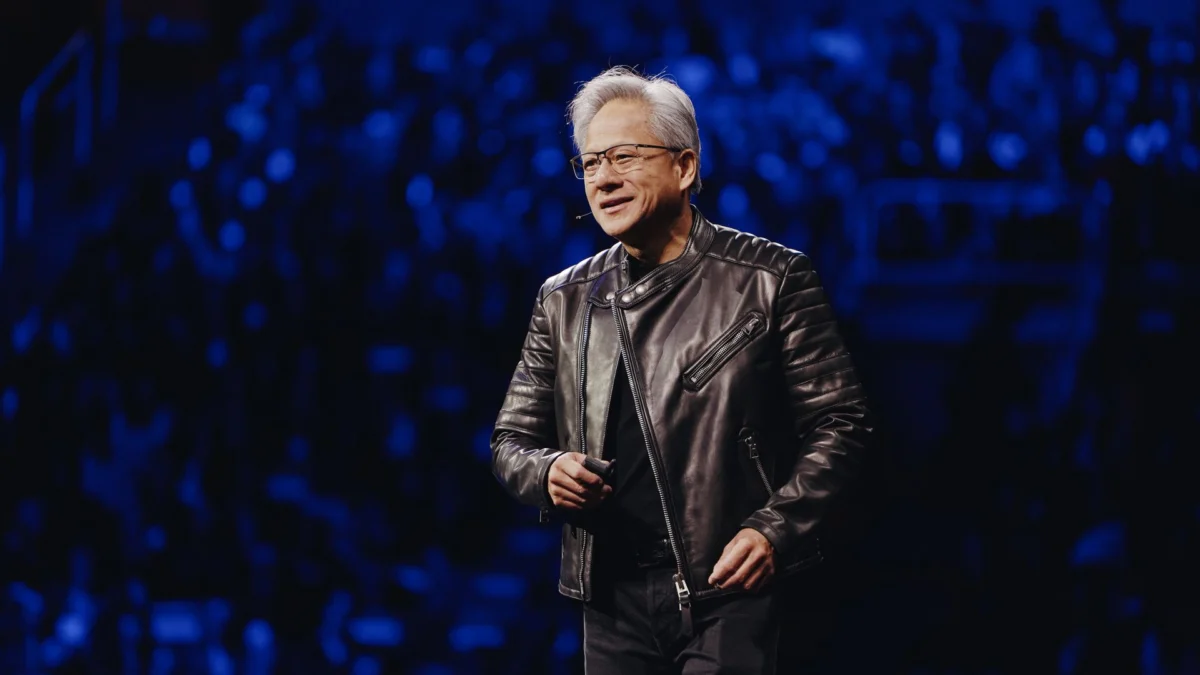
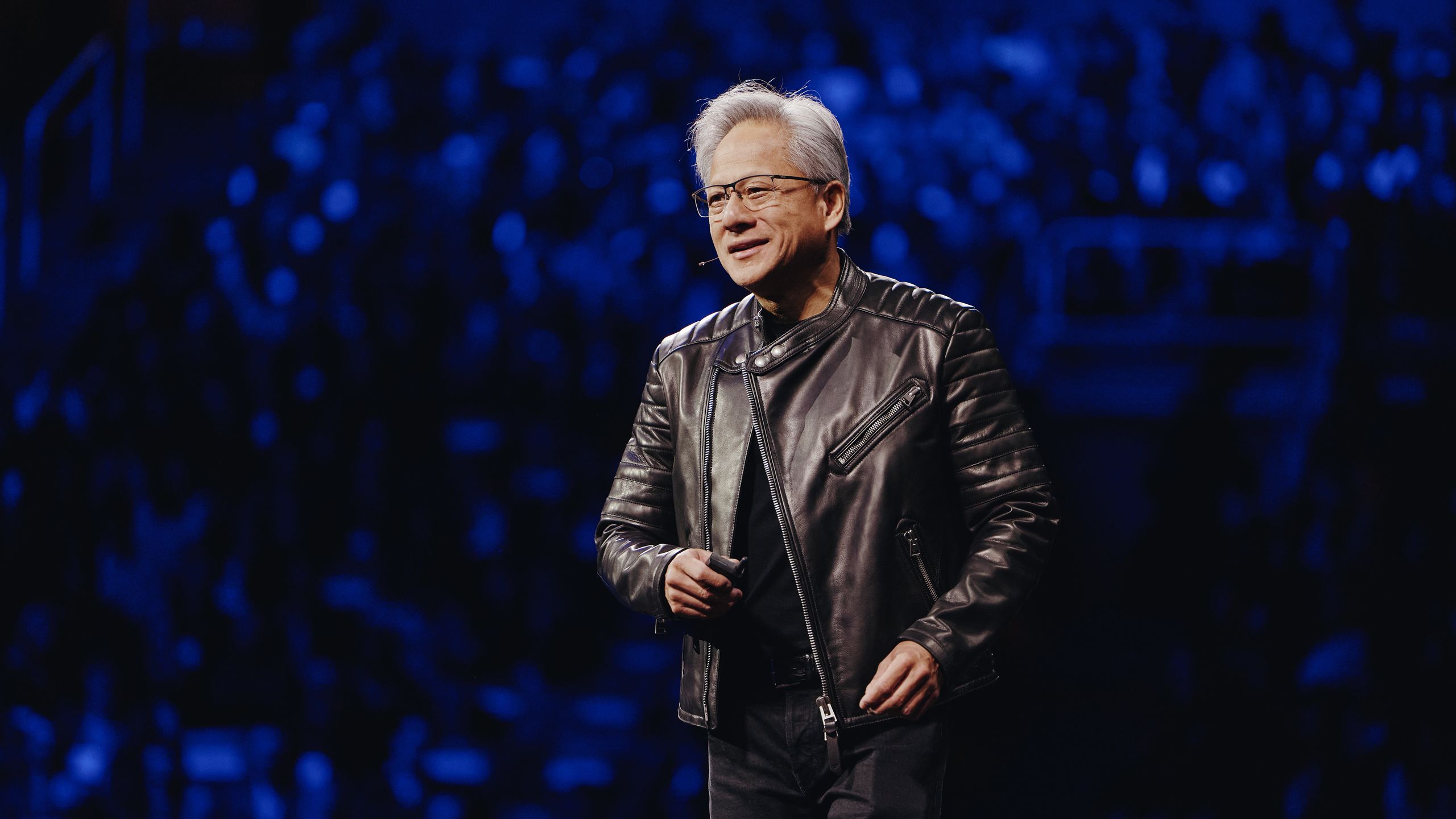
Nvidia CEO Jensen Huang recently offered a comprehensive look into the foundations of Taiwan’s semiconductor manufacturing supremacy, detailing how a combination of visionary government planning, strategic international partnerships, and decades of relentless engineering evolution transformed the island into the beating heart of the global technology supply chain.
During an extensive conversation with podcaster Lex Fridman, Huang mapped out the historical trajectory that enabled Taiwan to capture a staggering market share in advanced electronics. Today, the relatively small territory is responsible for manufacturing more than 90% of the world’s most advanced semiconductors. This heavy concentration of high-tech production has rendered Taiwan an indispensable pillar of modern digital infrastructure, influencing everything from consumer electronics to cutting-edge artificial intelligence systems.
Huang’s historical breakdown highlights how early European technology transfers, aggressive industrial policy, and the subsequent personal computer boom laid the groundwork for what would become an insurmountable manufacturing moat. As geopolitical tensions rise and the demand for sophisticated processors surges due to the artificial intelligence boom, understanding the genesis of Taiwan’s technological dominance has become more critical than ever for global policymakers and industry leaders alike.
Laying the Industrial Foundation: The 1950s and Dutch Partnerships
The roots of Taiwan’s electronics manufacturing capability trace back far deeper than the modern internet age, originating in the post-war economic strategies of the 1950s. At the time, visionary Taiwanese economic planner Li Kwoh-ting—widely regarded as the godfather of Taiwan’s economic miracle—spearheaded a proactive government initiative to attract foreign investment and technology transfer to bolster domestic capabilities.
Central to Li’s strategy was courting foreign industrial giants. Among the most notable early partners was Dutch electronics conglomerate Philips. By establishing a presence in Taiwan, Philips did more than just set up manufacturing plants; it acted as a vital conduit for industrial knowledge, training local engineers, and introducing rigorous Western quality control and production standards to Taiwan’s nascent industrial sector.
While Philips itself evolved over the decades, the ecosystem it helped seed became the fertile ground from which modern semiconductor titans would eventually sprout. The relationships, technical know-how, and skilled labor pools cultivated during these formative decades directly informed the establishment of the Taiwan Semiconductor Manufacturing Company (TSMC) in 1987 by Morris Chang.
Similarly, historical European ties indirectly influenced the broader supply chain. ASML, the Dutch powerhouse that currently holds an absolute monopoly on extreme ultraviolet (EUV) lithography systems—the critical machinery required to etch the smallest and most powerful chips in the world—traces its technological lineage back through European industrial cooperation networks. Although TSMC and ASML pursued distinct corporate trajectories, investments, and independent technological breakthroughs, their shared European historical undertones underscore how international industrial synergy catalyzed the island’s tech ascent.
The Personal Computer Boom and Market Acceleration
As Taiwan’s foundational manufacturing capabilities matured through the 1970s and 1980s, a massive new market opportunity emerged on the global stage: the personal computer.
A pivotal turning point in this era arrived when International Business Machines (IBM) published the open architecture specifications for its personal computer. By lowering the barriers to entry and allowing third-party manufacturers to build compatible machines and peripheral hardware, IBM unintentionally ignited a global hardware manufacturing revolution.
Taiwanese enterprises capitalized on this open standard with remarkable agility. Rather than attempting to compete solely on brand recognition, local companies specialized in designing chipsets, manufacturing motherboards, and supplying reliable components to global assembly systems. This period saw the rise of dedicated semiconductor foundries like TSMC and the United Microelectronics Corporation (UMC), which pioneered the pure-play foundry model—manufacturing chips designed by other companies without competing against their own clients.
Concurrently, a burgeoning network of hardware vendors integrated Taiwanese components into their supply chains. A prime example was a young Michael Dell, who founded his PC business during this era by utilizing commercially available components sourced through global manufacturing networks. While Dell’s eventual triumph relied heavily on his innovative direct-to-consumer sales model and lean supply chain logistics, the underlying hardware was made possible by the rapidly expanding manufacturing prowess of Taiwanese suppliers.
This PC-driven expansion represented an entirely distinct phase of industrial growth, distinct from the early Philips era. It proved that Taiwan’s technological rise was not a fluke of a single partnership, but rather a continuous capacity to adapt to shifting global market demands and manufacturing paradigms.
Data and Geopolitical Realities: Why Taiwan Remains Unmatched
The modern significance of Taiwan’s semiconductor ecosystem cannot be overstated, particularly in the wake of the generative artificial intelligence boom. Today, companies like Nvidia rely almost entirely on TSMC’s advanced fabrication nodes to produce the high-performance graphics processing units (GPUs) that power large language models, data centers, and advanced machine learning infrastructure.
Recent industry data underscores the sheer scale of this reliance:
- Advanced Node Concentration: Taiwan produces over 90% of the world’s sub-7-nanometer microprocessors—the cutting-edge chips required for AI, high-performance computing, and advanced defense systems.
- Economic Value: Semiconductors account for a substantial percentage of Taiwan’s total GDP and exports, cementing the industry as the island’s ultimate "silicon shield."
- Capital Expenditure: TSMC routinely invests tens of billions of dollars annually in research, development, and state-of-the-art fabrication facilities (known as GigaFabs), creating a staggering financial barrier to entry for prospective competitors.
Despite multi-billion-dollar legislative efforts in the United States, Europe, and China—such as the U.S. CHIPS and Science Act—to onshore semiconductor manufacturing, replicating Taiwan’s specialized ecosystem has proven exceptionally difficult. The island’s advantage lies not just in advanced cleanrooms and expensive lithography machines, but in a dense, highly integrated cluster of material suppliers, equipment specialists, and a deeply entrenched engineering culture characterized by relentless operational efficiency and round-the-clock problem-solving.
Broader Impact and Industry Implications
Jensen Huang’s retrospective on Taiwan’s semiconductor journey serves as a timely reminder of the complex, decades-long webs of international cooperation and state planning that underpin modern technology.
As geopolitical friction between major superpowers continues to cast uncertainty over the Taiwan Strait, global technology firms and sovereign governments are increasingly anxious about supply chain vulnerabilities. A disruption in Taiwan’s fabrication facilities would theoretically halt the production of the world’s most advanced electronics within weeks, triggering a catastrophic global economic shock.
Consequently, while semiconductor giants like TSMC are beginning to diversify their geographic footprints by building fabrication plants in the United States (Arizona), Japan (Kumamoto), and Europe (Germany), industry analysts note that the core of advanced research, development, and high-volume production will likely remain anchored in Taiwan for the foreseeable future.
The evolution from post-war economic partnerships with European firms to the undisputed epicenter of artificial intelligence hardware demonstrates that Taiwan’s technological leadership was forged through a unique convergence of foresight, adaptability, and execution. As the world enters a new era defined by intelligent machines and ubiquitous computing, the foundational choices made in Taipei decades ago continue to dictate the boundaries of human technological capability.