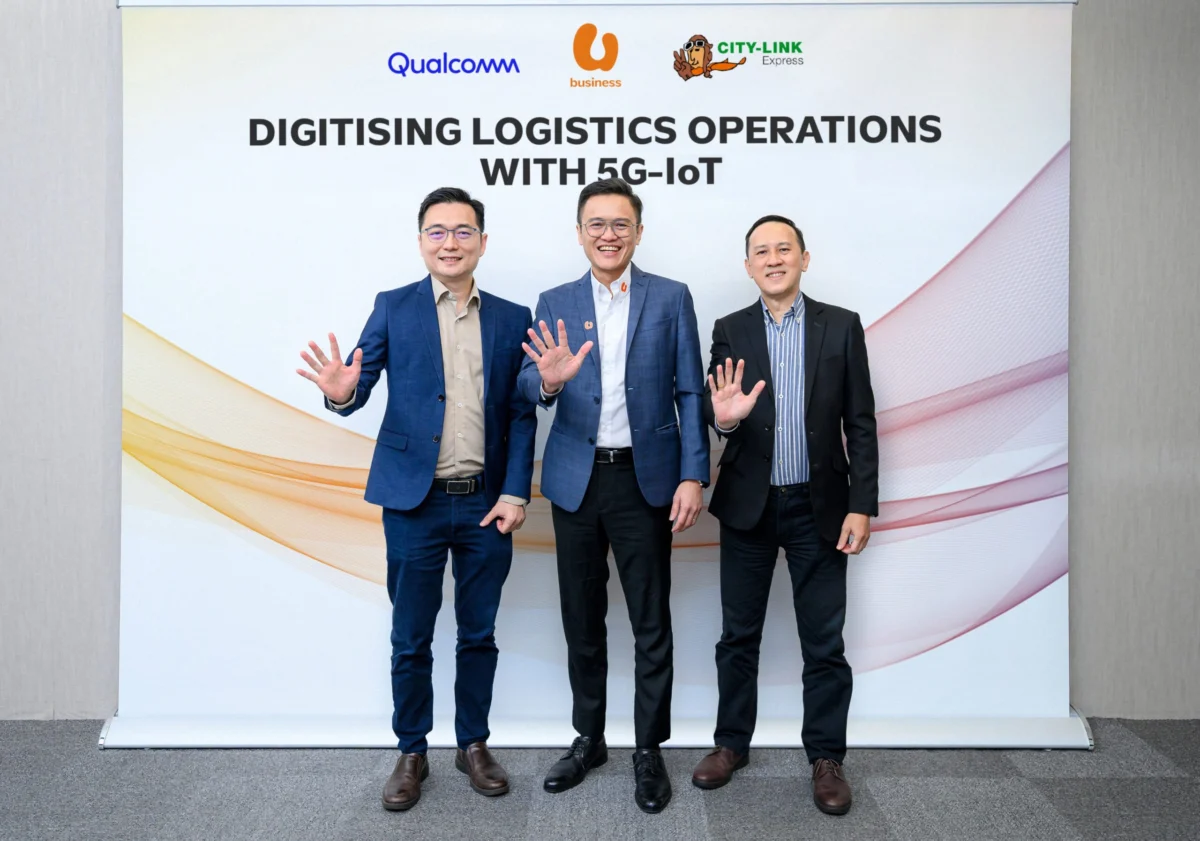
In a significant move for the Malaysian logistics and telecommunications sectors, U Business—the enterprise division of U Mobile—has announced the successful completion of a high-stakes Proof of Concept (PoC) aimed at revolutionizing air cargo tracking. This collaborative initiative, conducted alongside global technology leader Qualcomm Technologies, Inc. and local logistics giant City-Link Express, leveraged a sophisticated 5G-IoT architecture to provide unprecedented visibility into the transport of high-value goods. By integrating the Qualcomm Terrestrial Positioning Service (TPS) with U Business’s proprietary ULTRA IoT connectivity, the partners have demonstrated a viable path toward solving long-standing transparency issues in the air freight industry.
Addressing the Visibility Gap in Air Cargo Logistics
The logistics industry has historically struggled with "blind spots" during the transit of air cargo. While maritime and road transport have seen various iterations of tracking technology, air freight presents unique challenges, including strict signal regulations, the transition between multiple handlers, and the physical limitations of cargo holds where traditional Global Positioning System (GPS) signals often fail.
Before this PoC, City-Link Express relied on conventional tracking methods that were primarily checkpoint-based. Under this legacy system, shipments were scanned via barcodes at specific hubs, such as the Main Hub in Bandar Saujana Putra, Selangor, and again upon arrival at regional terminals in East Malaysia. While this provided a basic audit trail, it offered no insight into what occurred between these scans. If a high-value item was damaged, exposed to extreme temperatures, or delayed, investigators often had to spend days or weeks manually tracing the chain of custody across airports, ground handling facilities, and airline transfers.
The PoC was specifically designed to bridge this gap, focusing on the transit corridor between Peninsular Malaysia and the East Malaysian cities of Kota Kinabalu and Kuching. This route is critical for the Malaysian economy but involves complex handoffs that increase the risk of mishandling.
Technical Architecture: 5G, IoT, and Terrestrial Positioning
The technical foundation of the PoC rested on three pillars: U Business’s 5G-ready infrastructure, Qualcomm’s advanced positioning services, and City-Link Express’s operational framework. Central to the solution was the use of U Business’s ULTRA IoT connectivity, a bespoke suite of services designed for enterprise-grade reliability and massive machine-type communications (mMTC).
A key differentiator in this trial was the implementation of the Qualcomm Terrestrial Positioning Service (TPS). Unlike standard GPS, which requires a clear line of sight to satellites, Qualcomm TPS utilizes a combination of Wi-Fi and cellular signals to determine location. This is particularly effective in "signal-challenged" environments such as warehouses, cargo terminals, and airplane bellies. For even greater precision, the system can integrate Bluetooth Low Energy (BLE) beacons, ensuring that the location of an asset is known even within the vast, metallic interiors of an airport logistics hub.
During the two-month trial period, Qualcomm trackers were attached to selected high-value shipments. These devices were not merely location tags; they were equipped with multi-sensor capabilities. The trackers monitored:
- Shock and Tilt: Identifying if a package was dropped or mishandled during loading.
- Temperature: Essential for sensitive cargo like pharmaceuticals or high-end electronics.
- Light Exposure: Detecting if a secure package was opened prematurely or tampered with.
All data gathered by these sensors was transmitted in real-time via the 5G-IoT network and visualized through a digital dashboard, creating a continuous, unalterable digital audit trail.
Quantitative Success: Redefining Operational Metrics
The results of the two-month PoC provided clear, data-driven evidence of the technology’s impact. The partners reported significant improvements across four primary performance indicators:
1. Rapid Incident Response
One of the most striking outcomes was the 90% improvement in shipment location verification. Previously, locating a missing or delayed package required a manual search through logs and physical warehouses. With the 5G-IoT trackers, the location was available instantly. This allowed operations teams to reduce resolution times from days to mere hours. If a sensor flagged a handling issue—such as a sudden shock—teams could identify the exact checkpoint where the incident occurred and intervene before the shipment reached its final destination.
2. Enhanced Accountability and Dispute Resolution
In the high-value cargo sector, disputes over liability can be costly and legally complex. The PoC showed a 50% increase in "dispute readiness." By providing objective, time-stamped data on the condition of the cargo, City-Link Express moved away from relying on subjective handler reports. This is particularly vital for the transportation of pharmaceuticals, where proof of a maintained cold chain is a regulatory requirement.
3. Operational Efficiencies and Cost Reduction
The automation of logging and GPS trails resulted in a 70% reduction in operational review time. Staff who previously spent hours reconciling scan data could now focus on proactive logistics management. Furthermore, the PoC utilized a reusable tracker design. Compared to traditional single-use data loggers, these reusable units significantly lowered the per-shipment cost, making the high-tech solution economically sustainable for long-term deployment.
4. Improved Strategic Planning
The accuracy of the data collected led to a 30% improvement in overall data precision. This allowed City-Link Express to move beyond estimates and use actual performance patterns to optimize routes and plan capacity. By understanding exactly where delays occur in the airport handoff process, the logistics provider can refine its agreements with ground handlers and airlines to ensure smoother transitions.
Perspectives from Industry Leaders
The successful PoC has been met with enthusiasm from the leadership of all three participating organizations, each highlighting different aspects of the digital transformation.
How Lih Ren, Chief Business Officer of U Mobile, emphasized the broader mission of the telecommunications provider. "U Business is always seeking to fully leverage our 5G infrastructure and solutions to support the digital ambitions of Malaysia’s businesses," he stated. "The results of this PoC have been encouraging. We are keen to go beyond our 5G connectivity to also leverage our U Business solutions to help businesses digitize and scale with confidence."
From a technological standpoint, ST Liew, Vice President of Qualcomm Technologies and President of Qualcomm Southeast Asia, Australia, and New Zealand, pointed to the versatility of the positioning service. "Qualcomm TPS is a service that delivers precise indoor and outdoor low-power positioning across complex logistics signal environments," Liew noted. He explained that the service is designed to enable partners to develop solutions that enhance observability throughout the entire supply chain, providing insights that were previously technically impossible to obtain.
Colin Tan, Business Development Senior Manager of City-Link Express, described the collaboration as a "game-changer." He noted that the trackers provided "unprecedented real-time visibility and objective data" that the company simply did not have with conventional scanning. "We have had a very positive response to the trackers’ performance; they allowed us to transform how we resolve incidents and ensure our customers’ high-value assets are handled with the highest level of accountability," Tan added.
Analysis: The Broader Impact on Malaysia’s Digital Economy
The success of this PoC arrives at a critical juncture for Malaysia. As the nation continues to roll out its 5G network and positions itself as a regional hub for technology and logistics, the integration of 5G and IoT is becoming a cornerstone of the "Madani" economic framework.
Strengthening the East-West Logistics Corridor
The logistics link between Peninsular Malaysia and East Malaysia (Sabah and Sarawak) is a vital artery for national trade. However, the geographic separation necessitates a heavy reliance on air and sea freight. By proving that 5G-IoT can secure the air corridor, U Business and its partners are providing a blueprint for more resilient national supply chains. This technology could eventually be expanded to maritime routes, further unifying the Malaysian market.
Driving Industry 4.0 Adoption
This PoC serves as a practical demonstration of Industry 4.0 in action. It moves the conversation from theoretical 5G capabilities to tangible business outcomes. For other sectors—such as manufacturing, oil and gas, and retail—the success of this logistics trial provides confidence that IoT solutions can deliver a return on investment (ROI) through measurable efficiency gains.
Environmental and Sustainability Implications
While the primary focus of the PoC was on visibility and security, the transition to reusable trackers and optimized routing has clear environmental benefits. By reducing the reliance on single-use plastic-encased loggers and minimizing the fuel waste associated with inefficient routing and "lost" cargo searches, the solution aligns with global Environmental, Social, and Governance (ESG) trends in the logistics industry.
Future Outlook: Scaling Beyond the PoC
With the PoC successfully concluded, the focus now shifts to scalability. The modular nature of the 5G-IoT architecture means that City-Link Express and other logistics providers can gradually expand the use of these trackers across their entire high-value portfolios.
Future iterations of the technology may include deeper integration with Artificial Intelligence (AI) to provide predictive analytics. For instance, AI could analyze sensor data to predict when a package is at risk of damage before it happens, or to automatically reroute shipments in response to real-time airport congestion data.
The collaboration between U Business, Qualcomm, and City-Link Express marks a turning point for Malaysian logistics. It demonstrates that when telecommunications infrastructure, global technology expertise, and local operational knowledge converge, the result is a smarter, safer, and more efficient supply chain. As Malaysia continues its journey toward becoming a high-income, tech-driven economy, initiatives like this 5G-IoT PoC will likely serve as the standard for how businesses navigate the complexities of the modern world.