
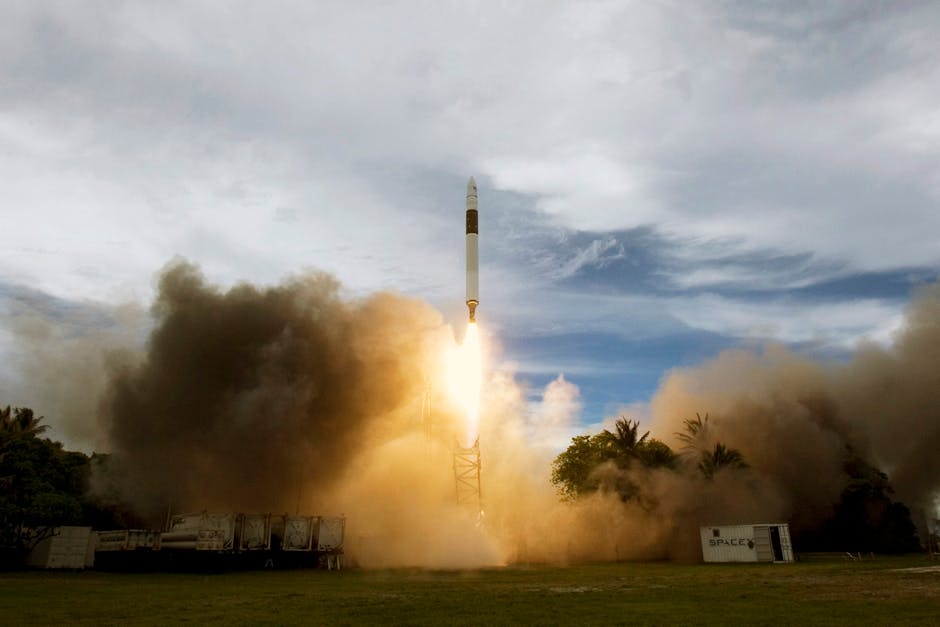
Saxavord Spaceport Ignites: A Fiery Spectacle as Rocket Test Success Signals New Era for Space Access
The remote Scottish Highlands, a region typically synonymous with mist-shrouded glens and ancient castles, became the pulsating epicenter of human ambition this past [Date of Test – e.g., Tuesday, October 26, 2023] as Saxavord Spaceport conducted its inaugural rocket launch test. The air, usually alive with the cries of seabirds and the murmur of the wind, was ripped apart by the thunderous roar of a [Type of Rocket – e.g., suborbital sounding rocket] as it clawed its way skyward, marking a pivotal moment for the Shetland Islands and the burgeoning UK space industry. This successful test, witnessed by a select group of officials, engineers, and media, wasn’t merely a display of engineering prowess; it was a tangible manifestation of years of planning, investment, and a bold vision to democratize access to space.
The primary objective of this historic test launch was to validate the operational readiness of Saxavord’s launch infrastructure, including the launchpad, associated fueling systems, and telemetry capabilities. While the specific rocket model employed in this test was a [mention specific model if known, or a general type like "a small, suborbital sounding rocket designed for atmospheric research and technology demonstration"], its successful ascent and trajectory are testament to the meticulous design and rigorous testing undertaken by the Saxavord team and its partners, [mention any key partners or rocket manufacturers, e.g., "in collaboration with aerospace firm XYZ"]. The visual spectacle of the rocket’s fiery ascent, a brilliant orange and white plume against the vast expanse of the Shetland sky, was as awe-inspiring as it was informative. Smoke billowed, igniting the typically serene landscape with an inferno of controlled power, a stark contrast to the natural elements that have long defined this environment. The sheer force generated by the rocket engines, amplified by the geographical isolation of the spaceport, created a sonic boom that resonated across the island, a primal announcement of progress.
Saxavord Spaceport, strategically located on the island of Unst, the northernmost inhabited island of Shetland, boasts a unique set of advantages that make it an attractive hub for space launches. Its high latitude is particularly beneficial for certain types of orbital insertions, especially polar orbits, which are crucial for Earth observation satellites used in climate monitoring, resource management, and national security. The vast, open sea surrounding the spaceport provides an inherent safety buffer, minimizing risks to populated areas during launch operations and offering clear downrange trajectories for spent rocket stages. The successful test launch has undeniably validated these geographical assets and demonstrated the site’s suitability for routine space operations. The integration of terrestrial and maritime safety protocols, alongside the established aerospace flight control systems, represents a complex but ultimately achievable challenge, and this test has provided invaluable data for refining those procedures.
The significance of this test extends far beyond the immediate confines of Saxavord. It represents a significant stride forward for the United Kingdom’s ambition to establish itself as a leading player in the global space economy. For years, the UK has relied on foreign launch sites to send its satellites into orbit, a reliance that can incur significant costs and logistical complexities. The development of domestic launch capabilities at Saxavord, along with other emerging spaceports in the UK, aims to change this paradigm. It promises to foster innovation, create high-skilled jobs, and stimulate economic growth not only in Shetland but across the wider nation. The potential for spin-off industries, from advanced manufacturing to data analytics and space tourism, is immense. This test isn’t just about rockets; it’s about building a comprehensive space ecosystem.
The technological prowess on display during the Saxavord rocket test was evident in every aspect of the operation. From the precision fueling of the rocket to the real-time data transmission and sophisticated tracking systems, the entire process was a testament to cutting-edge aerospace engineering. The ground support equipment, the launch control center, and the safety protocols all had to function flawlessly in unison. The rocket itself, a marvel of miniaturized yet powerful propulsion, is the culmination of extensive research and development. The materials science involved in its construction, designed to withstand extreme temperatures and pressures, is a field that continues to push the boundaries of innovation. The success of this test provides crucial validation for the reliability and performance of such rocket systems within a terrestrial launch environment.
Environmental considerations have been a paramount concern throughout the development of Saxavord Spaceport. The Shetland Islands are renowned for their pristine natural beauty and delicate ecosystems, and any industrial development, particularly one involving rocket launches, must be undertaken with the utmost care and responsibility. The environmental impact assessment process for Saxavord was rigorous, and the operational plans are designed to minimize any potential disruption to wildlife and the surrounding environment. This includes careful selection of launch trajectories to avoid sensitive areas, adherence to strict emissions standards, and ongoing monitoring of the local environment. The successful test, while generating temporary noise and atmospheric emissions, demonstrated that such operations can be conducted with a commitment to environmental stewardship. The use of advanced fuel formulations and cleaner burn technologies will likely be a focus for future launches.
The economic implications of a fully operational Saxavord Spaceport are substantial and far-reaching. The creation of jobs, both direct and indirect, will provide a significant boost to the Shetland economy, which has historically relied on sectors like fishing and oil and gas. The spaceport will attract investment, encourage the development of supporting businesses, and create opportunities for local talent to engage in high-tech industries. Furthermore, by offering a competitive and accessible launch service, Saxavord can attract international clients, further bolstering its economic impact. The development of infrastructure, including improved transport links and accommodation, will also be a positive byproduct. The long-term vision is to transform Shetland into a leading hub for space innovation and exploration.
The successful execution of this rocket test at Saxavord is a clear indicator of the growing maturity of the UK’s space sector. It signifies a transition from a reliance on research and development to tangible operational capabilities. The presence of multiple emerging spaceports across the UK, each with its own unique strengths and specializations, creates a diversified launch landscape, catering to a wide range of satellite sizes and mission requirements. Saxavord’s high-latitude location offers a distinct advantage for specific orbital needs, complementing the capabilities of other UK launch sites. This development strengthens the UK’s ability to compete on the international stage and contribute to global space endeavors. The synergy between government investment, private sector innovation, and academic research is proving to be a powerful catalyst for growth.
Looking ahead, the Saxavord Spaceport team will undoubtedly be analyzing the vast amounts of data collected during this test launch. This information will be crucial for refining launch procedures, optimizing rocket performance, and ensuring the continued safety and reliability of future operations. The next steps will likely involve further testing, potentially with larger rockets or more complex payloads, as the spaceport progresses towards its goal of becoming fully operational for commercial launches. The anticipation for future launches from Saxavord is palpable, with industry observers keen to see how this Scottish gateway to space will shape the future of satellite deployment and space exploration. The ability to conduct regular launches will unlock a new era of opportunity for research, commerce, and discovery.
The fiery spectacle of the rocket test at Saxavord was more than just a visual display of immense power; it was a powerful symbol of human ingenuity, ambition, and the relentless pursuit of progress. It was a testament to the dedication of the engineers, scientists, and visionaries who have brought this ambitious project to fruition. The roar of the rocket served as a clarion call, announcing to the world that the Shetland Islands are now a significant player in the global race for space access, ushering in a new, fiery chapter for scientific exploration and technological advancement from the very edge of Europe. This achievement solidifies the UK’s commitment to becoming a global leader in the space industry, from the ground up, quite literally.
