
BioBX Secures Funding to Transform Plastic Waste into Aromatic Chemicals
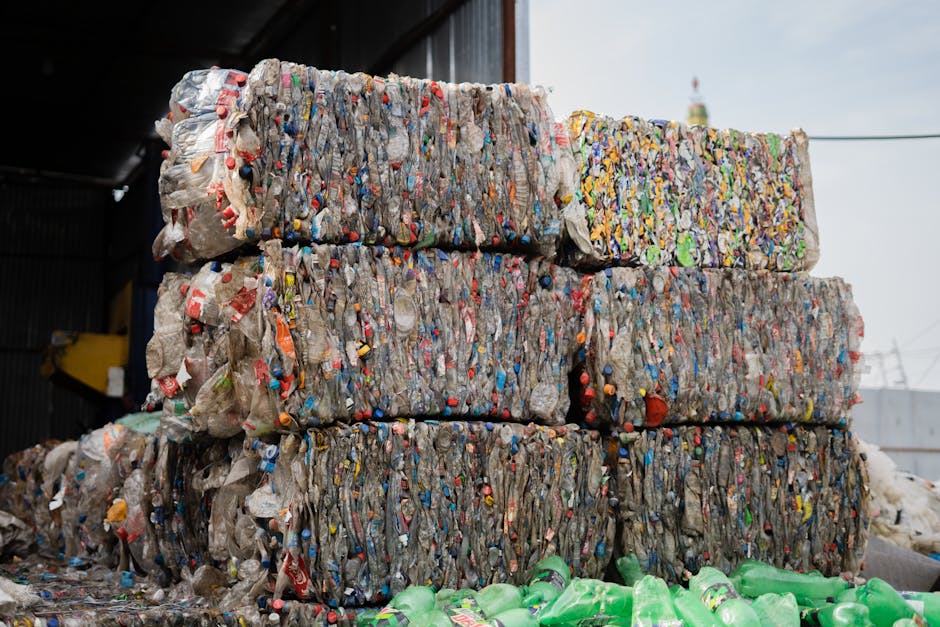
BioBX, a pioneering Dutch startup, has successfully raised significant funding to advance its groundbreaking technology that converts mixed plastic waste into valuable aromatic chemicals. This development marks a crucial step forward in tackling the global plastic pollution crisis and creating a circular economy for plastics. The investment will enable BioBX to scale its operations, further refine its proprietary process, and establish strategic partnerships within the chemical industry. Their innovative approach targets the inherent complexity of plastic waste, which often consists of mixed polymers, a significant hurdle for traditional recycling methods. By breaking down these complex materials into fundamental chemical building blocks, BioBX offers a pathway to upcycle plastic waste into higher-value products, moving beyond simple downcycling. This redirection of discarded plastics from landfills and incinerators into a feedstock for valuable chemicals addresses both environmental concerns and economic opportunities. The funding round, details of which are expected to be announced soon, signals strong investor confidence in BioBX’s technological prowess and its potential to disrupt the petrochemical industry.
The core of BioBX’s innovation lies in its advanced catalytic pyrolysis process. Unlike conventional pyrolysis, which often requires pre-sorted and purified plastic streams, BioBX’s technology is designed to handle mixed plastic waste, including post-consumer and post-industrial fractions that are typically challenging to recycle. This is achieved through a highly selective catalytic system that can depolymerize various plastic types, such as polyethylene (PE), polypropylene (PP), and polystyrene (PS), simultaneously. The process operates at moderate temperatures, reducing energy consumption and associated emissions compared to other thermal decomposition methods. Crucially, the catalysts are engineered to steer the reaction towards specific aromatic compounds, including benzene, toluene, and xylenes (BTX). These aromatics are foundational chemicals used extensively in the production of a vast array of products, including plastics themselves, solvents, pharmaceuticals, and fuels. This ability to produce high-purity aromatics directly from mixed plastic waste is a significant differentiator for BioBX.
The environmental imperative behind BioBX’s mission cannot be overstated. The world generates hundreds of millions of tons of plastic waste annually, with a substantial portion ending up in landfills, oceans, and natural environments, causing severe ecological damage. Current recycling rates for plastic remain low globally, and much of what is recycled is downcycled into lower-value applications, limiting its long-term sustainability. BioBX’s technology offers a viable alternative by providing a chemical recycling pathway that can effectively absorb large volumes of mixed plastic waste that would otherwise be discarded. By closing the loop on plastic production and consumption, BioBX contributes to a more circular economy, reducing reliance on virgin fossil fuels for chemical production and mitigating the environmental burden of plastic waste. The economic implications are also substantial, as the demand for aromatics is projected to grow, creating a market for these recycled-origin chemicals.
The funding secured by BioBX will be instrumental in several key areas of development. Firstly, it will support the scaling up of their pilot plant into a larger demonstration facility, allowing them to process greater quantities of plastic waste and validate their technology at an industrial scale. This scaling is critical for proving the economic viability and reliability of their process to potential industrial partners and investors. Secondly, the investment will fuel further research and development into catalyst optimization. BioBX’s proprietary catalysts are central to their success, and continuous improvement will enhance product yields, purity, and process efficiency. This ongoing R&D is vital for staying ahead of the curve in a rapidly evolving field. Thirdly, the funding will be used to build out BioBX’s team, attracting top talent in chemical engineering, catalysis, and business development to support their ambitious growth plans.
Strategic partnerships are a cornerstone of BioBX’s go-to-market strategy. The company aims to collaborate with waste management companies to secure a consistent and diverse supply of mixed plastic waste. They are also actively seeking partnerships with petrochemical companies who are major consumers of aromatic chemicals. These collaborations will not only provide off-take agreements for their produced aromatics but also offer opportunities for knowledge sharing and co-development. By integrating into existing chemical value chains, BioBX can accelerate the adoption of its technology and contribute to a broader shift towards sustainable chemical production. The company’s focus on producing high-demand aromatic chemicals positions them favorably within these partnerships, as it directly addresses a critical feedstock need for many established industries.
The technical challenges associated with depolymerizing mixed plastics are significant. Different polymers have varying chemical structures and require specific conditions for effective breakdown. For instance, PE and PP, which are polyolefins, behave differently than PS. Furthermore, the presence of additives, contaminants, and varying degrees of degradation in real-world plastic waste can complicate the process. BioBX’s proprietary catalysts are designed to overcome these challenges by exhibiting a broad tolerance for different plastic types and effectively neutralizing or mitigating the impact of common contaminants. The selectivity of their catalysts is crucial for achieving the desired aromatic compounds and minimizing the formation of unwanted byproducts, which would necessitate complex and costly downstream purification steps. Their approach emphasizes a holistic solution that accounts for the inherent variability of the feedstock.
The global market for aromatic chemicals is substantial and is expected to continue its upward trajectory. Benzene, toluene, and xylenes are indispensable building blocks for a multitude of industries. Benzene is a key component in the production of styrene, phenol, and cyclohexane, which are precursors to polystyrene, polycarbonates, and nylon, respectively. Toluene finds applications in the production of polyurethane and as a solvent. Xylenes are vital for producing polyester fibers and PET bottles. The reliance of these industries on fossil-fuel derived aromatics presents a clear opportunity for BioBX to offer a sustainable, circular alternative. By providing these essential chemicals from recycled plastic waste, BioBX can help reduce the carbon footprint of numerous downstream products and contribute to a more responsible chemical industry.
The economic viability of chemical recycling technologies like BioBX’s hinges on several factors, including feedstock cost, energy efficiency, product yield, and market price of the recovered chemicals. BioBX’s ability to handle mixed waste streams reduces the upfront cost of sorting and purification, a significant advantage over traditional recycling. The moderate operating temperatures of their process also contribute to lower energy expenses. Furthermore, the high-value nature of the aromatic chemicals they produce allows them to command competitive prices in the market. As the global push for sustainability intensifies and regulatory pressures on plastic waste increase, the economic case for BioBX’s technology is expected to strengthen further. Investor confidence, as evidenced by the recent funding, suggests a belief in the company’s ability to navigate these economic considerations successfully.
The competitive landscape for plastic waste recycling technologies is evolving rapidly, with various approaches being explored, including mechanical recycling, other forms of chemical recycling (such as solvolysis and gasification), and enzymatic degradation. BioBX distinguishes itself through its specific focus on catalytic pyrolysis for mixed waste and its ability to directly produce high-purity aromatic hydrocarbons. While other chemical recycling methods may produce fuels or other intermediate chemicals, BioBX’s output of BTX directly targets a foundational chemical feedstock, offering a clear value proposition for the petrochemical industry. This strategic focus on a high-demand, high-value output differentiates them and positions them for strong market integration.
The funding will also enable BioBX to conduct comprehensive life cycle assessments (LCAs) of their process. These assessments are crucial for quantifying the environmental benefits of their technology compared to conventional petrochemical production routes. By demonstrating a lower carbon footprint, reduced reliance on fossil fuels, and minimized waste generation, BioBX can further solidify its sustainability credentials and appeal to environmentally conscious stakeholders. These LCAs will provide robust data to support marketing claims and regulatory submissions, further enhancing the credibility of their solution.
Looking ahead, BioBX envisions a future where its technology plays a significant role in global plastic waste management and sustainable chemical production. The company aims to deploy its technology at multiple sites worldwide, processing vast quantities of plastic waste and supplying essential aromatic chemicals to diverse industries. Their roadmap includes developing strategic alliances with major chemical manufacturers and waste management firms, further integrating their solution into existing infrastructure. The successful execution of their scaling and partnership strategies will be critical in achieving this vision and making a tangible impact on the plastic pollution crisis and the transition to a circular economy. The secured funding is a pivotal enabler of these ambitious plans, underscoring the growing recognition of BioBX’s innovative and impactful approach.
