
Euclid Telescope Unveils Breathtaking Deep Space First Images: A New Era in Cosmic Exploration
The European Space Agency’s Euclid mission has officially entered its deep space observation phase, releasing a stunning collection of its first full-color scientific images. These inaugural snapshots, showcasing a diverse range of celestial objects, offer an unprecedented glimpse into the universe and mark a significant milestone for cosmology. Euclid’s primary objective is to investigate the nature of dark energy and dark matter, two enigmatic components that constitute approximately 95% of the universe’s total mass-energy. By meticulously mapping billions of galaxies over an expansive portion of the cosmos, Euclid aims to unravel the mysteries behind the accelerated expansion of the universe, a phenomenon attributed to dark energy, and to understand the gravitational influence of dark matter. The telescope’s cutting-edge instrumentation, including its wide-field VIS (Visible) instrument and its near-infrared spectrograph and photometer (NISP), are instrumental in capturing these high-resolution, broad-spectrum images. This article will delve into the scientific significance of these first images, the capabilities of the Euclid telescope, and the profound implications for our understanding of the universe.
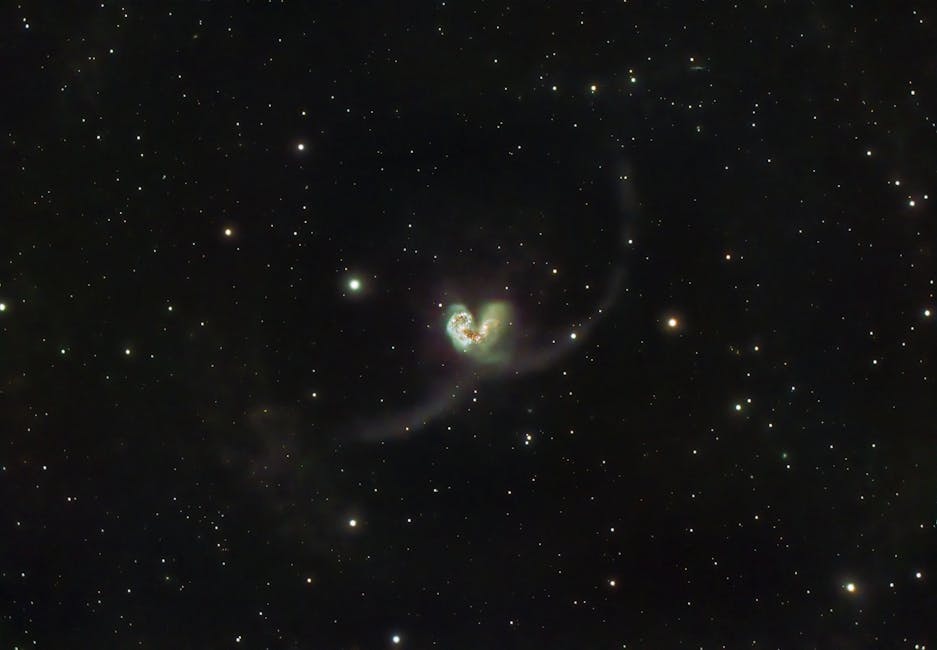
The initial release of Euclid’s images presents a captivating panorama of the cosmos, featuring not only familiar celestial structures but also revealing subtle details previously obscured. One of the most striking images is a mosaic of the Perseus Cluster, a massive collection of galaxies situated approximately 240 million light-years away. This particular image showcases over 1,000 galaxies within a single field of view, many of them exhibiting intricate details such as spiral arms, galactic cores, and the faintest of stellar populations. The sheer number of galaxies visible in this one image underscores Euclid’s extraordinary survey capabilities. Beyond galaxy clusters, Euclid has also captured the breathtaking beauty of the Taffy Galaxies, a pair of interacting galaxies locked in a cosmic dance of collision and merger. The dynamic processes of galactic evolution are laid bare in these images, with the visible and infrared light revealing the distribution of gas, dust, and newly forming stars. Another prominent target was the irregular dwarf galaxy NGC 6822, also known as Barnard’s Galaxy, a low-surface-brightness galaxy that provides an invaluable laboratory for studying star formation in a low-metallicity environment. The resolution achieved by Euclid’s VIS instrument is remarkable, resolving individual stars within these distant galaxies, which is crucial for understanding their stellar populations and evolutionary histories. The NISP instrument, on the other hand, provides spectroscopic and photometric data in the near-infrared, allowing astronomers to measure the redshift of galaxies. Redshift is a fundamental observable that directly correlates with a galaxy’s distance and, consequently, its position in the universe’s expansion history. By accurately measuring the redshifts of billions of galaxies, Euclid will build a precise three-dimensional map of the universe.
The scientific rationale behind Euclid’s mission is deeply rooted in the current cosmological model, the Lambda-CDM (Cold Dark Matter) model. While this model has been remarkably successful in explaining a wide range of cosmological observations, it relies on the existence of dark energy and dark matter, whose fundamental nature remains elusive. Dark energy is believed to be responsible for the observed accelerated expansion of the universe, a discovery that earned the Nobel Prize in Physics in 2011. The nature of dark energy, whether it is a cosmological constant, a dynamic field, or something else entirely, is one of the most pressing questions in modern physics. Euclid’s mission will provide unprecedented constraints on the properties of dark energy by measuring its equation of state, which describes how its pressure relates to its density. Dark matter, on the other hand, exerts a gravitational influence that shapes the structure of galaxies and galaxy clusters. Its existence is inferred from gravitational lensing effects and the rotation curves of galaxies, but it does not interact with light, making it invisible to traditional telescopes. Euclid will map the distribution of dark matter through gravitational lensing, a phenomenon where the gravity of massive objects bends the path of light from background sources. By analyzing the subtle distortions in the shapes of distant galaxies caused by the gravitational pull of intervening dark matter, Euclid will create detailed maps of its distribution across vast cosmic scales.
Euclid’s scientific payload comprises two main instruments, each contributing distinct yet complementary capabilities. The VIS instrument is a high-resolution, wide-field camera designed to capture images of galaxies across a broad range of visible wavelengths. Its large field of view allows it to survey vast swathes of the sky efficiently, while its exceptional resolution ensures that fine details within galaxies are captured. This instrument is crucial for identifying and characterizing galaxies for subsequent spectroscopic analysis, as well as for measuring weak gravitational lensing. The NISP instrument operates in the near-infrared spectrum and serves two primary functions: spectroscopy and photometry. In spectroscopic mode, NISP measures the light emitted by galaxies and breaks it down into its constituent wavelengths. This allows astronomers to determine the redshift of galaxies, providing their distances and enabling the construction of the 3D cosmic map. In photometric mode, NISP measures the brightness of galaxies across different near-infrared filters, which helps to determine their stellar populations and physical properties. The combination of VIS and NISP instruments provides Euclid with the necessary tools to carry out its ambitious cosmological survey. The telescope’s orbit around the Sun-Earth L2 Lagrange point provides a stable environment, minimizing thermal variations and gravitational perturbations, which are essential for achieving the high sensitivity and accuracy required for its observations.
The implications of Euclid’s first images extend far beyond their aesthetic appeal. Scientifically, they represent a crucial validation of the telescope’s capabilities and a promising prelude to the wealth of data that will be generated in the coming years. The detailed images of galaxy clusters, for instance, will enable astronomers to refine their understanding of how these massive structures form and evolve under the influence of gravity and dark matter. The study of individual galaxies within these clusters, such as the spiral arms and star-forming regions revealed by VIS, will provide insights into the complex interplay of gas, dust, and stellar feedback processes that drive galactic evolution. The Taffy Galaxies, in their chaotic grandeur, offer a prime opportunity to observe the dynamic processes of galactic mergers and the subsequent redistribution of matter and energy. The detailed imaging of Barnard’s Galaxy will allow for a more precise characterization of star formation in low-metallicity environments, which are thought to be representative of the early universe. Furthermore, the high-resolution imaging capabilities will be instrumental in identifying and studying faint dwarf galaxies, which are important probes of the hierarchical formation of structure in the universe and may harbor clues about the nature of dark matter.
The ability to measure precise redshifts for billions of galaxies is perhaps the most transformative aspect of Euclid’s mission. The 3D map that will be constructed from this data will be the largest and most detailed ever created. This map will allow cosmologists to test different models of dark energy by observing how the rate of cosmic expansion has changed over time. For example, if dark energy is found to be a constant, its influence on the expansion rate would be predictable. If, however, it is a dynamic field, its influence might vary, leading to deviations from this prediction. The precise mapping of galaxy distributions will also provide crucial data for understanding the role of dark matter. By analyzing the large-scale structure of the universe – the cosmic web of filaments and voids – astronomers can infer the gravitational influence of dark matter and potentially constrain its properties, such as its mass and interaction cross-section. The statistical analysis of the clustering of galaxies and the patterns of gravitational lensing will be key to achieving these goals.
Euclid’s contribution to our understanding of the universe is expected to be profound, potentially leading to a paradigm shift in cosmology. The data collected by the telescope will allow scientists to address fundamental questions such as: What is the nature of dark energy? Is it a cosmological constant, or does it evolve over time? What is the mass of neutrinos? What is the nature of dark matter? Is it a single particle, or a family of particles? Can we detect any subtle deviations from Einstein’s theory of General Relativity on cosmic scales? The answers to these questions will not only reshape our understanding of the universe but could also have significant implications for fundamental physics. The mission is designed to provide the most accurate measurements of key cosmological parameters to date, pushing the boundaries of our knowledge and potentially revealing new physics beyond the Standard Model. The synergy between the VIS and NISP instruments, coupled with the telescope’s extensive survey capabilities, ensures that Euclid will deliver a comprehensive and high-precision dataset that will be analyzed by the global scientific community for years to come. The first images are not just beautiful pictures; they are the opening act of a scientific revolution, offering a tantalizing preview of the cosmic secrets that Euclid is poised to reveal.
