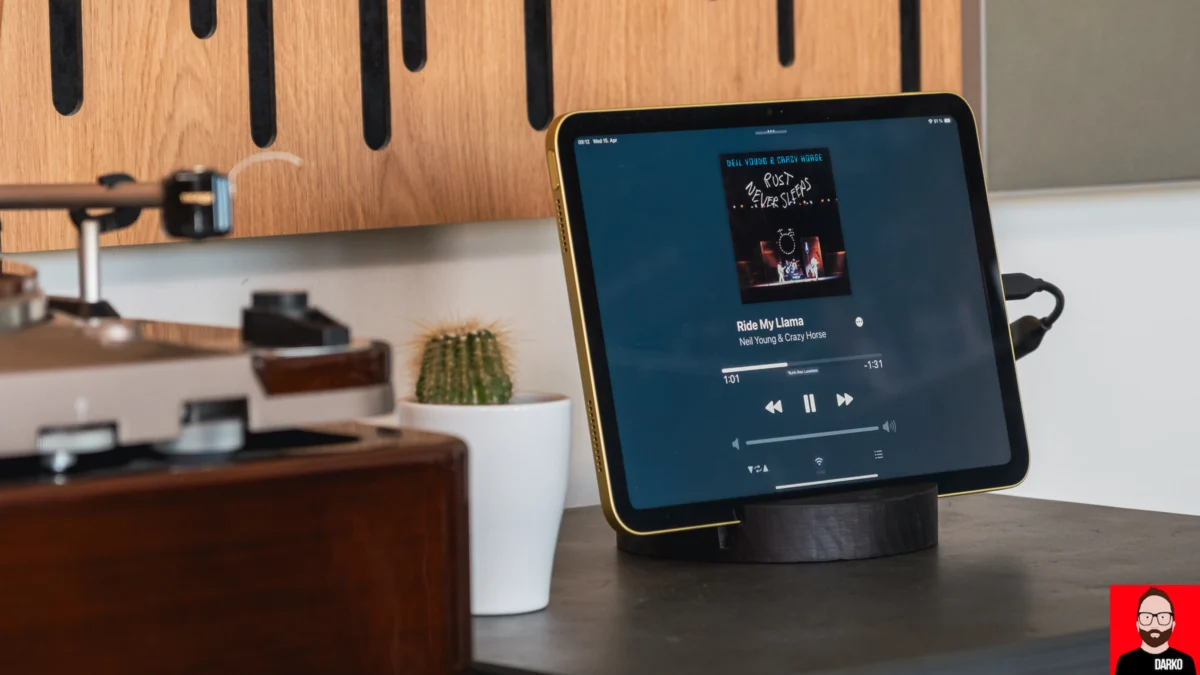
Four years after Apple Music launched its lossless and hi-res lossless tiers, a persistent challenge remains for discerning listeners: achieving bit-perfect audio playback within a home hi-fi system without compromising the integrity of the stream. The quest for unadulterated, high-resolution audio from Apple’s extensive library has proven to be an intricate dance of hardware selection and manual configuration, often leaving users with imperfect workarounds. Enter Lysoniq, an iOS application that, while not directly addressing Apple’s inherent limitations, has emerged as the most practical solution for those seeking uncompromising audio fidelity. The latest update to Lysoniq introduces an unexpected, yet remarkably effective, component to this equation: the Apple TV.

The core problem Lysoniq addresses is the desire for remote control of Apple Music playback from the comfort of a listening chair, coupled with the absolute requirement of bit-perfect audio. Bit-perfect playback signifies that the audio data arrives at the Digital-to-Analog Converter (DAC) precisely as it was transmitted by Apple’s servers, free from any resampling, downsampling, or lossy compression. While the audible impact of such fidelity is a subject for individual listening, the technical path to achieving it has been fraught with obstacles.
The Persistent Obstacles to Bit-Perfect Apple Music
Apple’s ecosystem, while vast and interconnected, presents several hurdles for audiophiles aiming for high-resolution streaming from Apple Music.

AirPlay 2’s Compromise: The ubiquitous AirPlay 2 protocol, designed for ease of use and multi-room audio, is fundamentally at odds with bit-perfect playback. When audio is routed via AirPlay 2 from an iPhone or iPad, it first passes through the source device. During this transit, the stream is typically re-encoded into a 256kbps AAC format, irrespective of the lossless or hi-res lossless settings selected within the Apple Music application. This means that even if a 24-bit/192kHz file is chosen, the signal sent to the receiving device is a significantly compressed 256kbps AAC stream, a quality level that even some basic Bluetooth codecs would surpass. This re-encoding process inherently degrades the audio data, making AirPlay 2 an unsuitable method for audiophile-grade streaming.
macOS and Core Audio’s Fixed Sample Rate: On macOS, the situation is slightly different but equally problematic. The operating system’s Core Audio framework mandates a fixed sample rate for all audio output. Users must manually select this sample rate within the Audio MIDI Setup utility. If the chosen sample rate is, for instance, 44.1kHz, then any higher resolution tracks (like 192kHz) will be downsampled. Conversely, if 192kHz is selected as the fixed rate, lower resolution tracks will be upsampled. Neither scenario results in bit-perfect playback, as the audio data is altered by the system. Furthermore, macOS devices typically require direct interaction for playback control, negating the convenience of remote operation from a listening position.

Apple TV’s HDMI Output Limitation: The Apple TV, a popular device for media consumption, also presents a significant limitation. Its HDMI output is capped at a maximum sample rate of 48kHz. This immediately disqualifies any hi-resolution audio content exceeding this rate from being transmitted without alteration. Compounding this issue, the Apple TV’s underlying operating system, tvOS, will then resample all incoming 44.1kHz audio signals to 48kHz before they are passed to the connected amplifier or AV receiver. The outcome is a universal 48kHz output, regardless of the source material’s original resolution, thereby preventing bit-perfect playback of higher-resolution content.
Previous Workarounds and Their Limitations
Prior to Lysoniq’s refined approach, several methods were employed by users attempting to circumvent these limitations, each with its own set of compromises:

-
Eversolo’s Android Implementation: Manufacturers like Eversolo have modified Android’s audio subsystem on their devices to bypass the standard 48kHz resampling limitations. This allows for bit-perfect playback of Apple Music through their devices, often controlled via screen mirroring from a smartphone or tablet. However, newer integrated solutions from Eversolo have reportedly reduced playback quality to CD-quality at best, and potentially lossy compressed, with prices starting at a considerable €859.
-
FiiO’s Dedicated Players: FiiO’s R7 (€699, discontinued) and R9 (€1499) digital audio players offer a similar Android-based workaround. Users can install the Apple Music app directly from the Google Play Store, benefiting from the modified audio pipeline. While these devices provide a direct path for high-resolution audio, FiiO’s screen-casting application has been noted for its less responsive nature, often necessitating users to physically interact with the device’s touchscreen for playback control, diminishing the remote convenience.

-
iPadOS and iOS with USB DACs: Connecting an iPad or iPhone directly to a USB DAC offers a truly bit-perfect pathway for Apple Music playback. The iPadOS and iOS operating systems do not interfere with audio streams when a USB DAC is attached, ensuring that 44.1kHz files are delivered as 44.1kHz and 192kHz files as 192kHz. However, this solution comes at the cost of remote control. While the audio quality is pristine, the user is tethered to the tablet or phone for playback management, a significant drawback for a relaxed listening experience. It’s important to note that Android tablets do not offer this benefit due to their OS also applying the 48kHz resampling.
Lysoniq: A Sophisticated Workaround Emerges
Lysoniq, priced at US$12 or €9 for iOS, fundamentally changes the landscape by addressing the remote control deficiency while preserving bit-perfect audio. The application is designed to run on an iPad, which is connected via USB to an external DAC. Upon launch, Lysoniq synchronizes with the user’s Apple Music library, presenting an interface that closely mimics the native Apple Music app’s layout. This familiarity ensures a gentle learning curve for existing Apple Music users. However, it’s crucial to understand that users are operating within the Lysoniq environment, not the original Apple Music application.

The true innovation lies in its network-based control architecture. A separate instance of Lysoniq is installed on an iPhone, allowing the two devices to communicate wirelessly across a local network. The critical function of designating the playback device is handled via a "LYNQ" button, prominently located at the bottom center of both the iPhone and iPad applications. When configured, the iPhone acts solely as a sophisticated remote control. It enables users to browse the entire Apple Music catalog, manage playback queues, and adjust volume. The audio stream itself, however, remains entirely within the iPad instance of Lysoniq. This iPad then streams the Apple Music files directly from Apple’s servers at their native resolution, passing them through the USB connection to the DAC. The iPhone, in this setup, never handles the audio data; it exclusively transmits control signals. This elegant separation of the playback engine from the user interface mirrors the architecture of professional streaming devices.
A significant advantage of Lysoniq is its seamless automatic sample rate switching. Unlike macOS, which requires manual adjustments in Audio MIDI Setup or the use of third-party software like LosslessSwitcher, Lysoniq dynamically adjusts the iPadOS audio output’s sample rate to precisely match each incoming track. For example, a track like Neil Young’s "Rust Never Sleeps," which is available in 24-bit/192kHz on Apple Music, will be transmitted and played back at that exact resolution, reaching the DAC without any unwanted upsampling or downsampling. This ensures that the listener experiences the audio exactly as intended by the artist and mastering engineer.

The Apple TV Integration: Expanding Control Options
The latest iteration of Lysoniq introduces an Apple TV application, a move that initially appears counterintuitive given the Apple TV’s inherent 48kHz HDMI output limitation. However, this integration represents a strategic enhancement to the user experience rather than a change in the audio path. The Apple TV app functions purely as a controller, not as a playback device.
In this configuration, the Apple TV app is used to select the playback device, which remains the iPad connected to the DAC. This is achieved by tapping the "LYNQ" button, now located in the top-right corner of the Apple TV app’s interface. Once linked, users can control the iPad’s Lysoniq playback using the Apple TV’s remote. The audio signal still travels directly from Apple’s servers to the iPad and then to the DAC at its full native resolution. The Apple TV, in this scenario, is relegated to transmitting only control commands, similar to how the iPhone operates in the previous setup.

This new workflow offers a compelling alternative for listeners who prefer the tactile experience of a traditional remote control over a smartphone interface for their home audio system. The Apple TV’s larger screen displays the Apple Music library with enhanced clarity, making browsing and selection more accessible for many users. Crucially, because the audio chain remains identical to the iPad-only setup, the integrity of high-resolution playback is entirely preserved.
Furthermore, Lysoniq provides remarkable flexibility in control. Both the iPad and the Apple TV can simultaneously display "now playing" information. Users can switch control between these devices at any time, or even hand control back to the iPhone. An especially useful feature is the ability to turn off the iPad’s screen, conserving battery power, while music continues to play uninterrupted. This level of configurability offers more options than a typical user might even require.

The initial playback issues reported in earlier versions of Lysoniq, such as occasional gaps in playback and an audio leak on pause, appear to have been resolved in subsequent updates. However, a minor user interface quirk persists: the "Recently Played" library section requires a full restart of the application to refresh. Additionally, a preference for the default button on album pages to be "Play" rather than "Artist Browse" has been noted by some users. Despite these minor points, the core functionality of delivering bit-perfect audio with versatile remote control is robust.
Who Benefits from Lysoniq?
Lysoniq is particularly well-suited for existing Apple Music subscribers who already possess an iPad and a USB DAC. The application effectively leverages hardware that might otherwise be underutilized, providing the remote control functionality that Apple has conspicuously omitted from its own ecosystem for high-resolution audio. By bypassing the audio-degrading pathways of AirPlay 2 and the limitations of macOS and Apple TV’s native outputs, Lysoniq ensures that Apple Music’s high-resolution audio remains intact from source to DAC.

The addition of the Apple TV app further enhances Lysoniq’s appeal by offering a refined and intuitive control surface for home listening without compromising the application’s core strength: preserving the fidelity of high-resolution audio. For a modest investment of US$12, users can explore a significantly improved Apple Music listening experience, a cost comparable to purchasing a single CD. The accessibility of the app makes it a low-risk endeavor to determine if it meets individual streaming needs.
The implications of Lysoniq’s development are significant for the audiophile community. It demonstrates that with thoughtful software design, it is possible to overcome the limitations imposed by platform manufacturers who may not prioritize audio fidelity to the same degree. As more users embrace high-resolution streaming, solutions like Lysoniq become increasingly vital, bridging the gap between convenience and sonic excellence. The continued evolution of such applications suggests a future where accessing pristine audio from popular streaming services is not an arcane technical challenge, but a readily available feature.