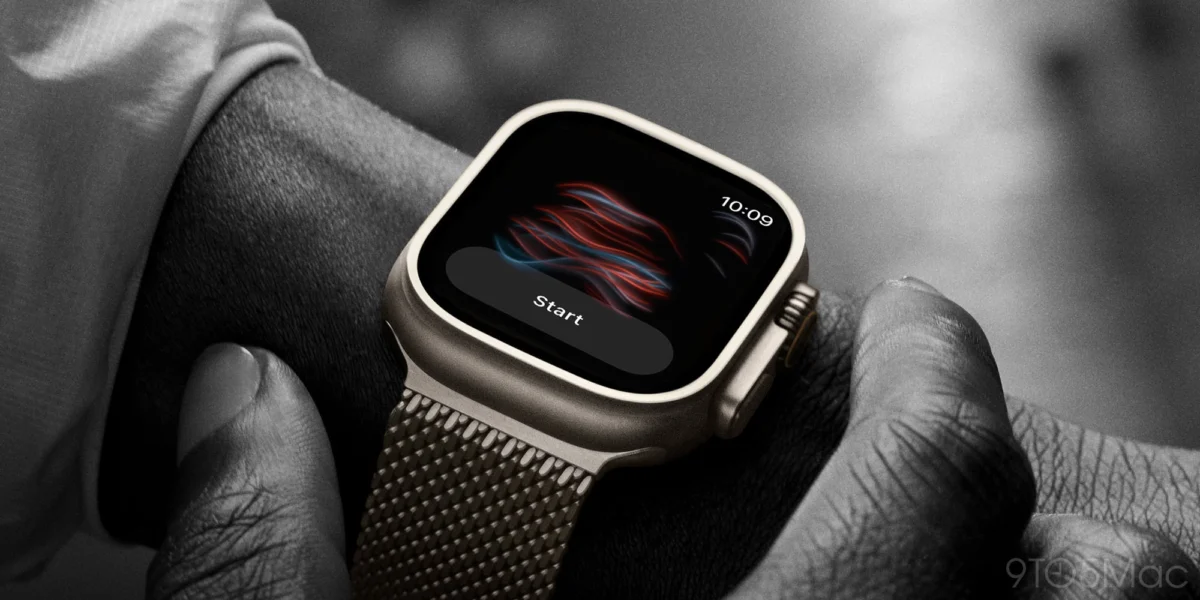
The International Trade Commission has officially declined to review a previous judicial ruling that favored Apple Inc., effectively terminating a long-standing legal challenge from health technology firm Masimo and solidifying Apple’s right to sell its redesigned blood oxygen monitoring technology within the United States. This decision marks a definitive turning point in a high-stakes intellectual property dispute that has spanned several years, involving multiple federal agencies, international trade regulations, and the temporary removal of flagship wearable products from one of the world’s most valuable retail markets. By refusing to review the Administrative Law Judge’s finding of non-infringement, the Commission has rejected Masimo’s final administrative bid to reinstate a sweeping import ban on the Apple Watch, ensuring that Apple’s current implementation of the Blood Oxygen app remains available to millions of American consumers.
The Genesis of the Dispute: Patents and Pulse Oximetry
The conflict between Apple and Masimo, a global leader in professional pulse oximetry, traces back to the introduction of the Apple Watch Series 6 in 2020. Masimo, founded by CEO Joe Kiani, alleged that Apple had engaged in a systematic campaign to misappropriate its trade secrets and infringe upon its patented light-based technology used to measure blood oxygen saturation (SpO2). Pulse oximetry is a critical health metric that measures the percentage of oxygen-carrying hemoglobin in the blood, a feature that became increasingly sought after during the global COVID-19 pandemic.
Masimo’s legal strategy was two-pronged, involving both a trade secret lawsuit in federal court and a patent infringement complaint filed with the International Trade Commission (ITC). While the trade secret case initially resulted in a mistrial, the ITC proceedings gained significant momentum. In late 2023, the ITC ruled that Apple had indeed infringed on two of Masimo’s patents related to the hardware and software used in the Apple Watch’s sensor array. This ruling led to a Limited Exclusion Order (LEO), which prohibited Apple from importing any Apple Watch models that featured the infringing technology into the United States.
The Import Ban and Apple’s Strategic Redesign
The impact of the ITC’s initial decision was immediate and profound. In December 2023, Apple was forced to briefly pause sales of the Apple Watch Series 9 and Apple Watch Ultra 2 on its online store and in physical retail locations across the U.S. to comply with the impending ban. Although a temporary stay was granted by the U.S. Court of Appeals for the Federal Circuit, it was eventually lifted, forcing Apple to ship "deactivated" versions of the watches. These units contained the physical sensors but lacked the software capability to perform blood oxygen readings.

To circumvent the permanent exclusion order, Apple’s engineering teams developed a comprehensive redesign of the blood oxygen feature. Unlike the original implementation, which processed data locally on the watch, the redesigned version moved the primary computational logic and data processing to the paired iPhone. By altering the workflow and the specific software algorithms used to interpret the light signals captured by the watch’s sensors, Apple sought to differentiate its process from the specific methods protected by Masimo’s patents.
In August 2025, U.S. Customs and Border Protection (CBP) reviewed this redesign and determined that it fell outside the scope of the existing exclusion order. This allowed Apple to resume sales of fully functional blood oxygen features on new Apple Watch models, provided they utilized the updated architecture. Masimo immediately challenged this determination, filing petitions with the ITC to argue that the redesign was merely a superficial change and still constituted an infringement of their intellectual property.
Chronology of the Recent Legal Victory
The path to the current resolution involved a series of critical judicial milestones over the last several months. Following Masimo’s challenge to the CBP decision, the matter was referred back to an Administrative Law Judge (ALJ) within the ITC for a formal Enforcement Initial Determination (EID).
On March 18, 2026, the presiding ALJ issued a comprehensive ruling concluding that Apple’s redesigned products did not infringe upon the asserted claims of Masimo’s patents. The judge found that the architectural shift—specifically the offloading of data processing to the iPhone—was a substantive enough change to avoid the specific technical limitations defined in Masimo’s patent claims.
Following this ruling, both parties filed petitions for the full Commission to review the EID. Masimo sought to have the finding of non-infringement overturned, while Apple sought to solidify the judge’s reasoning. On March 30, 2026, both companies filed their final responses. Today’s announcement by the ITC confirms that the Commission has determined not to review the ALJ’s findings. Under ITC procedures, a decision not to review an initial determination means that the judge’s ruling becomes the final determination of the Commission.
The official statement from the ITC noted: "This combined proceeding is hereby terminated in its entirety with the conclusion that the accused redesigned products do not infringe the Asserted Patents, and therefore, they should not be excluded pursuant to the terms of the LEO."
Official Responses and Corporate Sentiment
Apple expressed strong satisfaction with the ruling, viewing it as a validation of their independent innovation. In a statement provided to the media, a company spokesperson remarked: "We thank the ITC for its decision, which ensures we can continue to offer this important health feature to our users. For more than six years, Masimo has waged a relentless legal campaign against Apple, and nearly all of its claims have been rejected. We will always defend our innovations, and remain focused on what we do best: delivering the best products and services in the world for our users."
Apple also emphasized that the blood oxygen feature is part of a broader suite of health and safety tools, including the ECG app, irregular heart rhythm notifications, and the newly introduced hypertension monitoring. The company highlighted that these features are the result of years of research and collaboration with medical institutions, designed with a "privacy-first" approach.
Masimo, while currently on the losing side of this specific ITC ruling, has not yet indicated that it will cease its efforts. Under U.S. trade law, Masimo retains the right to appeal the ITC’s final decision to the U.S. Court of Appeals for the Federal Circuit. In previous statements, Masimo CEO Joe Kiani has maintained that Apple’s actions represent a "predatory" approach to smaller innovators, and the company has historically shown a willingness to pursue litigation through every available channel.
Technical Analysis of the Apple Redesign
The core of Apple’s legal victory lies in the technical nuances of how "infringement" is defined in the context of pulse oximetry. Masimo’s patents largely focused on the method by which light signals are emitted into the skin and how the resulting data is filtered and converted into an oxygen saturation percentage.

Apple’s redesign effectively "de-coupled" the sensor hardware from the processing software. By ensuring that the Apple Watch itself does not perform the final calculation—instead acting as a data collection peripheral that sends raw or semi-processed information to the iPhone—Apple successfully argued that it was no longer utilizing the specific "integrated" method described in Masimo’s patent claims. This shift highlights a common strategy in "Big Tech" patent litigation: using software architecture and cloud or companion-device processing to sidestep hardware-centric patent descriptions.
Broader Implications for the Wearables Industry
The conclusion of this phase of the Apple-Masimo battle has significant implications for the consumer electronics and medical device industries. First, it underscores the immense difficulty of enforcing an import ban against a company with the engineering resources of Apple. The speed with which Apple was able to develop, validate, and gain regulatory approval for a redesigned health feature demonstrates a level of agility that few competitors can match.
Second, the ruling sets a precedent for how "smart" features are evaluated by trade authorities. As wearable devices become increasingly sophisticated, the line between a "consumer gadget" and a "medical device" continues to blur. The ITC’s acceptance of Apple’s software-based redesign suggests that companies can avoid patent infringement by relocating the "intelligence" of a feature to a different part of their ecosystem.
For Masimo, the decision is a significant blow to its attempt to extract licensing fees or a settlement from Apple. While Masimo has successfully forced Apple to change its software, it has failed to achieve its ultimate goal: a permanent exclusion of the Apple Watch from the U.S. market or a court-ordered royalty agreement.
Market Context and Financial Impact
The Apple Watch remains the dominant force in the global smartwatch market, holding approximately 30% of the market share by volume and a significantly higher share of total industry revenue. The wearables, home, and accessories segment is a vital growth engine for Apple, generating billions in quarterly revenue.

The threat of a permanent ban on the blood oxygen feature was a major concern for investors, as health monitoring is one of the primary drivers of Apple Watch upgrades. Data from market analysts suggests that health-conscious consumers view SpO2 monitoring as a "must-have" feature in the premium smartwatch category. By successfully defending its redesigned feature, Apple has mitigated a significant risk to its hardware roadmap and maintained its competitive edge against rivals like Samsung and Garmin.
Conclusion and Future Outlook
While the ITC case is effectively closed, the broader legal war between Apple and Masimo may continue in the federal court system, where broader claims of trade secret misappropriation and patent validity are still being debated. However, for the immediate future, the path is clear for Apple. The Apple Watch Series 10 and subsequent models will continue to offer the Blood Oxygen app to U.S. customers without the looming threat of a customs-enforced seizure.
This victory for Apple reinforces the company’s stance that it can innovate its way out of legal constraints, while Masimo’s persistence serves as a reminder of the ongoing friction between established medical technology firms and the tech giants entering the healthcare space. As Apple continues to explore more advanced sensors—such as non-invasive glucose monitoring—the lessons learned from the Masimo dispute will undoubtedly shape the company’s future patent and engineering strategies. For now, the ITC has signaled that Apple’s technical workarounds are sufficient to satisfy the law, bringing a measure of stability to the most popular wearable device in the world.