The landscape of branding is in constant flux, a dynamic interplay between memorability, emotional resonance, and the intrinsic nature of a business. For decades, the most successful brands have demonstrated that their visual identity need not be a literal descriptor of their products or services. This principle, often referred to as brand recognition over direct description, has paved the way for iconic logos and names that transcend their origins. From the simple fruit of Apple to the distinctive arches of McDonald’s, and even the enigmatic MKBHD moniker in the tech review sphere, the power of a brand lies not in explicit explanation, but in its ability to forge a connection with its audience. This fundamental question – what truly makes a brand effective – has long been a subject of contemplation within marketing and design circles.
The Nuance of Brand Identity: Beyond Literal Representation
Historically, many corporations have operated under branding strategies that eschewed direct product nomenclature. The incorporation of a small, evocative visual icon often served to bridge this gap, capturing attention and fostering recognition. This approach allowed brands to evolve, shedding explicit product references as their recognition grew. A prime example is Pepsi. Once known as Pepsi-Cola, the brand’s widespread recognition eventually enabled the removal of "Cola" from its name, signifying a shift from product description to pure brand identity.
The camera industry also offers a compelling case study in brand evolution. While specific camera models and their technical specifications are crucial for consumers, the overarching brands themselves often cultivate an aura that extends beyond mere functionality. Brands like Canon, Nikon, and Sony have built immense loyalty through consistent quality, innovation, and a distinct brand personality that resonates with photographers of all levels, from hobbyists to professionals. Their logos and brand messaging evoke a sense of precision, creativity, and reliability, rather than explicitly stating "we sell cameras." This strategic layering of visual cues, emotional appeal, and perceived value is what elevates a brand from a simple identifier to a powerful entity.
Navigating the Branding Challenge: A Photographer’s Perspective
For individuals and businesses operating in creative fields, establishing a distinct brand identity presents a unique set of challenges. Darren J Spoonley, a photographer, videographer, writer, educator, and podcaster, has personally grappled with this for years. His own brand, "Darren J Spoonley Photography," inherently requires the inclusion of his name, necessitating a careful balance between personal identification and professional descriptor.
"When I first started my photography business, I wanted my brand to include my name alongside what I do," Spoonley elaborated. "I’m a photographer, videographer, writer, educator, and podcaster. I considered using icons to represent those skills, but they may not be immediately recognizable." This dilemma highlights the inherent tension between conveying comprehensive professional scope and maintaining a clear, impactful brand message. The risk of employing too many disparate icons is dilution of focus and potential confusion for the audience.
Spoonley’s initial approach was one of clarity: combining his name, a direct mention of his skills, and a camera icon. This strategy aimed to ensure immediate understanding of his primary professional focus. However, he expressed a persistent desire for a more refined, stylish, and unique brand presentation that retained its visual clarity. This internal drive for brand evolution ultimately led him to explore innovative solutions.
The Advent of AI in Brand Creation: An Introduction to Zawa
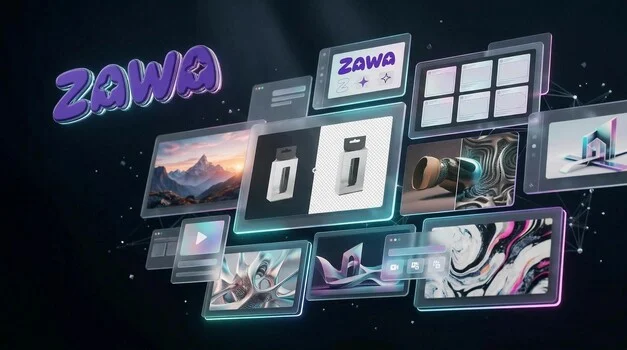
The emergence of artificial intelligence (AI) tools has begun to democratize complex creative processes, including brand development. When Zawa, an AI-powered branding suite, approached Fstoppers for a product review, Spoonley saw an opportune moment to address his long-standing branding aspirations. Zawa promised to streamline the brand creation process, mitigating common pain points and offering a cost-effective alternative to traditional design agencies. This proposition, appealing in its efficiency and potential for innovation, prompted Spoonley to investigate the platform.
Zawa is a web-based AI suite designed to assist users in generating logos and comprehensive brand kits. Its user interface, reminiscent of popular design platforms like Canva, offers a clean and intuitive user experience. The core functionality of Zawa revolves around prompt-based generation. Users provide descriptive input, and the AI system leverages this information to produce a suite of brand assets.
The Rebranding Process with Zawa: A Case Study
Spoonley’s objective was not to create a brand from scratch, but to reimagine his existing logo and brand identity. He uploaded his current logo and a professional photograph of himself, providing Zawa with a foundational dataset. His instruction was straightforward: "This is my existing logo. I want you to rebrand it and then give me a full brand kit. The logo needs to be modern and fresh. Here is an image of me also to help with this task." This approach allowed the AI to analyze his existing visual elements and personal image to inform the new brand direction.
Within approximately one minute of submitting his assets and prompt, Zawa provided an AI analysis of the uploaded images. This analysis typically includes observations on color palettes, shapes, styles, and any discernible themes present in the original logo and the user’s photograph. Following this initial assessment, Zawa requested clarification on which elements Spoonley wished to retain or alter, prompting him to reiterate his desire for a "fresh approach."
AI-Driven Design Direction: A Synthesis of Elements
Zawa’s AI then synthesized Spoonley’s input and its analysis into a proposed design direction. This direction was articulated through a core concept, visual elements, brand tone, and technical specifications for the deliverables.
The proposed Core Concept aimed to establish "A cohesive, modern visual identity that bridges technical media expertise with an approachable, organic teaching style." This succinctly captured the dual nature of Spoonley’s professional persona.
The Visual Elements section would typically outline specific design choices, such as typography, color palettes, and potential graphic motifs that align with the core concept. These elements are derived from the AI’s understanding of modern design trends and the user’s provided assets.
The Brand Tone was defined as "Professional, approachable, contemporary, expert, natural." This set of descriptors guided the AI in generating assets that would evoke the desired perception among Spoonley’s audience.
Finally, the Technical Details specified the range of assets to be generated, including "Social media avatars, YouTube lower thirds, podcast cover art, and photography watermarks." This comprehensive list ensures that the branding is consistent across all digital platforms.
Iterative Logo Design and Rapid Generation
Following the articulation of the design direction, Zawa presented four distinct logo design proposals. These proposals explored a spectrum of styles, ranging from minimalist graphic treatments to more typography-centric designs, all adhering to the established design guide. The speed of this process was remarkable; the entire cycle, from understanding the brief and analyzing assets to presenting structured outputs, was completed within approximately two minutes. This rapid iteration is a significant advantage offered by AI-powered design tools, allowing for quick exploration of various creative avenues.
Spoonley ultimately selected one of the proposed directions, and Zawa then generated a complete logo and brand toolkit based on his choice. This entire process, from initial upload to final output, reportedly took between five and seven minutes. He further experimented by requesting additional options, noting that one particular AI-generated design resonated strongly with his genre of landscape photography. The efficacy of this rapid prototyping and generation process suggests a significant shift in the traditional design workflow.
Beyond Logo Design: Additional AI-Powered Tools
Zawa’s utility extends beyond logo and brand kit generation. The platform incorporates additional tools designed to assist users with content creation and marketing. One such feature allows for the rapid generation of social media posts from a single image upload. Spoonley tested this by uploading images related to his digital location guide and his book, "COAST." Within two minutes, Zawa produced multiple social media post ideas, offering valuable inspiration and fresh content suggestions for online sharing. While these outputs often require minor adjustments, their initial quality and relevance are noteworthy, particularly for users seeking to enhance their online presence.
The platform’s array of tools caters to users with diverse skill levels, presenting a viable solution for those requiring a comprehensive design suite delivered with speed and efficiency.
Pricing and Value Proposition: A Competitive Market
Zawa’s pricing model is designed to be competitive within the AI-powered creative tool market. Compared to the cost of engaging a design agency for even a single task, Zawa’s monthly subscription fee offers significant economic advantages. The use of credits for each request provides a transparent and predictable cost structure, allowing users to manage their expenditure effectively. This credit-based system, while not offering unlimited usage, ensures that the platform’s resources are utilized efficiently.
Underlying Technology: A Symphony of AI Services
The operational backbone of Zawa integrates a combination of advanced AI technologies, including Nano Banana, agent-based systems, Midjourney, and ChatGPT. This synergistic approach enables the platform to process a single central prompt and deliver outputs across multiple use cases. By orchestrating requests to various AI services, Zawa consolidates the functionalities of disparate tools into a single, unified platform, thereby streamlining the user experience and eliminating the need to navigate multiple AI providers.
Limitations and Future Outlook: The Evolving Nature of AI
Despite the impressive capabilities of Zawa, it is essential to acknowledge the current limitations of AI in creative fields. Spoonley’s experience highlighted instances where the AI generated assets that required manual adjustment. In one notable example, when provided with covers for his eight location guides, the AI created its own versions, even introducing new locations not present in the original material. This indicates that while AI can produce strong outputs, it is not yet a fully automated solution for complex or highly specific creative tasks. These limitations are largely reflective of the current state of AI technology rather than inherent flaws in Zawa’s platform itself.
The AI’s performance is intrinsically linked to the quality and clarity of the input provided by the user. Stronger, more detailed prompts and well-prepared assets generally lead to more accurate and desirable outputs.
Concluding Thoughts: A Paradigm Shift in Branding
Spoonley’s exploration of Zawa proved to be an eye-opening experience, demonstrating the potential of AI to significantly reduce the time and effort required for brand development. The platform delivers solid outputs, though the ultimate quality is contingent on the input. Zawa fulfills its promises, producing results that are, on the whole, impressive. The true test of its success lies in its ability to create branding that is indistinguishable from human-designed work, a benchmark that AI is increasingly approaching. For individuals and businesses seeking to establish or refresh their brand identity efficiently and affordably, AI-powered platforms like Zawa represent a compelling and transformative new frontier in creative production. The implications for small businesses, independent creators, and even established corporations are substantial, promising a future where high-quality branding is more accessible than ever before.