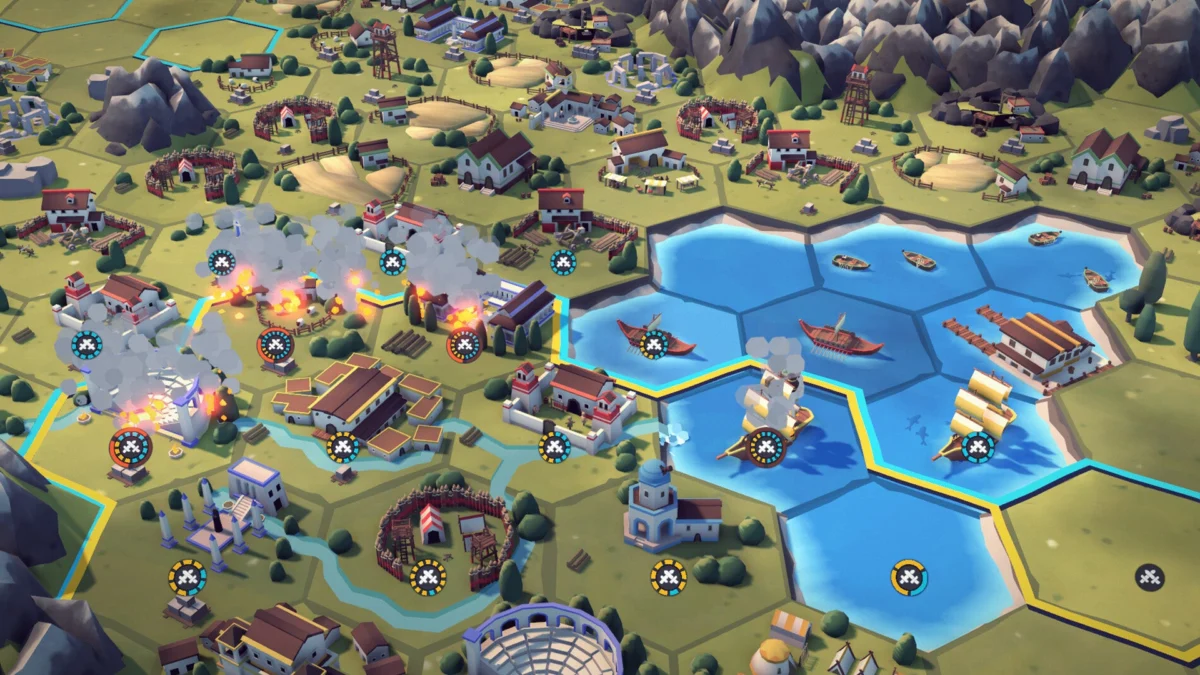
The modern gaming landscape has increasingly gravitated toward expansive, time-intensive titles that require significant investments of effort and attention. From the sprawling maps of Civilization to the complex logistics of Stellaris, the 4X genre—defined by the pillars of eXplore, eXpand, eXploit, and eXterminate—has traditionally demanded sessions lasting several hours or even days. However, a new development from MixedMoonGames, titled Monarchs at Play, seeks to challenge this paradigm by distilling the core mechanics of 4X strategy and city-building into a concise, one-hour gameplay loop.
Redefining the 4X Strategy Genre
The core appeal of the 4X genre has always been the sensation of building a civilization from the ground up, managing vast resources, and navigating complex diplomatic or military waters. Yet, as demographic shifts indicate that the average gamer is increasingly juggling professional responsibilities, household management, and limited leisure time, the "time barrier to entry" for grand strategy games has become a significant deterrent.
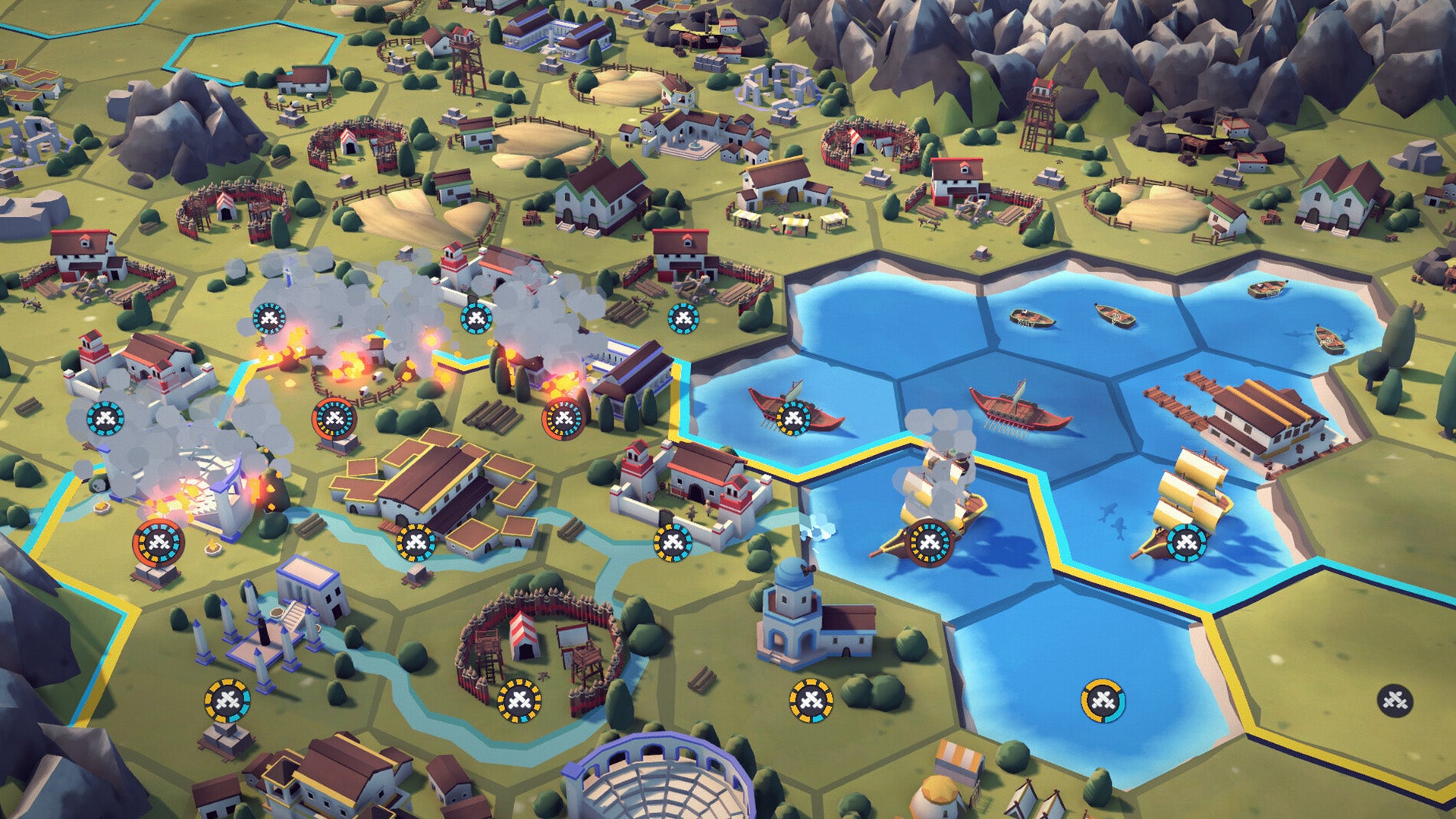
Monarchs at Play addresses this by emphasizing efficiency and rapid decision-making. Players assume the role of a monarch, each possessing unique character-specific abilities and a specialized architectural repertoire. The game utilizes a hexagonal grid system, a staple in strategy gaming, where the primary objective is to optimize tile placement to create synergy-based bonuses. By positioning specific buildings adjacent to one another, players generate the necessary resources to fuel further expansion, effectively creating a "combustion engine" of city-building that accelerates as the game progresses toward its conclusion.
Gameplay Mechanics and Strategic Depth
While the game is designed to be completed within sixty minutes, it does not sacrifice the adversarial nature inherent in 4X titles. The gameplay loop centers on a competitive environment where players are not merely optimizing their own territory but actively obstructing the growth of their neighbors.
The mechanism for interaction is direct and aggressive: players must strategically place structures to sabotage or overwrite the developments of their rivals. This creates a high-stakes dynamic where the sixty-minute timer acts as a pressure cooker, forcing players to prioritize defensive expansion alongside aggressive resource acquisition. The ability to engage in both local AI-driven matches and real-time online multiplayer sessions positions the title as a versatile option for both solo play and competitive gaming, filling a niche between "party games" and "grand strategy simulations."
Industry Context and the "Bite-Sized" Trend
The emergence of Monarchs at Play arrives at a pivotal moment in the independent gaming sector. In recent years, data from platforms like Steam and GOG have highlighted a growing consumer interest in "session-based" games. According to industry analyst reports on player retention, titles that offer a complete narrative or mechanical arc within a single sitting often see higher completion rates than those requiring long-term commitment.
This trend is not isolated to the strategy genre. Roguelikes, deck-builders, and minimalist survival games have all adopted similar philosophies, reducing the "grind" of traditional gaming in favor of high-density decision-making. By limiting the game length to one hour, MixedMoonGames is effectively lowering the barrier to entry, allowing the title to be played during short windows of free time—an approach that aligns with the "micro-gaming" movement that has gained momentum since the rise of mobile and casual gaming on desktop platforms.
Chronology of Development and Public Engagement
The development of Monarchs at Play has followed a transparent path typical of modern indie studios. The project, which emphasizes accessibility through its limited scope, entered the public consciousness through early design logs and community-focused development updates.
- Early Conceptualization: The developers focused on the core challenge of balancing 4X complexity with speed.
- Prototype Phase: Initial testing focused on tile-placement mechanics and ensuring that the "combo" system felt rewarding within a short timeframe.
- Demo Launch: The recent release of a public demo on Steam serves as a critical milestone. This allows the development team to gather telemetry data—tracking how players interact with different monarchs and identifying potential balance issues in the competitive aspect of the game.
- Community Feedback Loop: Through forums and community hubs, early adopters have begun providing feedback on building synergies and the viability of various monarchs, which the developers are currently utilizing to refine the final balance.
Fact-Based Analysis of Market Implications
The implications of a game like Monarchs at Play are significant for the strategy genre. If successful, it could signal a shift in how developers approach 4X design. For years, the industry standard has been "more is better"—more units, more map area, more technological tiers. However, the success of this model proves that "better is better." By stripping away the administrative bloat that often plagues the mid-to-late stages of 4X games, Monarchs at Play maintains a consistent level of intensity.
Furthermore, the game’s focus on direct competition—the destruction of rival buildings—is a departure from the "turtling" strategy often seen in traditional grand strategy, where players can hide behind defensive lines for hours. In this game, interaction is mandatory, which forces a more dynamic and unpredictable playstyle. This is an essential design choice for a short-form game; without it, the hour-long session might feel static or repetitive.
Official Responses and Future Outlook
While a formal release date remains unannounced, the reception of the demo has been largely positive, with players highlighting the intuitive nature of the resource management and the satisfying "snap" of the tile-placement mechanics. Representatives from MixedMoonGames have indicated that they are currently prioritizing stability and UI optimization, ensuring that the competitive multiplayer experience remains smooth regardless of the number of players involved.
The strategy of releasing a demo well ahead of the final launch is a common, yet essential, practice for smaller studios. It serves as both a marketing tool and a stress test. By observing how players interact with the game’s core mechanics, the developers can make informed decisions regarding the final scope of the project. If the current trajectory holds, Monarchs at Play is poised to become a staple in the libraries of strategy enthusiasts who appreciate the genre but lack the time for the industry’s traditional, multi-day investments.
As the industry continues to evolve, the ability to pack a complete, satisfying strategic experience into a single hour will likely become a valued trait. Monarchs at Play represents a thoughtful response to the modern reality of time-poor players, proving that the scale of a game’s ambition need not be measured in hours, but in the density and satisfaction of the decisions it offers. For now, the public is encouraged to engage with the available demo on Steam, providing the necessary data for the developers to finalize what could be a disruptive entry into the competitive strategy market.
While the wait for a full launch continues, the current iteration serves as a compelling proof-of-concept for a genre that has long been overdue for a "quick-play" revolution. As the project progresses, the focus will likely remain on refining the competitive balance, ensuring that every minute spent in-game contributes to the overall strategic satisfaction of the player.