The plight of the northern bald ibis (Geronticus eremita), a species teetering on the precipice of oblivion, has galvanized a dedicated team of biologists who are employing a radical and deeply personal approach to reintroduce this ancient bird to its ancestral migratory pathways. In a bold endeavor, these conservationists are acting as surrogate parents, guiding the last remnants of the species on a journey that could determine their survival.
A Desperate Mission for a Critically Endangered Species
The northern bald ibis, once widespread across North Africa and the Middle East, has suffered a catastrophic population decline. Habitat loss, hunting, and pesticide use decimated their numbers throughout the 20th century, leading to their extinction in Europe by the 17th century and near-total disappearance from the wild in their former ranges. Today, the species is classified as Critically Endangered by the International Union for Conservation of Nature (IUCN), with wild populations numbering only in the low hundreds.
The project, spearheaded by organizations like the Waldrappteam Conservation gGmbH, focuses on establishing a new migratory corridor for the species, reconnecting fragmented populations and establishing new ones in areas where they were once abundant. This ambitious undertaking requires not only scientific expertise but also an extraordinary level of human commitment.
The Birth of a New Generation of Migrators
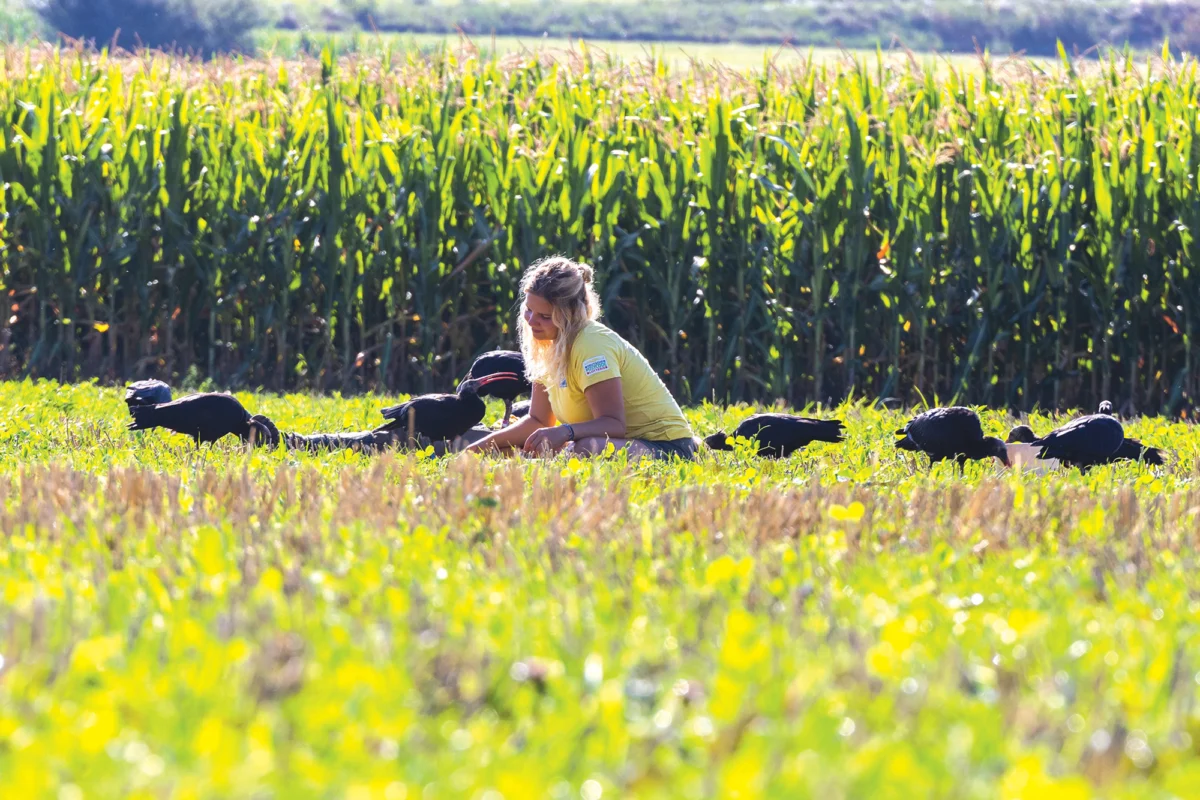
The story of this conservation effort takes a deeply human turn within the confines of an aviary in southern Austria. In April 2023, as the crisp mountain air mingled with the lushness of the valleys, 25-year-old Barbara Steininger experienced a profound sense of anticipation. Her role in this monumental conservation mission was about to begin: she was to become a foster mother to some of the world’s rarest birds. "It’s not an everyday occurrence, especially if your fosterlings are birds," Steininger remarked, her voice tinged with both excitement and trepidation.
Moments later, a zookeeper from Wildlife Park Rosegg placed two featherless, vulnerable chicks into Steininger’s warm, cradling hands. Her freckled face broke into a radiant smile, a beacon of hope amidst the grim reality of the species’ endangered status. This was just the beginning; two chicks down, thirty-three more to go.
From that chilly April day, Steininger and her colleague, 28-year-old Helena Wehner, became the sole caregivers for these young northern bald ibises. Their dedication mirrored that of human parents, requiring constant attention, affectionate encouragement, and an abundance of what can only be described as “baby talk.” The chicks needed to be hand-fed eight times a day. "Just that it’s not breast milk or formula," Wehner explained, detailing the meticulously prepared diet: a blend of shredded beef hearts and mice. This intensive, hands-on approach is crucial for imprinting the young birds with a sense of connection to their human caretakers, a vital step in their subsequent training.
Imprinting and the Genesis of Migration
The process of imprinting is central to the success of this conservation strategy. Northern bald ibises are precocial, meaning they are relatively mature and mobile soon after hatching. However, they also imprint on the first moving object they see, typically their parents, which then guides their behavior, including migration. By acting as surrogate parents, Steininger, Wehner, and other team members ensure that the chicks imprint on them. This imprinting is the foundation upon which the artificial migration training is built.
The chicks are raised in a controlled environment, shielded from predators and provided with optimal nutrition. As they grow, they are gradually introduced to their handlers, who wear distinctive camouflage clothing to avoid imprinting the birds on human faces, which could lead to undesirable interactions with people in the wild. The goal is for the birds to view their human trainers as their flock leaders.
The Courageous Journey: Training for the Skies
The hand-rearing phase is just the prelude to the most challenging and innovative aspect of the project: teaching the ibises a new migratory route. Historically, northern bald ibises migrated south from Europe to Africa for the winter. However, due to human activities and the resulting lack of suitable wintering grounds in their traditional migratory areas, this route has become perilous.
The conservationists have devised a method that leverages the imprinted bond. Once the young ibises are strong enough, they are introduced to ultralight aircraft piloted by the conservationists themselves. These aircraft become the surrogate parents in the sky. The birds, having imprinted on their human caregivers, follow the aircraft as if it were their parent leading them on a journey.
This meticulously planned training takes place over several weeks. The ultralights gradually increase the distance and duration of their flights, acclimatizing the birds to long-distance travel. The ultimate objective is to guide them on their first migratory flight, a journey of hundreds of kilometers, to a carefully selected wintering site. This year, the target destination is Tuscany, Italy, a region with suitable climate and habitat that has been identified as a potential safe haven.
A Chronology of Hope: Milestones in the Project
The reintroduction of the northern bald ibis is not a new endeavor, but this specific approach of artificial migration training has been refined over years of dedicated work. The Waldrappteam, in collaboration with various partners, has been working on this project for over a decade.
- Early 2000s: Initial feasibility studies and pilot projects begin to explore the potential for reintroducing northern bald ibises into Europe.
- 2010s: The Waldrappteam establishes breeding programs and begins implementing the imprinting and hand-rearing techniques. Early attempts at artificial migration training commence, encountering various challenges and learning opportunities.
- 2014: The first successful artificial migration of northern bald ibises from Austria to Italy takes place, marking a significant milestone.
- 2017-2022: Ongoing efforts to refine the training methods, increase the number of successfully migrating birds, and establish suitable wintering grounds. Several groups of ibises are successfully guided to different locations in Italy.
- April 2023: The current cohort of chicks, including those under the care of Barbara Steininger and Helena Wehner, begins their development.
- Late Summer/Autumn 2023: The imprinting and training phase culminates in the guided migration of this new group of ibises towards their wintering grounds in Tuscany.
Supporting Data: The Grim Reality and the Glimmer of Hope
The urgency of this conservation effort is underscored by stark data:
- Global Population: Estimates suggest fewer than 500 breeding pairs of northern bald ibises remain in the wild, primarily in Morocco and Syria.
- European Extinction: The species was declared extinct in Europe by the 17th century.
- Survival Rate: The artificial migration training program aims to increase the survival rate of young birds, which is typically low in the wild due to predation, harsh weather, and lack of food.
- Success Rate: While not every bird successfully completes the migration or survives its first winter, the program has demonstrated a notable success rate in establishing migratory behavior and founding new populations. In previous years, flocks have reached their designated wintering sites, and some have even returned to Austria in the spring, indicating the potential for a self-sustaining migratory cycle.
Statements and Reactions: A Chorus of Support and Concern
Conservationists involved in the project express a mix of optimism and caution. Johannes Fritz, a key figure in the Waldrappteam, has consistently emphasized the critical need for such innovative approaches. "We are not just trying to save a species; we are trying to restore an ecological connection that has been lost for centuries," Fritz has stated in previous communications. "These birds have an innate migratory instinct, but they have lost the knowledge of the route. We are providing that knowledge, with a lot of patience and a little bit of help from our ultralights."
Local authorities and environmental agencies in Austria and Italy have largely supported the initiative, recognizing the ecological and symbolic importance of reintroducing such a charismatic species. However, concerns are often raised regarding the long-term viability of the project and the potential impact on local ecosystems. Ensuring that the reintroduced birds do not negatively affect native wildlife or agricultural practices is a continuous consideration.
Broader Impact and Implications: Rebuilding Ecological Bridges
The success of the northern bald ibis reintroduction project has far-reaching implications beyond the survival of a single species. It serves as a powerful testament to the potential of human ingenuity and dedication in combating biodiversity loss.
- Ecological Restoration: Re-establishing a migratory bird species can have cascading positive effects on ecosystems. These birds play a role in seed dispersal and insect control, contributing to the health and balance of their habitats.
- Scientific Advancement: The project pushes the boundaries of conservation science, offering valuable insights into avian behavior, imprinting, and the feasibility of assisted migration for other endangered species.
- Public Awareness and Engagement: The deeply personal nature of the project, with its "foster mom" narrative, resonates with the public, fostering greater awareness and engagement with conservation issues. It highlights the emotional investment and extraordinary commitment required for successful conservation.
- A Model for Future Interventions: Should this project achieve long-term success, it could provide a replicable model for reintroducing other extirpated species that face similar challenges, especially those with migratory behaviors that have been disrupted by human activity.
The journey of these few dozen northern bald ibises, guided by determined biologists and the hum of ultralight engines, is more than just a conservation effort; it is a daring experiment in ecological restoration and a profound statement of hope. It underscores the critical need for innovative, dedicated, and often deeply personal interventions to pull species back from the brink of extinction and to reweave the intricate tapestry of life on Earth. The success of this endeavor will be measured not only in the number of birds that reach their destination but also in the resilience and adaptability of the species, and in the enduring power of human compassion to safeguard the natural world.