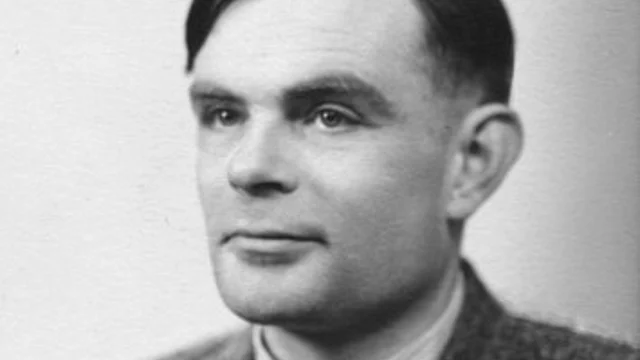
Alan Turing is globally recognized as a foundational figure whose intellectual contributions dramatically reshaped the 20th century and continue to define the 21st. His groundbreaking work, particularly in cryptanalysis during the Second World War, cemented his place in history, but it was his theoretical insights into computation and machine intelligence that laid the bedrock for what we now know as artificial intelligence. In 1950, a mere five years after the war’s end, Turing published his seminal paper, "Computing Machinery and Intelligence," in the philosophical journal Mind. This article not only introduced the famous "Imitation Game," later dubbed the Turing Test, but also offered a profound and remarkably accurate blueprint for the future development of intelligent machines. Turing’s enduring legacy lies in his uncanny ability to foresee the incremental, iterative nature of AI development, advocating for a focus on immediate, solvable problems rather than chasing immediate human-level intelligence. This forward-thinking approach has directly influenced the trajectory of AI, from its nascent theoretical stages to the sophisticated large language models and generative AI systems prevalent today.
Alan Turing: A Life of Genius and Persecution
To fully appreciate the depth of Turing’s 1950 treatise, it is essential to understand the intellectual journey that preceded it. Born in London in 1912, Alan Mathison Turing displayed an exceptional aptitude for mathematics and science from a young age. He attended King’s College, Cambridge, where his groundbreaking work on computability and the concept of a universal machine – later known as the Turing machine – was established. This abstract device, described in his 1936 paper "On Computable Numbers, with an Application to the Entscheidungsproblem," provided the theoretical basis for all modern digital computers, establishing the fundamental limits and capabilities of computation.
However, it was his pivotal role during World War II that thrust him into the annals of practical, high-stakes problem-solving. Recruited by the Government Code and Cypher School (GC&CS) to the clandestine Bletchley Park, Turing became a leading figure in the effort to decrypt German codes, most notably the Enigma machine. The Enigma, used by the German military to encrypt sensitive communications, was considered unbreakable. Turing, along with fellow mathematicians and engineers, designed and developed electro-mechanical machines called "bombes." These machines were instrumental in rapidly testing possible Enigma settings, significantly accelerating the decryption process. The intelligence gleaned from these efforts, known as Ultra, is widely credited with shortening the war by an estimated two to four years, saving countless lives. His innovative spirit and capacity for abstract thought, combined with a pragmatic approach to engineering solutions, were the hallmarks of his wartime service. This experience undoubtedly shaped his perspective on the potential of machines to mimic and even surpass human cognitive abilities.
Tragically, despite his immense contributions to the war effort and to science, Turing’s life was cut short. In 1952, he was prosecuted for homosexual acts, which were illegal in Britain at the time. He accepted chemical castration as an alternative to imprisonment. His security clearance was revoked, and he was barred from continuing his work with government communications. He died in 1954 at the age of 41, with an inquest ruling his death a suicide by cyanide poisoning. In 2009, then-Prime Minister Gordon Brown issued a posthumous apology, and in 2013, Queen Elizabeth II granted him a royal pardon. His story stands as a poignant reminder of the societal prejudices of his era, yet his intellectual legacy remains untarnished and continues to inspire.
"Computing Machinery and Intelligence" (1950): The Blueprint for AI
Following the intensity of his wartime contributions, Turing’s attention turned to the philosophical and practical implications of machine intelligence. His 1950 paper, "Computing Machinery and Intelligence," published in the esteemed journal Mind, stands as a cornerstone in the field of artificial intelligence. At a time when the term "artificial intelligence" had not yet been coined – that would occur six years later at the Dartmouth Workshop – Turing navigated the complexities of defining and assessing machine intelligence using terms like "thinking machines" and "machine intelligence."
The paper famously introduced the "Imitation Game," a thought experiment designed to address the question, "Can machines think?" In this game, an interrogator communicates via text with two unseen entities: a human and a machine. If the interrogator cannot reliably distinguish the machine from the human after a series of questions, then the machine is said to have passed the test. This conceptual framework, later simplified and popularized as the "Turing Test," shifted the focus from defining "intelligence" in abstract philosophical terms to a more pragmatic, observable criterion of behavior. Turing anticipated many objections to his proposal, meticulously addressing arguments from theology, consciousness, mathematical logic, and even the "Lady Lovelace’s objection" (that machines can only do what they are programmed to do). His counter-arguments revealed a profound understanding of potential future machine capabilities, including learning and adaptation.
Crucially, Turing’s paper was not merely a theoretical exercise. He offered a clear pathway for achieving what he called "proficient AI." He suggested that rather than attempting to program machines to mimic adult human intelligence directly, it would be more fruitful to simulate the learning process of a child. He envisioned "learning machines" that could be trained, much like a child is educated, acquiring knowledge and developing capabilities over time. "Instead of trying to produce a programme to simulate the adult mind," Turing wrote, "why not rather try to produce one which simulates the child’s? If this were then subjected to an appropriate course of education one would obtain the adult brain." This idea of iterative development, where basic "thinking machines" are built and then progressively refined and educated, underpins much of modern machine learning and deep learning paradigms. His emphasis was on solving "immediate challenges" and building foundational components that could be "iterated on in the future," a strategy that has proven remarkably prescient.
The Genesis of AI: From Cybernetics to Dartmouth
Turing’s insights, while groundbreaking, emerged within a broader intellectual current exploring the nature of control, communication, and complex systems. The term "cybernetics," coined by Norbert Wiener in 1948, was then the dominant paradigm for studying feedback and control systems in biological, mechanical, and electronic contexts. Turing’s work aligned with these early explorations, pushing the boundaries from mere control to genuine intelligence.
The formal birth of "Artificial Intelligence" as a distinct field is often traced to the summer of 1956, at a workshop held at Dartmouth College. Organized by John McCarthy, Marvin Minsky, Nathaniel Rochester, and Claude Shannon, the Dartmouth Summer Research Project on Artificial Intelligence brought together leading researchers to discuss "the conjecture that every aspect of learning or any other feature of intelligence can in principle be so precisely described that a machine can be made to simulate it." It was McCarthy who coined the term "Artificial Intelligence" for this workshop, distinguishing it from cybernetics and other related fields. This event marked a crucial pivot, establishing AI as an independent discipline with its own goals and methodologies, directly building on the conceptual foundations laid by Turing.
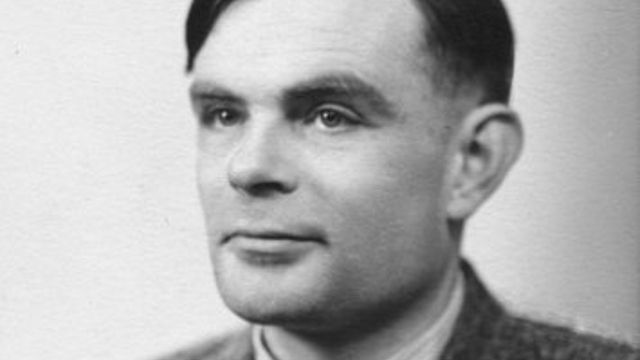
A Chronology of AI Development: Triumphs, Winters, and Renaissance
The history of AI since Turing’s paper can be understood as a series of cycles, oscillating between periods of intense optimism and significant breakthroughs, followed by "AI winters" where progress stalled and funding waned.
Early Optimism and the First AI Winter (1950s-1970s)
The initial decades following the Dartmouth workshop were characterized by immense optimism and significant theoretical breakthroughs. Early AI programs like Arthur Samuel’s checkers player (1959), which learned from experience, and ELIZA (1966), a natural language processing computer program, demonstrated nascent capabilities that seemed to promise rapid progress towards human-level intelligence. ELIZA, developed by Joseph Weizenbaum at MIT, could engage in rudimentary conversations, often convincing users of its "understanding," albeit through simple pattern matching and rule-based responses. However, the complexity of real-world problems and the limitations of early computing power soon became apparent. Researchers found that scaling up these early systems was incredibly difficult, leading to what is known as the "first AI winter" in the mid-1970s. Funding dwindled, and public perception of AI became skeptical as promised breakthroughs failed to materialize. The Lighthill report in the UK (1973) and the DARPA cuts in the US significantly impacted academic research.
The Revival of Expert Systems and the Second AI Winter (1980s-Early 1990s)
The 1980s saw a resurgence of interest in AI, largely driven by the development of "expert systems." These programs were designed to emulate the decision-making ability of a human expert in a specific domain, such as medical diagnosis (MYCIN, developed at Stanford in the mid-1970s) or configuring computer systems (R1/XCON, developed by Digital Equipment Corporation and Carnegie Mellon University in 1978). Expert systems proved commercially viable in niche applications, leading to renewed investment, particularly in Japan’s ambitious Fifth Generation Computer Systems project. However, these systems were brittle, difficult to maintain, and lacked common sense reasoning, once again hitting a wall when faced with broader, more complex problems. Their reliance on handcrafted rules meant they struggled with ambiguity and generalization. This led to a "second AI winter" in the late 1980s and early 1990s, as the limitations of symbolic AI became evident and funding again dried up.
The Rise of Machine Learning and Statistical AI (Mid-1990s-2000s)
Despite the setbacks, research continued, shifting away from purely symbolic, rule-based approaches towards statistical methods and machine learning. This period saw advancements in neural networks, which, though conceived much earlier (e.g., perceptrons in the 1950s), began to gain traction with improved algorithms like backpropagation, rediscovered and popularized by researchers like Geoffrey Hinton. The availability of larger datasets and increased computational power made these data-driven approaches more feasible. Key developments included support vector machines (SVMs), decision trees, and ensemble methods, which found practical applications in areas like spam filtering, credit scoring, and search engine ranking. Turing’s earlier emphasis on "learning machines" began to find its practical realization, as algorithms learned from data rather than being explicitly programmed with every rule.
The Deep Learning Revolution and Generative AI (2010s-Present)
The most transformative period in AI began in the early 2010s with the advent of "deep learning." This subfield of machine learning utilizes artificial neural networks with multiple layers (deep neural networks) to learn complex patterns from vast amounts of data. Several factors converged to fuel this revolution:
- Big Data: The proliferation of the internet and digital devices led to an explosion of accessible data (images, text, audio), essential for training deep models.
- Computational Power: The rise of Graphics Processing Units (GPUs), initially designed for video games, proved highly efficient for the parallel computations required by deep learning, enabling the training of much larger and deeper networks.
- Algorithmic Advancements: Innovations in neural network architectures (e.g., convolutional neural networks for image recognition, recurrent neural networks for sequence data) and training techniques (e.g., ReLU activation functions, dropout regularization) significantly improved performance and stability.
A particularly significant breakthrough occurred in 2017 with the introduction of the Transformer architecture by Google researchers in their paper "Attention Is All You Need." This novel architecture, characterized by its "attention mechanism," allowed models to process input data in parallel, dramatically improving efficiency and scalability, especially for sequential data like natural language. Transformers quickly became the backbone for Large Language Models (LLMs) like Google’s BERT and, most famously, OpenAI’s GPT series (Generative Pre-trained Transformer).
The launch of ChatGPT by OpenAI in late 2022 marked a public inflection point. Built upon the GPT-3.5 architecture, ChatGPT demonstrated unprecedented capabilities in generating human-like text, answering complex questions, writing code, and engaging in coherent conversations across a vast array of topics. This generative AI paradigm has since exploded, leading to tools that can create images (DALL-E, Midjourney), music, and even video from simple text prompts, fundamentally changing how humans interact with digital information and creative processes. The global AI market size, valued at approximately $150 billion in 2023, is projected to grow exponentially, reaching over $1.8 trillion by 2030, driven largely by the proliferation of generative AI applications across all sectors.
The Turing Test Revisited: Has It Been Beaten?
Turing’s "Imitation Game" has remained a benchmark for AI progress for over seven decades. The question of whether the Turing Test has been "beaten" is a complex one, sparking considerable debate among AI researchers and philosophers. While some chatbots, like Eugene Goostman (which simulated a 13-year-old Ukrainian boy), have occasionally convinced a minority of human judges in specific limited contexts, these events are often met with skepticism from the AI community. Critics argue that such instances typically rely on clever trickery, exploiting human biases, or operating within narrowly defined parameters, rather than demonstrating genuine understanding or intelligence. For example, Eugene Goostman’s success was attributed to its persona’s designed quirks (being a non-native English speaker and a teenager), which allowed it to evade difficult questions.
However, the capabilities of modern large language models, such as GPT-4, have forced a significant re-evaluation. These models exhibit an astonishing ability to generate coherent, contextually relevant, and even creative text across a vast array of topics, making it incredibly difficult for an average human to distinguish their output from human-generated content in many scenarios. While experts still argue that current LLMs lack true consciousness, self-awareness, or common sense reasoning that a human possesses, their performance has certainly blurred the lines of the Turing Test. Some prominent figures in the AI field suggest that, practically speaking, for many interactive tasks, these systems already pass a functional version of the test, at least for a significant portion of the population.