The departure of David Limp, Amazon’s Senior Vice President of Devices and Services, marks a significant turning point for the tech giant’s hardware division and the broader smart home ecosystem it helped pioneer. As Limp prepares to retire after more than 13 years with the company, his exit coincides with the upcoming 10th anniversary of the Amazon Echo and Alexa, a milestone that invites a critical evaluation of whether the voice-assistant model and the connected home can transition from a subsidized experiment into a sustainable, independent industry. The shift in leadership comes at a time when the smart home market is bifurcating into high-end, integrated infrastructure—such as smart doors and advanced waste management systems—and a regulatory environment increasingly focused on cybersecurity and interoperability standards.
The End of an Era: David Limp’s Retirement and Amazon’s Strategy Shift
David Limp has been the architect of Amazon’s "Devices and Services" strategy since the early days of the Kindle, overseeing the explosive growth of the Echo line, Fire TV, and the acquisition of Ring and Eero. His retirement follows a series of high-profile executive departures under CEO Andy Jassy, who has been aggressively auditing Amazon’s various business units for profitability.
Historically, Amazon’s hardware strategy operated on a "razor and blades" model: selling Echo devices at near-cost to get Alexa into as many homes as possible, with the hope that users would eventually drive revenue through voice-based shopping or subscriptions. However, internal reports throughout late 2022 and 2023 suggested that the Devices and Services division was facing annual losses exceeding $10 billion. While Alexa became a household name, the monetization of voice commands remained elusive, as most users utilized the assistant for low-value tasks like setting timers, playing music, or checking the weather rather than purchasing consumer goods.
Limp’s departure signifies a potential narrowing of focus for Amazon. The company has already undergone significant layoffs within the Alexa division, signaling that the next decade of the smart home will likely prioritize financial viability over market-share expansion at any cost.
A Decade of Alexa: From Novelty to Infrastructure
In late 2014, the Amazon Echo was introduced as an invite-only product, appearing to many as a glorified Bluetooth speaker. Ten years later, voice assistants have become the primary interface for the smart home. According to industry data, over 500 million Alexa-enabled devices have been sold globally. Yet, the anniversary of the Echo prompts a difficult question: Has the smart home truly evolved, or has it merely become more cluttered?
The early promise of the smart home was "ambient intelligence"—a home that anticipates a resident’s needs. While Alexa succeeded in providing a centralized control point, the fragmentation of the market often left consumers frustrated by "walled gardens" and devices that failed to communicate with one another. As the industry moves into 2024, the focus is shifting away from the assistant itself and toward the underlying protocols that make the home function, such as the Matter standard and the resilience of local control.
The Luxury Turn: Integrated Smart Infrastructure
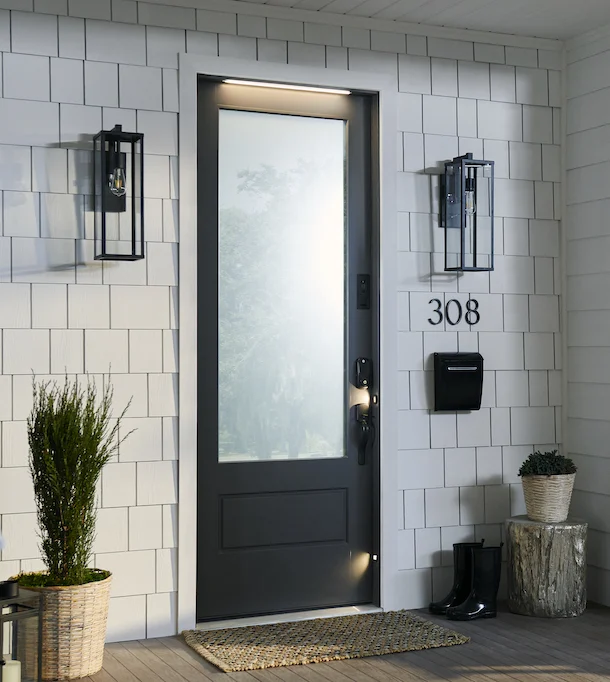
Evidence of a maturing—and increasingly expensive—market can be seen in the latest hardware offerings from industry veterans. Masonite, a leader in door manufacturing, recently announced that its "M-Pwr" smart doors are now available at retail through Home Depot. Unlike a standard door with a smart lock retrofitted onto it, the Masonite M-Pwr is a fully integrated system that is hardwired into the home’s electrical grid. It features built-in power backup, LED welcome lights, a Ring video doorbell, and a Yale smart lock.
With a price tag that can reach several thousand dollars, the Masonite door represents a shift toward "smart infrastructure." This is no longer a hobbyist’s DIY project; it is a permanent fixture of the home’s envelope. Similarly, the Mill kitchen system, a high-tech composting bin created by Nest co-founder Matt Rodgers, highlights a trend toward subscription-based hardware. The Mill bin dries and grinds food waste, which is then shipped back to the company to be turned into chicken feed.
These products suggest that the next phase of the smart home may be less about $30 smart plugs and more about high-margin, integrated systems that solve specific domestic problems, albeit at a price point that remains out of reach for the average consumer.
Strengthening the Foundation: FCC Cybersecurity Labeling
As smart devices become more integrated into the home, the risks associated with data privacy and hacking have moved to the forefront of the national conversation. In response, the Federal Communications Commission (FCC) has released a Notice of Proposed Rule Making (NPRM) for a new IoT (Internet of Things) cybersecurity labeling program.
Modeled after the "Energy Star" program, the proposed "U.S. Cyber Trust Mark" would appear on products that meet specific security criteria, such as strong default passwords, data encryption, and regular software updates. The FCC has opened a 30-day window for public and industry comment, a move seen as essential for restoring consumer confidence in a market plagued by news of hacked cameras and data leaks.

Industry analysts suggest that such a label could become a prerequisite for major retailers, effectively weeding out low-quality, insecure devices that have flooded the market over the last decade.
Industrial Vulnerabilities and the Need for Robust Security
The urgency of the FCC’s initiative is underscored by recent findings from Microsoft’s security research team. Microsoft recently identified a series of vulnerabilities in industrial equipment—specifically those using the CODESYS software framework—that could potentially allow bad actors to shut down power plants or manufacturing facilities.
While these vulnerabilities affect industrial control systems (ICS) rather than consumer smart bulbs, the underlying lesson is the same: as more physical infrastructure is connected to the internet, the surface area for cyberattacks grows exponentially. The "S" in IoT, as the industry joke goes, stands for security—implying that it is often non-existent. The push for better labeling and more robust industrial standards is a recognition that the "move fast and break things" era of the smart home must end to ensure public safety.
The Z-Wave Renaissance and Trident IoT
Amidst the hype surrounding Matter—the new interoperability standard backed by Apple, Google, and Amazon—the older, more established Z-Wave protocol is undergoing a resurgence. Trident IoT, a new company founded by industry veterans including Mariusz Malkowski, has emerged as a secondary source for Z-Wave silicon.
For years, the Z-Wave ecosystem was largely dependent on a single chip provider, Silicon Labs. By introducing a second source of chips, Trident IoT aims to stabilize the supply chain and drive down costs for manufacturers. Furthermore, Trident IoT is focusing on Z-Wave Long Range (ZWLR), which promises to extend the reach of smart home devices to up to a mile, making it ideal for large estates, multi-dwelling units, and commercial applications.
The emergence of Trident IoT also addresses the "bridge" problem. While Matter is designed to be the new universal language, millions of existing Z-Wave devices cannot be abandoned. Companies like Trident are working to ensure that Z-Wave and Matter can coexist through bridging technologies, allowing the reliability and range of Z-Wave to complement the broad compatibility of Matter.
Local Control: The Case for the Homey Pro
As consumers become more weary of cloud dependencies—where a server outage at a company’s headquarters can render a home’s lights unswitchable—there is a growing demand for local processing. The Homey Pro, a high-end smart home hub, has recently gained traction for its ability to process automations locally.
Unlike the Amazon Echo, which relies heavily on the cloud to interpret voice commands and execute routines, the Homey Pro keeps the data within the four walls of the home. While the device is more expensive than a standard smart speaker, it offers support for a staggering array of protocols, including Zigbee, Z-Wave, Wi-Fi, Bluetooth, Infrared, and Matter. Reviews of the device suggest that while the setup requires more technical proficiency than an Alexa-based home, the result is a faster, more private, and more reliable system.
Implications for the Future of the Smart Home
The convergence of these events—the leadership change at Amazon, the rise of luxury smart infrastructure, new federal security mandates, and the shift toward local control—indicates that the smart home is entering its "adult" phase. The novelty of asking a cylinder to tell a joke is fading, replaced by a serious focus on how connectivity can improve home efficiency, security, and sustainability.
The departure of David Limp may signify that Amazon is ready to let Alexa "stand on its own," moving away from heavy subsidies and toward a model where the value of the service justifies its cost. Meanwhile, the entry of players like Masonite and Trident IoT suggests that the industry is moving deeper into the bones of the house.
For the consumer, the next few years will likely bring more clarity in the form of security labels and better interoperability, but also higher costs as the industry moves away from subsidized hardware. The smart home is no longer just a collection of gadgets; it is becoming a fundamental component of modern residential architecture, requiring the same level of scrutiny, security, and investment as the plumbing and electrical systems that preceded it.