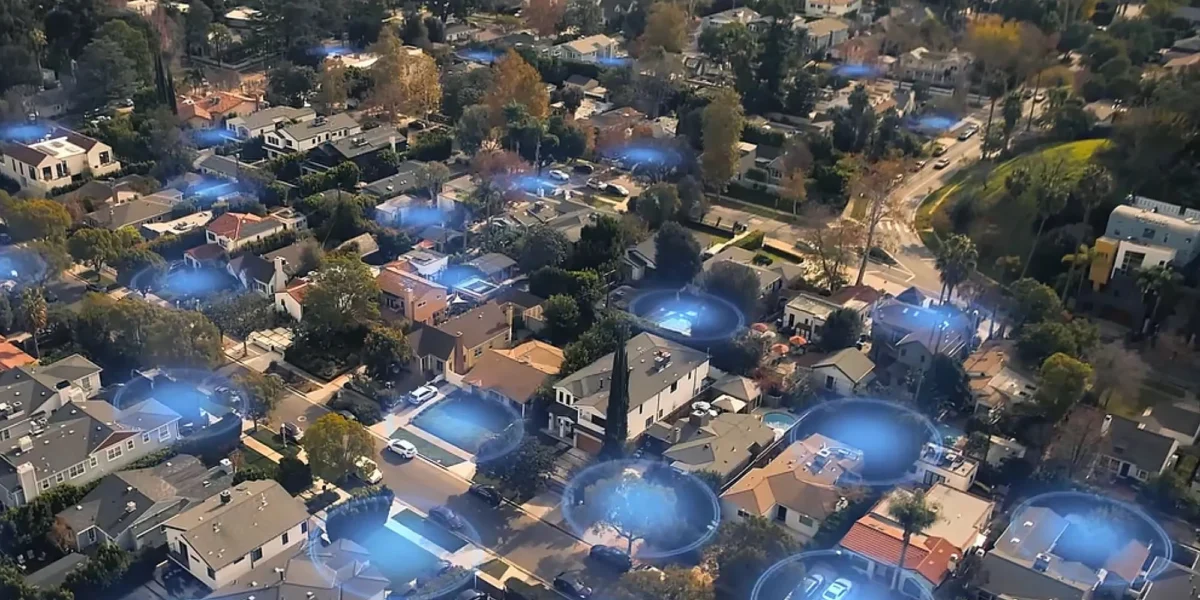
The expansion of Amazon’s Ring "Search Party" feature, intended to help pet owners locate missing dogs through a network of smart home cameras, has encountered a wave of public and political criticism following its high-profile promotion during the Super Bowl. While the company marketed the tool as a community-driven solution for pet recovery, privacy advocates and lawmakers have labeled the move as "dystopian," arguing that it establishes a technological framework for a sophisticated surveillance dragnet. The backlash comes at a sensitive time for Amazon, as the company faces increasing scrutiny over its facial recognition capabilities and its historical relationship with law enforcement agencies.
The Search Party feature utilizes artificial intelligence to scan video feeds for animals matching a description provided by a pet owner. When the system identifies a potential match, it alerts the camera owner, who can then confirm the sighting and contact the pet owner through the Ring app. In a significant strategic shift, Amazon recently opened the feature to individuals who do not own Ring hardware, allowing anyone with a smartphone to join the "Neighbors" network and participate in the search. Despite the company’s efforts to frame the initiative as a benevolent neighborly service, the rollout has reignited a fierce debate over the normalization of constant residential surveillance.
The Mechanics of Search Party and the Super Bowl Campaign
Amazon’s decision to air a 30-second advertisement during the Super Bowl—one of the most expensive and highly viewed television events in the world—underscores the company’s commitment to integrating Ring into the daily lives of suburban and urban residents. The advertisement depicted a community coming together to find a lost dog, utilizing the Ring app to turn a neighborhood’s collective camera infrastructure into a real-time search engine.
![‘Dystopian’ Ring Search Party feature sparks public backlash [Video]](https://i0.wp.com/9to5mac.com/wp-content/uploads/sites/6/2026/02/Tone-deaf-Ring-Search-Party-feature-sparks-public-backlash.jpeg?resize=1200%2C628&quality=82&strip=all&ssl=1)
Jamie Siminoff, the founder and chief inventor of Ring, defended the expansion of the service, stating that the technology offers a modern alternative to traditional search methods. "Before Search Party, the best you could do was drive up and down the neighborhood, shouting your dog’s name in hopes of finding them," Siminoff said in a statement. He emphasized that by making the feature available to non-Ring owners, the company is "empowering" communities to help find lost pets more effectively than ever before. According to company data, the Search Party feature has reportedly assisted in returning more than one dog per day since its initial limited launch.
However, the technical architecture of the feature is what has caused the most alarm. The system relies on "Search Party for Dogs," an AI-driven algorithm that processes visual data to identify specific breeds and markings. Critics point out that the underlying technology used to identify a canine is fundamentally similar to the technology used for human facial recognition, a feature that Ring has also been integrating into its product line.
A Chronology of Ring’s Surveillance Evolution
To understand the current backlash, it is necessary to examine the trajectory of Ring’s development since its acquisition by Amazon in 2018 for approximately $1 billion. What began as a simple video doorbell has evolved into a comprehensive security ecosystem that critics argue facilitates "surveillance creep."
- 2013–2017: Originally known as Doorbot, the company gained popularity for its ability to allow homeowners to see and speak to visitors via their smartphones.
- 2018: Amazon acquires Ring and begins integrating it into the Alexa ecosystem, significantly expanding its market reach.
- 2019: The launch of the "Neighbors" app allows users to share video clips and report "suspicious activity" to their local communities. This period saw the first major wave of criticism regarding racial profiling and the "gamification" of neighborhood watch programs.
- 2020–2022: Ring establishes partnerships with over 2,000 law enforcement agencies across the United States, allowing police to request footage from users without a warrant, though users could technically decline.
- 2024–2025: Amidst rising privacy concerns, Ring announces changes to its police partnership program, requiring law enforcement to use formal legal processes for most footage requests. However, the company simultaneously pushes forward with advanced AI features.
- 2026: The rollout of human facial recognition for Ring doorbells and the national expansion of the Search Party feature via a Super Bowl advertisement.
Public and Political Backlash
The reaction to the Search Party advertisement was swift and largely negative across social media and among privacy watchdog groups. Many observers noted the irony of using a "cute" concept like finding a lost puppy to mask the expansion of a surveillance network that could easily be repurposed for more controversial uses.
![‘Dystopian’ Ring Search Party feature sparks public backlash [Video]](https://9to5mac.com/wp-content/uploads/sites/6/2026/02/Tone-deaf-Ring-Search-Party-feature-sparks-public-backlash.jpeg?quality=82&strip=all&w=1600)
Senator Ed Markey, a long-time critic of Amazon’s privacy practices, was among the most prominent voices to speak out. In a public statement, Markey highlighted the recent rollout of human facial recognition by Ring, noting that the company has been evasive regarding user consent. "What this ad doesn’t show: Ring also rolled out facial recognition for humans," Markey stated. "Their answer? They won’t ask for your consent. This definitely isn’t about dogs—it’s about mass surveillance."
Journalistic outlets and technology analysts have echoed these sentiments. 404 Media described the feature as "horrifyingly dystopian," noting that it does not require a leap of the imagination to see how a "dog dragnet" could be tweaked to track "suspected criminals, undocumented immigrants, or others deemed ‘suspicious’ by people in the neighborhood." The publication pointed out that the "Neighbors" app has already been criticized for years as a platform where racial biases influence what residents consider "suspicious."
The Climate of Surveillance and Civil Rights
The controversy is exacerbated by the current political and social climate in the United States. Reports of nationwide protests against Immigration and Customs Enforcement (ICE) operations have made the public particularly sensitive to technologies that could facilitate the tracking of individuals. Privacy advocates argue that once a neighborhood is saturated with AI-powered cameras capable of identifying specific subjects, the infrastructure for state-sponsored or community-led tracking of marginalized groups is effectively in place.
The "Neighbors" app, which serves as the hub for the Search Party feature, has a documented history of controversy. Studies by civil rights groups have previously shown that the app can amplify suburban anxieties and lead to the disproportionate reporting of people of color. By encouraging users to "be a hero" and engage in community-wide searches, critics argue that Amazon is encouraging a culture of constant monitoring that erodes the expectation of privacy in public and semi-public spaces.
![‘Dystopian’ Ring Search Party feature sparks public backlash [Video]](https://9to5mac.com/wp-content/themes/ninetofive/dist/images/google-preferred-source-badge-dark.png)
Technical Implications and Data Privacy
From a technical perspective, the Search Party feature raises questions about data retention and the training of AI models. For the system to identify a specific dog, it must process vast amounts of video data from numerous cameras. It is unclear how long this data is stored, who has access to the metadata generated by the AI, and whether the images of people captured during these searches are being used to further refine Amazon’s human facial recognition algorithms.
Industry analysts suggest that Amazon’s strategy is to create a "network effect" where the value of the Ring ecosystem increases as more people join. By opening the app to non-hardware owners, Amazon is effectively expanding its data collection footprint beyond the boundaries of its paying customers. This move allows the company to map neighborhoods with greater density, filling in the "blind spots" between houses that already have Ring doorbells.
Implications for the Future of Smart Home Technology
The backlash against the Search Party feature may signal a turning point in the public’s relationship with smart home security. While the convenience of these devices is undeniable, the social cost is becoming a primary concern for a growing segment of the population.
The primary implications of this controversy include:
![‘Dystopian’ Ring Search Party feature sparks public backlash [Video]](https://9to5mac.com/wp-content/themes/ninetofive/dist/images/google-preferred-source-badge-light.png)
- Regulatory Scrutiny: Increased pressure on the Federal Trade Commission (FTC) and state legislatures to enact stricter biometrics and facial recognition laws that would require explicit opt-in consent.
- Market Shifts: A potential rise in demand for "privacy-first" security solutions that process data locally on the device rather than in the cloud.
- Community Polarization: The potential for increased tension within neighborhoods between those who embrace "crowdsourced security" and those who view it as an infringement on their civil liberties.
As of the time of publication, Amazon has not announced any plans to scale back the Search Party feature or the Neighbors app expansion. The company continues to maintain that its tools are designed to keep communities safe and connected. However, the "Search Party" incident serves as a stark reminder of the thin line between community assistance and the construction of a permanent, AI-powered surveillance state. The debate highlights a fundamental question for the modern era: how much privacy are citizens willing to trade for the hope of finding a lost pet or a stolen package? For now, the answer from a vocal portion of the public appears to be that the price is too high.