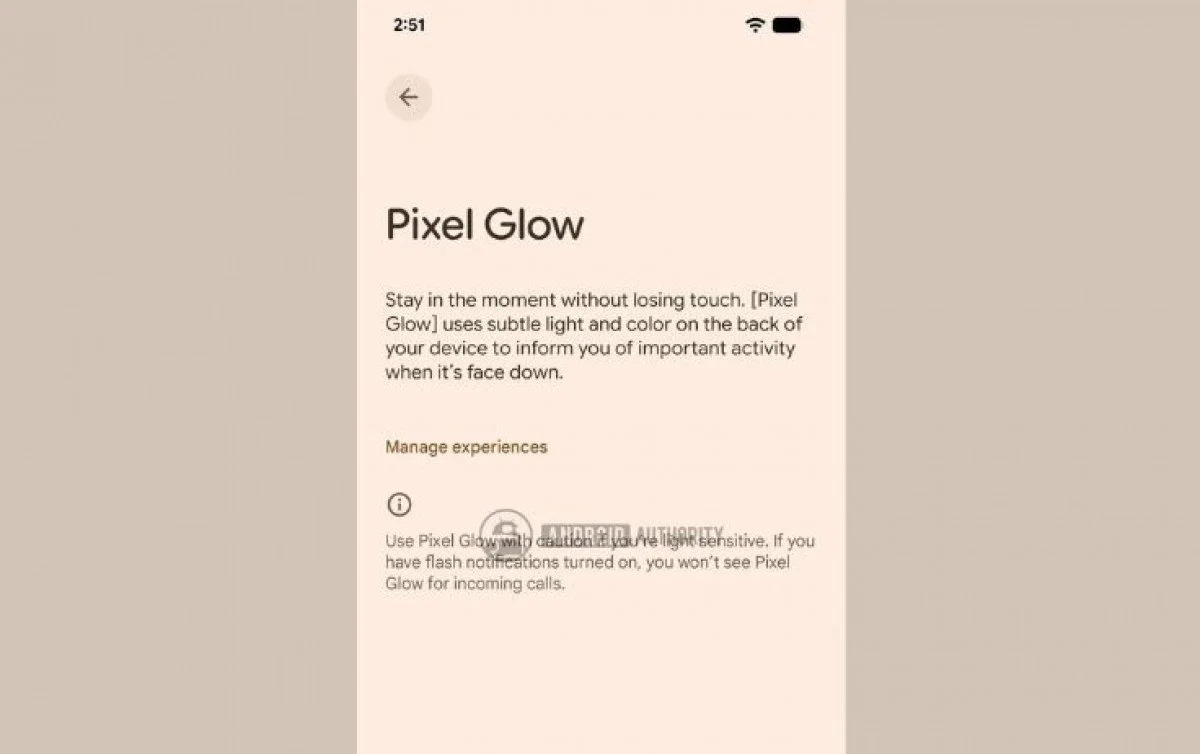
The discovery, detailed in a recent report derived from an analysis of the latest Android beta, points towards Pixel Glow functioning as an advanced LED-based notification system. This concept harks back to the utilitarian front-facing notification lights prevalent on many older smartphones, albeit re-imagined for a modern aesthetic and expanded functionality on the rear of the device. The core utility of Pixel Glow appears to be providing visual alerts when a smartphone is placed face down, leveraging colored lights to signify incoming alerts without requiring the user to flip the device over or activate the main screen.
A screenshot accompanying the initial report offered a glimpse into the operational parameters of Pixel Glow. It explicitly states that the feature will utilize "colored lights on the rear panel to notify users of incoming alerts," particularly when the phone is positioned with its display facing downwards. This strategic design choice aims to offer a discreet yet effective notification mechanism, allowing users to stay informed without constant screen interaction. Furthermore, the analysis of the beta code indicates a dependency on "dedicated hardware lighting" for Pixel Glow to function, implying that this is not merely a software trick but requires specific physical components embedded within the device’s chassis.
Intriguingly, the same code strings that reveal the existence of Pixel Glow also hint at a broader range of applications beyond simple notifications. These use cases include subtle lighting effects for incoming calls from "favorite contacts," offering a personalized visual cue for important communications. The system is also suggested to provide "visual feedback during hands-free operation," which could integrate with voice assistants or other gesture-based interactions. Moreover, there are references to "subtle lights when interacting with Gemini," Google’s AI assistant, indicating a deeper integration with the device’s intelligent capabilities. This multi-faceted approach suggests Google intends Pixel Glow to be more than just a notification light, positioning it as an integral part of the overall user experience.
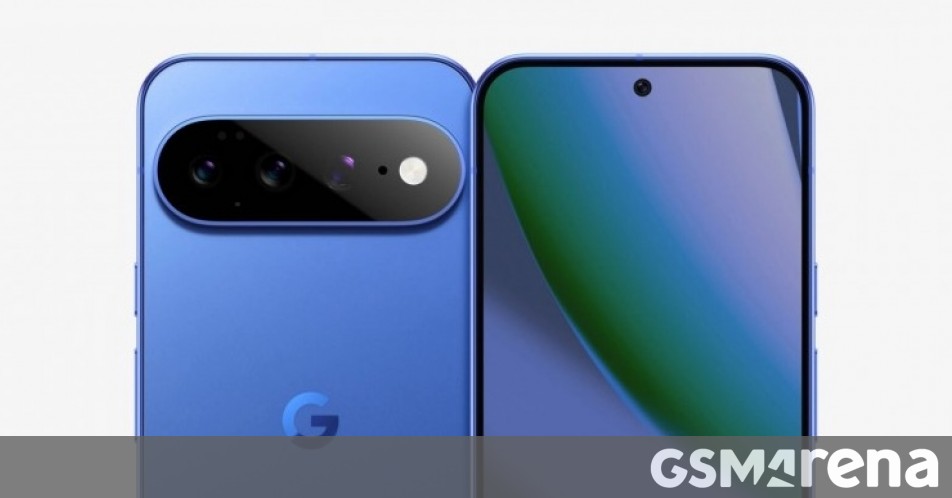
However, a significant discrepancy emerges when considering recent leaks pertaining to Google’s upcoming flagship smartphones. Leaked CAD-based renders of the Pixel 11, Pixel 11 Pro, and Pixel 11 Pro XL, which typically offer highly accurate representations of device designs based on manufacturing schematics, do not visually depict any discernible rear lighting hardware. This contradiction raises immediate questions about the implementation strategy: either the leaked renders are incomplete or misleading regarding this specific feature, or Google has devised an exceptionally subtle or innovative method to integrate the dedicated hardware lighting that is not externally visible in conventional renders. This tension between software evidence and hardware leaks sets the stage for considerable anticipation regarding Google’s official announcements.
Historical Context: The Evolution of Smartphone Notifications
The potential introduction of Pixel Glow marks an interesting full circle in the evolution of smartphone notification systems. Dedicated notification LEDs were a staple of early and mid-era smartphones, particularly prominent on devices from HTC, Samsung, LG, and Google’s own Nexus line. These small, often multi-colored lights, typically positioned near the earpiece on the front of the device, provided instant, at-a-glance information about unread messages, missed calls, low battery, or other alerts without the need to wake the phone’s entire display. Their simplicity, low power consumption, and effectiveness made them a beloved feature for many users.
As smartphone designs evolved, particularly with the advent of larger, edge-to-edge displays and the push for minimal bezels, dedicated notification LEDs began to disappear. They were largely superseded by more sophisticated, software-driven solutions. The "Always-On Display" (AOD) emerged as a dominant alternative, allowing a portion of the screen to remain illuminated with essential information like time, date, and notification icons, consuming less power than waking the full display. Alongside AODs, ambient display features that briefly light up the screen upon receiving a notification, and edge lighting effects (as seen on some Samsung devices), became common. While these solutions offered more information and aesthetic flair, they sometimes lacked the discreet, persistent visual cue that a simple LED provided, particularly in situations where a quick glance was preferred over screen activation.
In recent years, a notable resurgence of rear-panel lighting has been championed by Nothing Technology with its "Glyph Interface" on the Nothing Phone (1) and Phone (2). This innovative feature uses a series of customizable LED strips on the transparent rear panel to indicate notifications, charging status, incoming calls, and even act as a fill light for the camera. The Glyph Interface has been praised for its unique aesthetic, functional utility, and the ability to offer a new form of digital well-being by allowing users to understand notifications without constantly looking at their screen. Google’s exploration of Pixel Glow, therefore, can be seen as both a nod to the past utility of notification lights and a contemporary response to innovative design trends exemplified by Nothing, suggesting a renewed focus on multi-sensory user interfaces beyond just the front display.
Technical and Implementation Challenges
The successful realization of Pixel Glow, particularly given the "dedicated hardware lighting" requirement, presents several technical and design challenges for Google. The most immediate is reconciling the beta code’s evidence with the lack of visible hardware in leaked Pixel 11 renders.
Potential Implementation Strategies:
- Under-Display or Under-Glass LEDs: Google could employ micro-LED arrays or thin, flexible LED strips integrated beneath the glass back panel, similar to how under-display cameras are implemented. This would allow the lights to be invisible when off and illuminate subtly through the glass when active. This approach would be technically complex but aligns with a desire for a clean aesthetic.
- Translucent or Semi-Transparent Panel Sections: Certain sections of the rear panel, perhaps around the camera bar or logo, could be designed with a slightly translucent material that allows light to pass through from internal LEDs. This would require precise material engineering and integration.
- Light Pipes: A system of internal light pipes could channel light from small, hidden LEDs to specific points on the rear surface, creating the desired "glow" without overt external hardware.
- Integration with Existing Components: Less likely, but theoretically, existing components like the camera flash module could be repurposed or enhanced to emit colored light, though this would limit the customizability and spatial distribution suggested by the code.
Power Consumption and Battery Life: Any additional lighting system, especially one designed for persistent or frequent use, inevitably draws power. Google would need to optimize Pixel Glow for energy efficiency to prevent significant impact on battery life. This would involve intelligent power management, efficient LED technology, and perhaps limitations on brightness or duration based on battery levels. The balance between functionality and endurance will be crucial for user acceptance.
Software Integration and Customization: The rich array of proposed use cases (favorite contacts, hands-free, Gemini) indicates a deep software integration requirement. Pixel Glow would need robust APIs for developers, allowing third-party applications to leverage its capabilities. The level of user customization (colors, patterns, intensity) will also be key to its appeal. Google’s strength in software integration, particularly with Android and its AI capabilities, bodes well for this aspect.
Manufacturing Complexity and Cost: Incorporating dedicated lighting hardware, especially if it involves intricate under-glass solutions or specialized materials, could add complexity to the manufacturing process and potentially increase the bill of materials (BOM). This could translate to higher retail prices for Pixel devices, a factor Google must weigh against the feature’s perceived value.
Durability and Repairability: Adding more intricate internal components could, in some scenarios, affect the device’s durability or make repairs more challenging. Ensuring the waterproofing and structural integrity of the device while integrating these lights will be an engineering priority.
Strategic Analysis and Market Implications
The potential introduction of Pixel Glow carries significant strategic implications for Google in the highly competitive smartphone market.
Differentiation in a Saturated Market: In an era where many flagship smartphones offer similar core functionalities and designs, unique hardware-software integrations like Pixel Glow can serve as a powerful differentiator. It provides a distinctive visual identity and a novel user experience that sets Pixel devices apart from competitors like Apple’s iPhone and Samsung’s Galaxy lines, which predominantly rely on screen-based notifications.
Enhancing the Pixel Ecosystem: Google’s hardware strategy has increasingly focused on creating a cohesive ecosystem where hardware and software work seamlessly together to deliver unique experiences. Features like the Tensor chip, advanced computational photography, and now potentially Pixel Glow, underscore this philosophy. By integrating with Gemini, calls, and hands-free operations, Pixel Glow reinforces the idea of the Pixel as an intelligent, responsive companion.
Competitive Response and Innovation: While not directly copying, Pixel Glow can be seen as Google’s answer to the innovation demonstrated by Nothing’s Glyph Interface. It signals that Google is actively exploring new modalities for smartphone interaction and is willing to experiment with novel hardware designs to enhance user engagement. This could spur further innovation across the industry, potentially leading to more interactive and expressive smartphone backs.
User Experience and Digital Well-being: For users, Pixel Glow could offer a more subtle and less intrusive way to receive notifications, especially in social settings or during focused work. It aligns with trends towards digital well-being by allowing users to quickly assess the urgency of an alert without fully engaging with their screen, potentially reducing screen time and distractions. The ability to prioritize notifications through custom lighting for "favorite contacts" is a strong example of this user-centric approach.
Accessibility: Depending on its implementation, Pixel Glow could also offer accessibility benefits, providing visual cues for users with hearing impairments or those who prefer non-auditory notifications.
Chronology of Revelations and Anticipation
The journey of Pixel Glow from a speculative concept to a likely feature can be traced through several key events:
- Android 17 Beta 4 Release: The specific build of Android 17 Beta 4, released in the current development cycle, is the foundational source for the Pixel Glow references. Beta releases are crucial periods for developers to test upcoming features and for code analysts to unearth hints about future products.
- Report from Android Authority (Source): The initial report detailing the Pixel Glow findings emerged from an analysis of this beta build, highlighting specific code strings and a screenshot illustrating the feature’s intent. This report solidified the existence of the feature in Google’s development pipeline.
- Pixel 11 Series CAD Renders Leak (Preceding or Concurrent): Prior to or around the time of the Pixel Glow discovery, high-fidelity CAD-based renders of the Pixel 11, Pixel 11 Pro, and Pixel 11 Pro XL were widely leaked by prominent industry leakers like OnLeaks. These renders typically precede official announcements by several months and provide a strong indication of the devices’ external design. The absence of visible rear lighting hardware in these renders created the aforementioned contradiction, fueling speculation about the feature’s subtle integration.
- Anticipated Official Announcement (Fall 2024): Google traditionally unveils its new flagship Pixel smartphones during a dedicated hardware event in the fall, typically in October. This event is the expected venue for the official unveiling of the Pixel 11 series and, presumably, the detailed explanation and demonstration of features like Pixel Glow.
The timeframe between beta discoveries, hardware leaks, and official product launches is a standard cycle in the tech industry, creating a period of intense speculation and anticipation. For Pixel Glow, the wait for Google’s official statement and a hands-on demonstration will be critical to understand its full capabilities and how it integrates into the physical design of the next-generation Pixel devices.
Industry and Consumer Reactions (Anticipated)
While Google maintains its characteristic silence on leaks and rumors, the anticipation for Pixel Glow is likely generating varied reactions across different segments:
- Google (Official Stance): Historically, Google refrains from commenting on unreleased products or speculative reports. Any official confirmation or denial will only come during a formal product launch event.
- Industry Analysts: Many analysts will likely view Pixel Glow as a smart strategic move for Google, offering a unique selling proposition and enhancing the Pixel brand’s identity. They might highlight its potential to differentiate Pixel from competitors and its alignment with Google’s integrated hardware-software philosophy. Comparisons to Nothing’s Glyph Interface will be inevitable, but analysts may also focus on Google’s specific integration with Gemini and other AI features as a unique angle.
- Developer Community: The mention of various use cases implies potential new APIs and developer opportunities. Developers may anticipate tools to integrate Pixel Glow into their applications, offering new ways to engage users with visual feedback. This could foster a vibrant ecosystem of custom lighting effects.
- Consumers: Initial consumer reaction is likely to be a mix of excitement and skepticism. Those who miss dedicated notification LEDs might welcome a modern interpretation. Fans of unique design and customization, particularly those drawn to features like Nothing’s Glyph, will likely be enthusiastic. However, some might question the necessity of rear lighting, or express concerns about potential battery drain or the visual aesthetics if not executed subtly. The discrepancy with leaked renders might also lead to confusion until official details emerge.
Broader Impact and Conclusion
The emergence of Pixel Glow in the Android 17 Beta 4 code signifies more than just a new notification system; it represents Google’s continued commitment to innovating in the hardware space and creating distinctive user experiences within its Pixel ecosystem. By potentially reintroducing and reimagining a form of notification lighting, Google is tapping into both nostalgic utility and contemporary design trends, aiming to offer a more intuitive, discreet, and personalized way for users to interact with their smartphones.
The tension between the strong software evidence and the ambiguous hardware leaks of the Pixel 11 series underscores the secretive nature of product development and heightens anticipation for Google’s next hardware event. Whether Pixel Glow will be subtly integrated beneath the surface or manifest in a novel, unseen design remains to be seen. What is clear, however, is that Google is exploring new avenues for smartphone interaction, positioning the Pixel line not just as a device for cutting-edge AI and photography, but also as a pioneer in intelligent, multi-sensory user interfaces. The industry will be closely watching Google’s next move, as Pixel Glow could well set a new precedent for how smartphones communicate with their users, fostering a more harmonious blend of technology and everyday life.