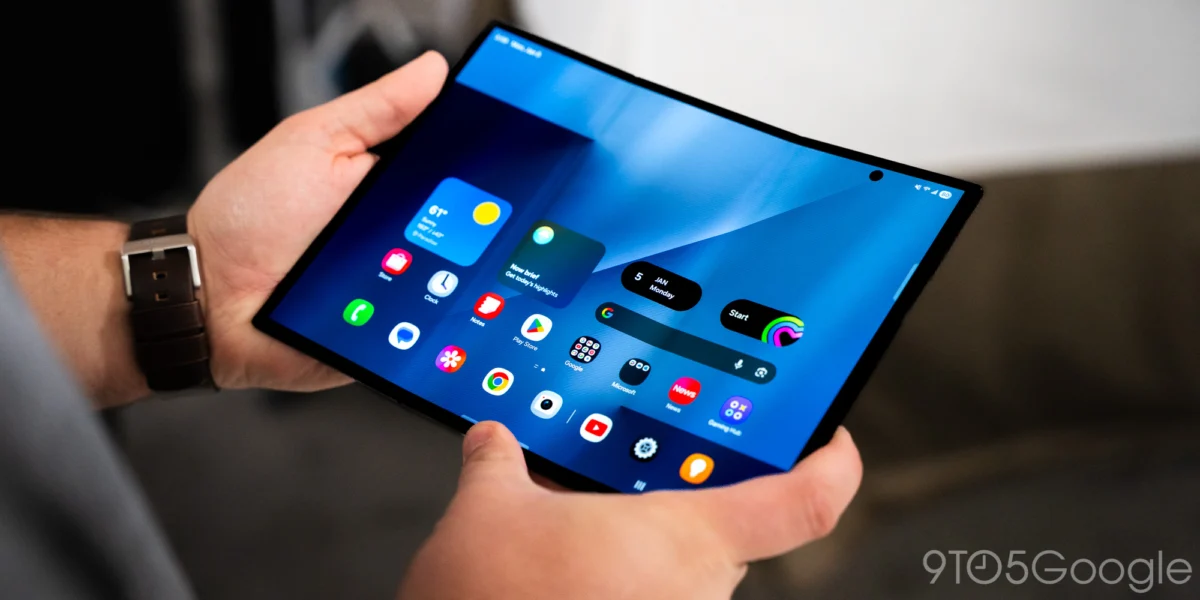
Samsung’s audacious Galaxy Z TriFold, a pioneering device in the burgeoning multi-pane foldable smartphone market, has officially sold out across all channels, both online and in physical stores. This final depletion of stock signals the definitive end of the "limited-run" product’s brief but impactful market presence, barely four months after its highly anticipated debut. The announcement, updated on Samsung’s official product listing, now directs prospective customers towards the company’s more conventional, albeit still cutting-edge, Galaxy Z Fold 7 or Galaxy S26 Ultra models, effectively closing the chapter on this experimental form factor for the immediate future.
The Rise and Swift Retreat of a Foldable Pioneer
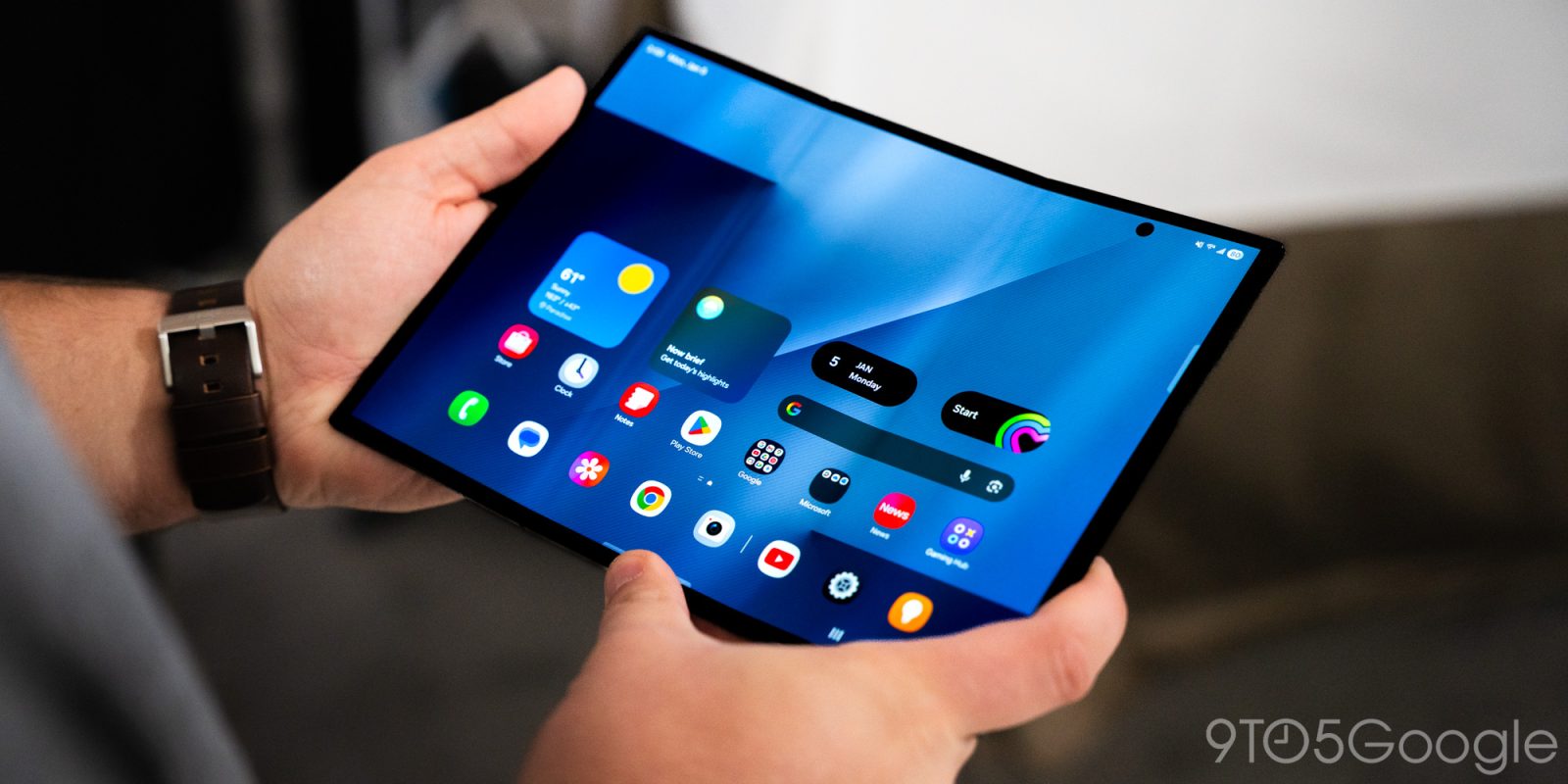
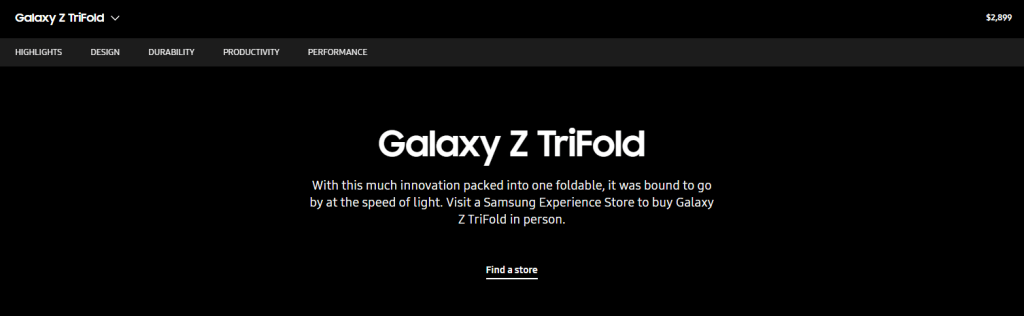
The Galaxy Z TriFold emerged onto the technology landscape in January 2026, capturing immediate attention as Samsung’s audacious foray into the realm of three-pane foldable devices. Priced at a premium of $2,899 upon its U.S. launch on January 30th, the device was not merely an incremental update but a bold statement, pushing the boundaries of what a portable computing device could be. Its defining characteristic was a sophisticated dual-hinge mechanism that unfolded to reveal a sprawling 10-inch inner display. This expansive screen real estate dwarfed that of most existing foldables, offering an unprecedented canvas for multitasking, media consumption, and productivity applications, particularly through features like Samsung DeX, which promised a desktop-like experience on the go.
The device’s introduction was met with a mix of excitement and scrutiny. Tech enthusiasts and industry analysts lauded Samsung’s willingness to innovate and experiment with new form factors, especially in a market where the foldable segment, while growing, was still dominated by dual-panel designs. The TriFold represented a significant engineering achievement, tackling the complexities of multiple hinges, crease management, and software optimization for a truly dynamic display. Early hands-on impressions highlighted the impressive immersion offered by the large display and the unique flexibility it provided, allowing for various configurations from a compact smartphone to a tablet-sized canvas. However, its considerable size, weight, and the inherent challenges of foldable durability, coupled with its ultra-premium price point, positioned it as a niche device for early adopters and those demanding the absolute forefront of mobile technology.

A Brief but Impactful Market Presence: A Detailed Chronology
The journey of the Galaxy Z TriFold, from its grand unveiling to its quiet disappearance, unfolded rapidly, underscoring the dynamic and often unpredictable nature of the high-tech consumer electronics market.
-
Pre-Launch Buzz (Late 2025): Rumors and patent filings from Samsung hinting at multi-foldable designs had circulated for years, building anticipation for a device that could surpass the existing Z Fold series in screen size and versatility. Industry observers speculated about the technological hurdles Samsung would need to overcome, from hinge longevity to display durability and software integration for such a complex form factor. This period saw a growing industry trend towards larger, more immersive mobile displays, and multi-foldables were seen as a logical, albeit ambitious, next step.
-
Official Launch and U.S. Debut (January 2026): The Galaxy Z TriFold was officially unveiled, confirming its triple-panel design and the impressive 10-inch unfolded display. Its U.S. availability was set for January 30th, 2026, with a price tag of $2,899. Samsung positioned it as a "limited-run" product from the outset, though this designation was not heavily emphasized in initial marketing, suggesting an experimental venture rather than a mass-market staple.
-
Initial Market Reception (February – Early March 2026): The device garnered significant media attention and interest from tech enthusiasts. Reviewers praised its innovative design and the potential of its large screen for productivity and entertainment. The integration of Samsung’s established software features, like DeX, was seen as a natural fit for the TriFold’s expansive display. However, common concerns for first-generation foldables, such as the visible crease lines, the overall bulk when folded, and long-term durability, were also raised. Despite these points, the TriFold was widely regarded as a technological marvel, showcasing Samsung’s continued leadership in display technology.
-
Reports of Discontinuation (March 16, 2026): Just a little over three months after its launch, reports began to surface, initially from sources close to Samsung’s supply chain, indicating that the company was preparing to cease sales of the Galaxy Z TriFold. This news came as a surprise to many, given the device’s innovative nature and recent introduction. Initial speculation ranged from lower-than-expected sales volumes for such a high-priced niche device to potential manufacturing complexities or a strategic shift in Samsung’s foldable roadmap.
-
Official Discontinuation Confirmed (March 17, 2026): Samsung officially confirmed the discontinuation of the Galaxy Z TriFold. While specific reasons were not detailed, the company began to subtly re-label the device as a "limited-run" product on its official website, retrospectively framing its short availability as a pre-planned experimental phase rather than an abrupt cancellation. This official confirmation solidified the end of its retail life.
-
Final Restock in the U.S. (April 10, 2026): Despite the discontinuation, a final, limited restock of the Galaxy Z TriFold occurred in the U.S. on April 10th. This provided a last opportunity for eager consumers to acquire the unique device. For several days following this, Samsung’s product page continued to advise interested buyers to check Samsung Experience stores for remaining stock, suggesting some units were still circulating through retail channels.
-
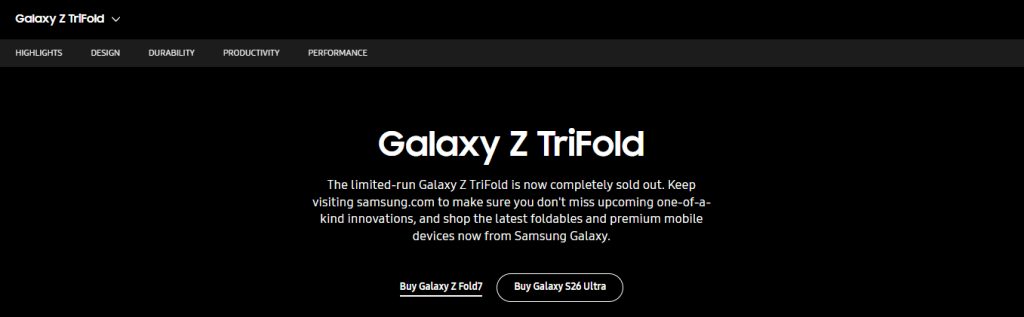
Complete Sell-Out (April 17, 2026): By April 17th, Samsung updated its TriFold listing on Samsung.com, explicitly stating that the device was "now completely sold out" both online and in stores. The message further encouraged customers to explore other "latest foldables and premium mobile devices" from Samsung Galaxy, specifically mentioning the Galaxy Z Fold 7 and Galaxy S26 Ultra as alternatives. This update marked the definitive conclusion of the Galaxy Z TriFold’s retail availability.
Technical Innovation and User Experience: A Glimpse into the Future
The Galaxy Z TriFold was not merely a phone; it was a testament to Samsung’s ambition in foldable technology. Its 10-inch internal display, a significant leap from the 7.6-inch and 8-inch displays common in existing book-style foldables, offered unparalleled screen real estate for mobile users. This larger canvas was particularly beneficial for productivity tasks, allowing for more expansive multi-window layouts, enhanced document viewing, and a more comfortable digital workspace. The device leveraged Samsung’s robust software ecosystem, with features like DeX allowing users to connect external peripherals and transform the device into a powerful, portable workstation. This capability was a core part of the TriFold’s appeal, promising to blur the lines between smartphones, tablets, and even laptops.
The dual-hinge design was an engineering marvel, demonstrating Samsung’s mastery over complex mechanical components and flexible display technology. While it undeniably added to the device’s thickness and weight when folded, it enabled the unique tri-fold functionality that set it apart. The challenges of developing such a device are immense: ensuring consistent display quality across multiple folds, managing the structural integrity of two hinges, and optimizing battery life for a larger, more power-hungry screen. The TriFold served as a crucial proving ground for these advanced concepts, gathering invaluable data on user interaction, durability under real-world conditions, and the practical implications of multi-foldable designs.
The Business Rationale: Limited Run or Market Correction?
Samsung’s decision to discontinue the Galaxy Z TriFold so soon after its launch, while initially surprising, aligns with several plausible strategic and market considerations. Labeling it a "limited-run" product retrospectively provides a corporate narrative, but the underlying business factors likely played a significant role.
One primary factor is the inherent cost and complexity of manufacturing such a cutting-edge device. Multi-foldable displays and dual-hinge mechanisms are incredibly expensive to produce, involving intricate supply chains and specialized fabrication processes. This would naturally lead to a higher bill of materials and, consequently, a higher retail price, limiting its potential market reach. For a device priced at nearly $3,000, the addressable market is significantly smaller than for conventional flagships or even dual-foldables.
Furthermore, the "limited-run" strategy can be interpreted as a form of market testing for radical innovations. Samsung, a leader in the foldable space, often pioneers new form factors to gauge consumer interest, identify engineering challenges, and gather real-world usage data before committing to mass production. The TriFold could have served as a high-profile experiment, allowing Samsung to explore the viability of larger, more complex foldables without the pressure of achieving mainstream sales volumes. The insights gained from its production and brief market presence would be invaluable for future research and development, influencing subsequent generations of foldable and flexible display technologies.
Sales performance, even for a "limited-run" device, cannot be entirely discounted. While "sold out" sounds positive, it’s crucial to consider the initial production volume. If a relatively small number of units were produced, selling them all would not necessarily indicate overwhelming commercial success. It could simply mean the limited stock was eventually depleted over the course of several months. The rapid discontinuation suggests that perhaps the device did not meet internal strategic objectives, whether related to production efficiency, market adoption, or its overall fit within Samsung’s broader product portfolio.
Finally, Samsung’s focus might be shifting towards more refined, potentially more commercially viable, next-generation foldable and flexible devices. The company’s immediate recommendation for the Galaxy Z Fold 7 and Galaxy S26 Ultra suggests a consolidation of efforts on established, high-volume premium segments.
Broader Impact and Implications for the Foldable Market
The brief saga of the Galaxy Z TriFold carries significant implications for the future of foldable technology and Samsung’s innovation strategy.

-
Future of Multi-Foldables: The discontinuation of the TriFold does not necessarily signal the death knell for multi-foldable designs. Instead, it might represent a strategic pause, allowing Samsung to refine the technology, address design challenges, and potentially integrate new advancements. The existing reports about Samsung working on a "sequel" in the future, possibly a "slideable" phone by 2027, indicate a continued commitment to pushing the boundaries of flexible displays, albeit perhaps with a different approach. A slideable design could offer a large screen experience without the added thickness of multiple folds, potentially solving some of the TriFold’s practical challenges.
-
Samsung’s Innovation Playbook: This episode reinforces Samsung’s reputation as an industry innovator willing to take risks. The company has a history of launching experimental devices, from the original Galaxy Fold’s early challenges to niche form factors. The "limited-run" strategy allows Samsung to test radical concepts in the market without fully committing to mass production, effectively using the market as an advanced R&D lab. This approach allows them to maintain a leadership position in innovation while mitigating the financial risks associated with unproven technologies.
-
Consumer Expectations and Longevity: For consumers who invested nearly $3,000 in a device with such a short lifespan, questions about product longevity and future support might arise. While "limited-run" products are often understood to have shorter lifecycles, the rapid discontinuation of a device launched only months prior could influence consumer confidence in highly experimental categories. Samsung will need to balance its innovative drive with clear communication about product lifecycles and support for such niche devices.
-
Competitive Landscape: Competitors in the foldable space, including Chinese manufacturers like Huawei and Xiaomi, along with Google and OnePlus, will undoubtedly be observing Samsung’s moves. The TriFold’s journey offers valuable lessons for the entire industry regarding the commercial viability and technical challenges of multi-foldable designs. It might encourage some to be more cautious, while others might view it as an opportunity to learn from Samsung’s experiment and develop their own, potentially more refined, multi-fold or slideable solutions.
The Galaxy Z TriFold, despite its short time in the spotlight, will likely be remembered as a pivotal moment in the evolution of mobile technology. It demonstrated the breathtaking possibilities of flexible display technology and Samsung’s relentless pursuit of innovation. While its immediate chapter has closed, its legacy will undoubtedly influence the design and development of the next generation of truly transformative mobile devices. The tech world eagerly awaits what "one-of-a-kind innovations" Samsung will unveil next, hoping that the spirit of the TriFold’s futuristic vision will find a more enduring form in the years to come.