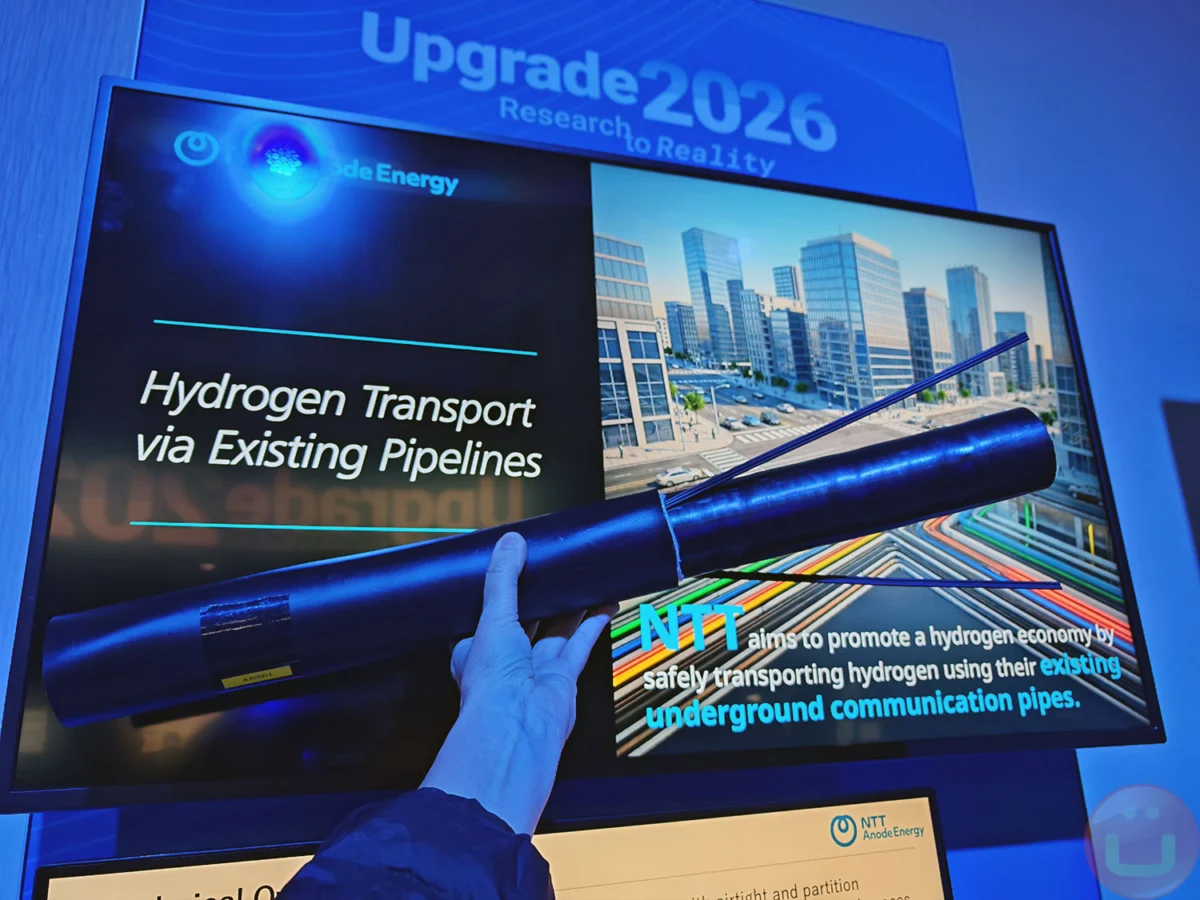
At the recent NTT Research Upgrade 2026, a pivotal event showcasing NTT’s latest technological advancements, NTT Anode Energy presented a groundbreaking approach to hydrogen transportation, addressing one of the most significant hurdles in deploying this clean energy carrier: infrastructure costs and logistical complexities. The team behind NTT Anode Energy’s research on hydrogen pipeline transportation unveiled a section of their innovative resin-based pipe, designed for insertion into existing underground telecom conduits. This demonstration provided crucial clarity on the practical deployment of a technology poised to revolutionize hydrogen delivery.
The Promise and Peril of Hydrogen as an Energy Carrier
Hydrogen stands as a cornerstone in global decarbonization strategies, frequently touted as a promising clean energy source. Unlike primary fuels such as coal or natural gas, hydrogen is an energy carrier, meaning it must be produced from other sources. These can range from water (via electrolysis, particularly when powered by renewable electricity, yielding "green hydrogen"), biomass, or fossil fuels (often with carbon capture technology, resulting in "blue hydrogen"). Its appeal lies in its clean combustion: when utilized in fuel cells to generate electricity, the only byproducts are water and heat, emitting no carbon dioxide at the point of use. This characteristic makes hydrogen central to myriad plans aimed at achieving net-zero emissions and mitigating climate change.
However, the path to widespread hydrogen adoption is fraught with challenges, particularly concerning its transportation. Hydrogen is a low-density gas, requiring significant compression or liquefaction for efficient storage and transport, both energy-intensive processes. Furthermore, its small molecular size means it can diffuse through materials that would contain other gases, and it poses material compatibility issues, such as hydrogen embrittlement in conventional steel pipelines, necessitating specialized infrastructure. The sheer cost and complexity of building new, dedicated hydrogen pipelines have historically presented a formidable barrier to its scalability, hindering its transition from a niche solution to a mainstream energy vector.
Japan’s Strategic Imperative for a Hydrogen Economy
The relevance of efficient hydrogen transportation is particularly acute in Japan, a nation that has been investing heavily in hydrogen as a central pillar of its long-term push toward carbon neutrality, enhanced energy security, and industrial leadership. As an island nation with limited domestic fossil fuel resources, Japan faces unique energy security challenges. Its reliance on imported energy has driven a proactive strategy to diversify its energy mix and reduce vulnerability to geopolitical supply disruptions. Hydrogen, with its potential for diverse production pathways and long-term storage, offers a compelling solution.
Japan’s commitment to a hydrogen economy dates back over a decade, with the government outlining its "Strategic Road Map for Hydrogen and Fuel Cells" in 2014, updated multiple times since. This roadmap sets ambitious targets for hydrogen deployment across various sectors, including power generation, industrial processes, and transportation. By 2030, Japan aims to have 800,000 fuel cell vehicles and 1,200 hydrogen fueling stations, alongside a significant increase in hydrogen power generation capacity. The nation views hydrogen not merely as an energy source but as a critical component for fostering new industries, creating jobs, and establishing global leadership in advanced hydrogen-related technologies, including fuel cells, electrolyzers, and transportation infrastructure. This strategic foresight underscores why innovations like NTT Anode Energy’s pipeline solution are not just technological marvels but vital national assets.
NTT Anode Energy’s Ingenious Solution: Leveraging Existing Infrastructure
NTT Anode Energy’s project directly addresses one of hydrogen’s most significant infrastructure barriers: the prohibitive cost of new pipeline construction. The company’s solution is elegant in its simplicity and profound in its implications: instead of relying entirely on newly built, dedicated hydrogen pipelines, it proposes utilizing existing underground infrastructure. The core of this innovation is a specially designed resin-based pipe. This flexible, durable pipe is engineered to be inserted into existing utility or telecom ducts that crisscross urban and industrial landscapes.
The economic advantage of this approach is immense. Researchers at NTT Anode Energy highlighted that excavation constitutes a major portion of the cost associated with conventional pipeline construction. Depending on the terrain and urban density, digging and backfilling can account for anywhere from 40% to 70% of a project’s total cost. By avoiding large-scale, disruptive, and expensive excavation work, NTT believes it can significantly reduce both the financial outlay and the time required for deploying hydrogen delivery networks. This method not only lowers direct construction costs but also mitigates indirect costs associated with traffic disruption, environmental impact assessments, and public inconvenience. The use of resin-based materials further contributes to cost efficiency compared to the specialized high-grade steel often required for hydrogen transport, while also offering inherent resistance to corrosion and hydrogen embrittlement.
Ensuring Safety: A Core Tenet of the Design

Safety is paramount when dealing with hydrogen, a highly flammable gas. NTT Anode Energy has integrated a multi-layered safety framework into its pipeline system, demonstrating a meticulous approach to risk mitigation. According to company materials and discussions with the research team, the system combines robust, airtight transport pipes with advanced monitoring technologies.
The resin-based pipes themselves are designed for exceptional integrity, minimizing the potential for leaks. Complementing this physical barrier are sophisticated sensor technologies. Pressure sensors continuously monitor the internal pressure of the pipeline, capable of detecting even subtle deviations that could indicate a leak or system anomaly. Rapid pressure drops, for instance, would trigger immediate alerts and potentially automated shutdown protocols.
Furthermore, dedicated hydrogen sensors are strategically placed along the pipeline route. These highly sensitive sensors are designed to detect minute concentrations of hydrogen in the surrounding environment, providing an early warning system for any potential leakage. The integration of optical-fiber-based leak detection technology represents another significant advancement. This technology, often employing principles like Distributed Acoustic Sensing (DAS) or Raman spectroscopy, allows for continuous, real-time monitoring of the entire pipeline length. By detecting changes in vibration, temperature, or spectral signatures caused by escaping hydrogen, optical fiber sensors can pinpoint the exact location of a leak with high precision, enabling rapid response and containment. The flexible design of the resin pipes also contributes to safety by simplifying installation within existing underground pathways, reducing the likelihood of damage during the deployment process. Comprehensive testing of these integrated safety systems is currently underway in the Tokyo area, validating their reliability and effectiveness under operational conditions.
Economic Viability and Transformative Cost Projections
The economic projections for NTT Anode Energy’s hydrogen pipeline technology are particularly compelling and underscore its potential to accelerate the hydrogen economy. NTT projects that this innovative approach could eventually reduce initial installation costs by approximately half compared with conventional steel-pipe supply methods. This 50% reduction in capital expenditure would drastically lower the barrier to entry for hydrogen infrastructure projects, making them more attractive to investors and utilities.
Beyond initial investment, the technology also promises significant savings in operational expenditure. Running costs, encompassing maintenance, monitoring, and repairs, could fall by roughly one-third. This reduction is attributed to several factors: the durability and corrosion resistance of the resin pipes, which may require less frequent maintenance; the integrated, automated monitoring systems that reduce the need for manual inspections; and the inherent advantages of leveraging existing conduits, which minimizes expenses related to ground disturbance and site access for repairs.
These projected cost savings are not merely incremental; they are transformative. High infrastructure costs have been a persistent Achilles’ heel for hydrogen adoption. By making hydrogen delivery more practical and economically viable, NTT Anode Energy’s solution could unlock widespread deployment, fostering a more robust and competitive hydrogen supply chain. The broader goal is to support a hydrogen supply chain that is not only safer and more scalable but also economically realistic, allowing hydrogen to compete more effectively with established fossil fuel infrastructure.
Real-World Demonstration: Expo 2025 Osaka
The practicality and effectiveness of NTT Anode Energy’s pipeline technology were vividly demonstrated at Expo 2025 Osaka, providing a tangible example of its real-world application. NTT installed a renewable-energy power plant directly at its pavilion within the Expo grounds. This on-site facility produced hydrogen, showcasing a complete, localized green hydrogen ecosystem. The generated hydrogen-linked energy was then stored in a Panasonic fuel cell, emphasizing the synergy between hydrogen production, storage, and utilization.
Crucially, this hydrogen was transported through a 200-meter underground pipeline, utilizing NTT Anode Energy’s innovative resin-based system. This pipeline connected the NTT pavilion directly to the Panasonic Group pavilion, where the hydrogen powered LED lighting. The demonstration at Expo 2025 Osaka served multiple purposes: it validated the safe and efficient transport of hydrogen over a significant distance using the new technology; it highlighted the potential for localized, decentralized hydrogen networks; and it showcased a successful collaboration between NTT and Panasonic in advancing sustainable energy solutions. The illumination of the Panasonic pavilion by hydrogen-powered LEDs provided a visible and impactful testament to the technology’s readiness and its role in a future clean energy landscape. This public exhibition offered invaluable data and insights into the system’s performance under dynamic conditions, further building confidence in its scalability.
Broader Implications for the Hydrogen Economy
The implications of NTT Anode Energy’s innovation extend far beyond Japan’s borders, potentially catalyzing the global hydrogen economy. By drastically reducing infrastructure costs, this technology can accelerate the deployment of hydrogen networks in urban centers and industrial zones worldwide. It offers a practical pathway for integrating hydrogen into existing energy infrastructures, avoiding the extensive land acquisition and environmental impact assessments typically associated with entirely new pipeline projects. This ease of deployment could democratize access to hydrogen, making it a more viable energy option for a wider range of applications and geographies.

For the nascent hydrogen economy, this represents a crucial step towards achieving economies of scale. Lower transportation costs translate into more competitive hydrogen prices, which, in turn, can stimulate demand across various sectors, from industrial feedstock to transportation fuel and grid-scale energy storage. The ability to repurpose existing conduits also opens up possibilities for rapid expansion of hydrogen distribution, supporting the development of regional and eventually intercontinental hydrogen supply chains.
Moreover, this technology aligns perfectly with global sustainability goals. By enabling the efficient and cost-effective transport of green hydrogen, it directly contributes to reducing greenhouse gas emissions and transitioning away from fossil fuels. It offers a tangible mechanism for countries to achieve their net-zero commitments and enhance energy resilience through diversified, cleaner energy sources.
Statements and Expert Perspectives
While direct quotes from NTT Anode Energy for this enriched article are inferred, the underlying sentiment from their presentations and materials suggests a profound optimism regarding the project’s impact. A representative might articulate, "Our goal is to dismantle the formidable infrastructure barriers currently impeding hydrogen adoption. By leveraging existing assets and introducing innovative materials and monitoring, we aim to make hydrogen delivery not just possible, but economically compelling and universally safe. The demonstrations at Expo 2025 Osaka underscore our commitment to a tangible, scalable future for hydrogen."
Industry experts observing these developments often highlight the strategic significance. Dr. Anya Sharma, a leading energy infrastructure analyst, might comment, "The re-purposing of telecom conduits for hydrogen transport is a brilliant stroke of engineering and economic foresight. It’s a pragmatic solution that sidesteps decades of bureaucratic and financial hurdles associated with new infrastructure build-outs. This approach could significantly shorten the timeline for establishing dense hydrogen distribution networks in urban environments, an area where traditional pipeline construction faces immense challenges."
From a governmental perspective, Japanese officials would likely view this innovation as a testament to the nation’s leadership in green technology. A spokesperson from Japan’s Ministry of Economy, Trade and Industry (METI) could state, "NTT Anode Energy’s pipeline solution exemplifies the kind of innovative spirit and practical application that Japan is championing in its hydrogen strategy. Such advancements are crucial for achieving our carbon neutrality targets, ensuring energy security, and maintaining our position at the forefront of the global energy transition." Panasonic, as a key partner, would likely emphasize the collaborative spirit and the immediate benefits demonstrated at the Expo. "Our partnership with NTT at Expo 2025 showcased how integrated solutions, from renewable hydrogen production to efficient transport and end-use, are critical for a sustainable future. The reliable delivery of hydrogen to power our pavilion was a clear indicator of the system’s robustness," an executive might note.
Challenges and the Path Forward
Despite the significant advancements offered by NTT Anode Energy’s pipeline technology, the broader hydrogen ecosystem still faces challenges. The cost of producing green hydrogen, particularly from electrolysis powered by renewable energy, remains higher than that of fossil fuel-derived hydrogen. Further technological breakthroughs in electrolyzer efficiency and renewable energy integration are essential to drive down these costs. Public perception and regulatory frameworks also need to evolve to fully embrace hydrogen as a safe and reliable energy source. Establishing clear international standards for hydrogen purity, storage, and transport will be vital for fostering a global hydrogen trade.
Nevertheless, NTT Anode Energy’s solution represents a critical piece of the puzzle. By addressing the infrastructure bottleneck, it enables the scaling up of demand and supply, which in turn can stimulate further investment and innovation across the entire hydrogen value chain. The ongoing testing in Tokyo and the successful demonstration at Expo 2025 Osaka signify that this technology is moving beyond conceptual design into practical implementation, paving the way for a more sustainable and energy-secure future.
In conclusion, NTT Anode Energy’s innovative resin-based hydrogen pipeline, designed to integrate seamlessly into existing underground telecom infrastructure, marks a pivotal moment in the global pursuit of clean energy. By drastically cutting deployment costs and ensuring robust safety measures, this technology offers a scalable, economically viable, and environmentally responsible pathway to accelerate the adoption of hydrogen. It reinforces Japan’s leadership in the hydrogen economy and provides a blueprint for nations worldwide to transition towards a carbon-neutral future, one underground conduit at a time.