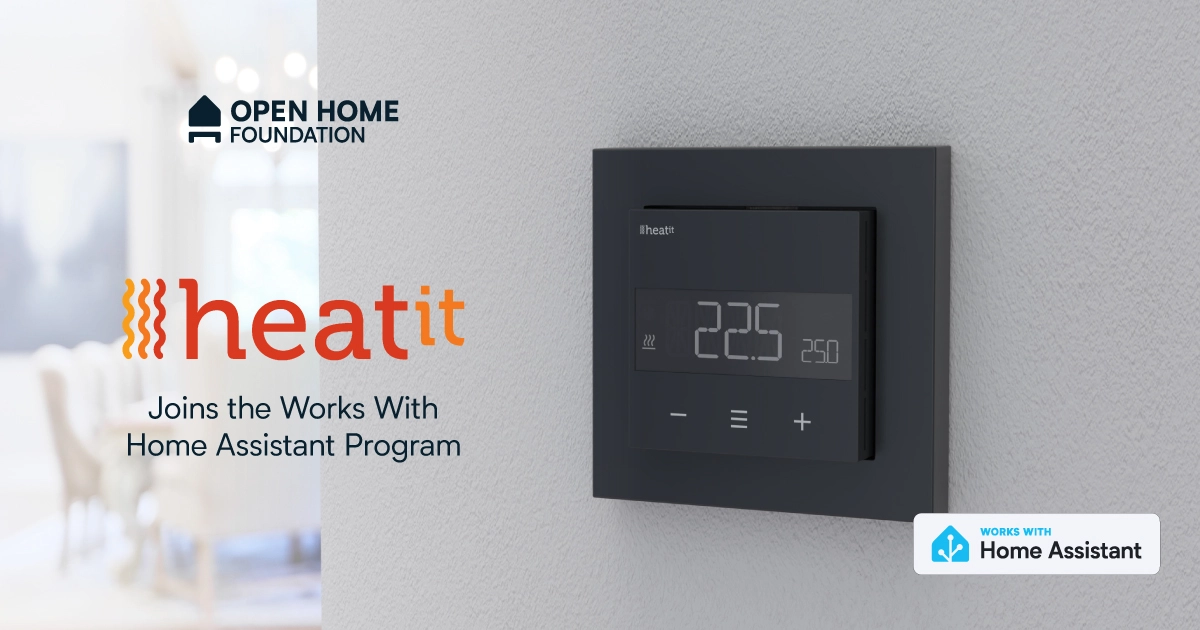
The Home Assistant ecosystem has officially expanded its roster of certified hardware partners with the inclusion of Heatit, a prominent Norwegian manufacturer specializing in smart heating and climate control solutions. This partnership marks a significant milestone for the "Works with Home Assistant" program, as it brings a suite of high-durability Z-Wave devices into the fold of natively supported, locally controlled smart home hardware. By achieving this certification, Heatit—a brand with over three decades of experience in the HVAC and thermostat industries—commits to providing seamless integration, long-term firmware support, and a "local-first" operational philosophy that aligns with the growing global demand for data privacy and system reliability.
A Strategic Alliance for Local Smart Home Control
The collaboration between Heatit and the Open Home Foundation, the governing body behind Home Assistant, represents more than a mere compatibility update. It is a strategic alignment focused on the "Open Home" pillars: privacy, choice, and sustainability. Heatit, formerly known as Thermofloor, has transitioned from a traditional industrial heating company into a modern smart home innovator, particularly focusing on the rigorous demands of the Scandinavian climate. In regions like Norway, where winter temperatures frequently plummet below -20°C, heating is not merely a comfort feature but a critical utility where failure can lead to property damage or safety risks.
The certification ensures that Heatit’s Z-Wave devices, including their specialized thermostats and the Z-Smoke 2 smoke detector, are recognized instantly by Home Assistant’s Z-Wave JS integration. This "plug-and-play" functionality is facilitated through rigorous testing performed by the Home Assistant in-house team using standardized hardware, such as the Home Assistant Green and the Home Assistant Connect ZWA-2 adapter.
The Technical Foundation: Why Z-Wave Matters for Climate and Safety
Central to the Heatit product line is the utilization of the Z-Wave protocol. While many consumer-grade smart home devices rely on Wi-Fi or Bluetooth, Heatit’s decision to stick with Z-Wave for its certified lineup is a calculated technical choice. Z-Wave operates on a sub-GHz frequency (typically around 868 MHz in Europe and 908 MHz in the US), which significantly reduces interference from the crowded 2.4 GHz spectrum used by Wi-Fi and microwaves.
The technical advantages of this protocol are particularly relevant for heating and safety:
- Mesh Networking: Every mains-powered Heatit device acts as a repeater, strengthening the network across large homes or through thick masonry walls—a common architectural feature in Northern Europe.
- Energy Efficiency: For battery-operated devices like the Z-Smoke 2, Z-Wave allows for years of operation on a single charge, ensuring that safety sensors remain active without constant maintenance.
- Local Execution: Unlike cloud-dependent ecosystems, Heatit’s Z-Wave devices communicate directly with the local Home Assistant controller. This ensures that if the home’s internet connection fails, the heating schedules and safety triggers continue to function without interruption.
The Z-Smoke 2 is a standout in this certification, being the first Z-Wave smoke detector to receive the official "Works with Home Assistant" badge. It features a built-in heat sensor and a siren that functions independently of the network, ensuring that the primary safety function is never compromised by software updates or connectivity issues.
Chronology of Innovation and Certification
The journey of Heatit from a local floor heating provider to an international smart home player has spanned over 30 years. The company’s evolution can be traced through several key phases:
- 1990s–2000s: Operating as Thermofloor, the company established a dominant presence in the Norwegian market, focusing on high-quality electric underfloor heating systems for harsh environments.
- 2010s: Recognizing the shift toward the Internet of Things (IoT), the company rebranded as Heatit and began integrating Z-Wave technology into its thermostat line, allowing for remote management and scheduling.
- 2020–2023: Heatit expanded its portfolio to include safety sensors and wall controllers, emphasizing professional-grade build quality that differentiates its products from lower-cost consumer electronics.
- 2024: The formal application and testing process for the "Works with Home Assistant" program began. This involved a rigorous audit of the devices’ command classes, firmware stability, and the company’s commitment to long-term support.
- Present: Heatit officially joins the program, with an initial focus on Z-Wave products and ongoing development to bring their Wi-Fi-based solutions into the same level of local-first integration.
Supporting Data: The Impact of Smart Heating on Energy Consumption
The integration of Heatit products into Home Assistant arrives at a time when energy management has become a primary driver for smart home adoption in Europe. According to data from Eurostat and various energy analysts, heating accounts for approximately 60% to 70% of total household energy consumption in Northern and Central Europe.
By utilizing Heatit’s certified thermostats within Home Assistant’s "Energy Dashboard," users can achieve significant efficiency gains. Data-driven automation, such as reducing the temperature by 2°C when the house is unoccupied or during peak electricity price hours (using integrations like Nord Pool), can result in a 10% to 15% reduction in annual energy bills. In a climate like Norway’s, where energy usage is high, these savings are substantial for both the consumer and the stability of the power grid.
Furthermore, Heatit’s commitment to sustainability is reflected in the longevity of their hardware. While many smart home startups have shuttered, leaving consumers with "bricked" hardware, Heatit’s 30-year history and the local-only nature of Z-Wave ensure that these devices will remain functional for decades, reducing electronic waste.
Official Responses and Strategic Vision
The leadership of both organizations has expressed a shared vision for the future of the smart home. Pål Aksel Forberg, CEO at Heatit, emphasized that the decision to join the program was driven by the community. "We’re excited to join the Home Assistant program because of the strong community and the shared focus on open, local-first smart home solutions," Forberg stated. He noted that the integration allows the company to bridge the gap between "enthusiasts and professionals," delivering products that are flexible enough for hobbyists but reliable enough for professional installers.
From the perspective of the Open Home Foundation, the inclusion of Heatit strengthens the "Works with Home Assistant" brand by adding a partner that specializes in the "heavy lifting" of home automation—climate and safety. The foundation noted that the certification is not merely a marketing badge but a guarantee of functionality. If a device is certified, it must provide full functionality within Home Assistant without requiring a cloud subscription or proprietary bridge.
Broader Implications for the Smart Home Industry
The entry of Heatit into the Works with Home Assistant program signals a broader shift in the smart home industry. For years, the market was dominated by "walled gardens" and cloud-centric platforms. However, the rise of Home Assistant—which now powers hundreds of thousands of homes globally—has forced established hardware manufacturers to reconsider their software strategies.
- The Decline of Proprietary Clouds: As consumers become more aware of the risks associated with cloud dependency (such as service outages or data breaches), brands like Heatit are finding a competitive advantage in promoting local control.
- Interoperability Standards: While the industry moves toward the "Matter" standard, the continued support for Z-Wave by premium brands like Heatit suggests that specialized protocols will remain relevant for high-reliability applications like heating and fire safety for the foreseeable future.
- Professional vs. DIY: Heatit occupies a unique space where its products are often installed by certified electricians but managed by DIY smart home enthusiasts. This certification bridges that gap, ensuring that a professionally installed thermostat can be easily adopted into a user-managed Home Assistant instance.
Technical Guidance for Consumers and Installers
As part of the certification announcement, Home Assistant and Heatit have provided guidance for users looking to deploy these systems. Due to the high-voltage nature of in-wall thermostats and controllers, professional installation is recommended and, in many jurisdictions, legally required.
To facilitate the setup process for those with the appropriate hardware, Heatit has implemented "SmartStart" technology. This allows users to add devices to their Z-Wave network by simply scanning a QR code via the Home Assistant mobile app, significantly reducing the complexity of the pairing process. Once paired, the devices operate entirely within the local network, though they can still be accessed remotely through the secure Home Assistant Cloud (Nabu Casa) for users who wish to adjust their heating while away from home.
Conclusion and Future Outlook
The partnership between Heatit and Home Assistant is expected to evolve. While the current certification covers a core group of Z-Wave devices, both parties have indicated that testing is ongoing for additional products. This includes Heatit’s emerging line of Wi-Fi devices, which the company is working to bring into the local-first fold.
As the smart home market matures, the focus is shifting from "novelty" to "utility." By securing a partner that specializes in the fundamental necessities of home life—warmth and safety—Home Assistant continues to solidify its position as the central nervous system for the modern, private, and sustainable home. For Heatit, the partnership provides a direct line to the world’s most active community of smart home power users, ensuring their Norwegian-engineered hardware remains at the cutting edge of the global automation landscape.