United States lawmakers have significantly revised the proposed Measuring America’s Semiconductor Advantage Globally (MATCH) Act, narrowing its initial scope following considerable pushback from the semiconductor equipment industry. A key alteration in the updated bill involves the removal of one of its most sweeping provisions: a blanket prohibition on the sales of cryogenic etching tools to chipmakers in designated countries of concern, primarily China. This development, first reported by Reuters based on an unseen revised document, marks a notable shift in legislative strategy, although industry analysts suggest some of these changes may be more symbolic than substantive given the robust existing export controls already in place.
The initial draft of the MATCH Act, introduced earlier this year, sought to tighten the leash on China’s access to advanced semiconductor manufacturing capabilities. Among its most contentious elements was the explicit inclusion of cryogenic etching equipment under a broad ban, regardless of the technological node or application. This specific provision had generated considerable anxiety within the global semiconductor equipment sector, as companies like Lam Research and Tokyo Electron are major suppliers of such critical tools. The industry expressed concerns over potential disruptions to global trade, increased regulatory complexity, and the competitive disadvantages that such an expansive ban might impose on U.S. and allied companies.
The Evolving Landscape of U.S. Semiconductor Export Controls
The revisions to the MATCH Act unfold against a backdrop of intensifying geopolitical competition and a strategic technology rivalry between the United States and China. Semiconductors, often referred to as the "new oil," are foundational to nearly all modern technologies, from artificial intelligence and advanced computing to telecommunications and defense systems. The U.S. government views China’s rapid advancements in chip manufacturing as a significant national security concern, fearing that cutting-edge capabilities could be leveraged for military modernization or to gain an insurmountable economic advantage.
This concern galvanized the U.S. into action years prior, with initial export controls rolled out in 2021 and significantly expanded in October 2022. These existing regulations primarily target China’s ability to acquire or manufacture advanced logic chips (typically 14nm/16nm process nodes and below, utilizing FinFET transistor architectures), advanced memory chips (DRAM below 18nm, NAND with 128 layers or more), and certain advanced packaging technologies. The controls also restrict the export of specific manufacturing equipment, software, and U.S. person support for the development or production of advanced chips in China. Entities like Semiconductor Manufacturing International Corporation (SMIC), Yangtze Memory Technologies Corp (YMTC), and ChangXin Memory Technologies (CXMT) have been placed on various U.S. government lists, effectively limiting their access to U.S. technology and expertise.
The original intent of the MATCH Act was to build upon these existing controls, seeking to close potential loopholes and make the restrictions more robust and explicit. One perceived loophole in earlier controls was that restrictions often applied to specific facilities rather than entire companies, potentially allowing Chinese entities to acquire advanced tools for older fabs or for research and development purposes, which could then indirectly benefit their more advanced operations. The MATCH Act aimed to shift towards company-specific prohibitions, ensuring a more comprehensive blockade against targeted entities.
Understanding Cryogenic Etching and its Significance
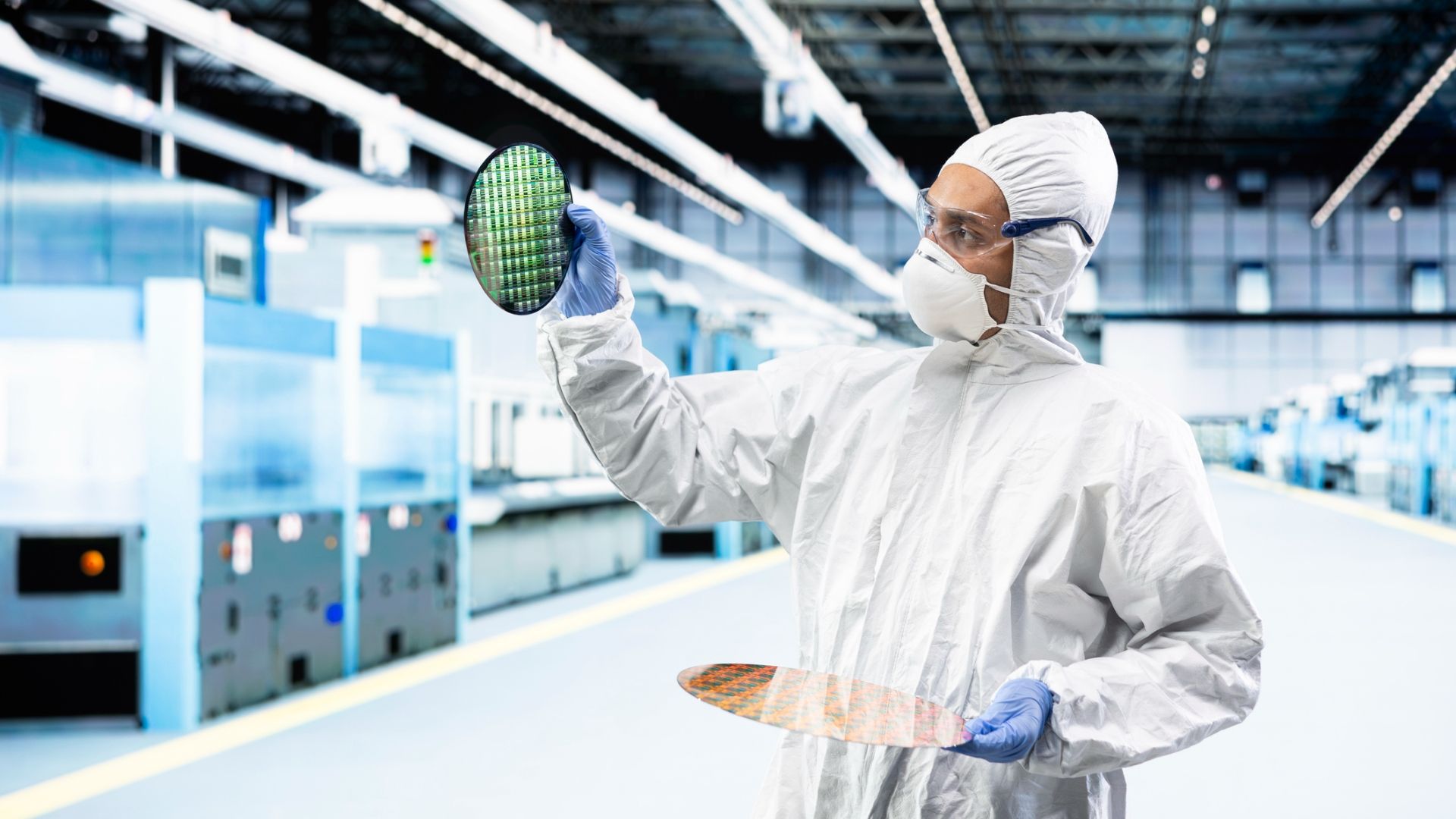
Cryogenic etching tools are highly specialized pieces of equipment indispensable in the fabrication of advanced semiconductors. These tools perform high-aspect-ratio, extremely smooth silicon etching, a process where material is removed with exceptional precision to create intricate patterns on a silicon wafer. The "cryogenic" aspect refers to the use of very low temperatures during the etching process, which helps to achieve unparalleled control over the etch profile, minimizing sidewall roughness and ensuring the structural integrity of incredibly small features.
Such precision is critical for manufacturing advanced transistor structures like FinFETs (Fin Field-Effect Transistors) and the even newer GAA (Gate-All-Around) transistors, which are the building blocks of modern, powerful, and energy-efficient processors. Beyond logic chips, cryogenic etching also finds applications in the production of specialized Micro-Electro-Mechanical Systems (MEMS) and in advanced research and development environments where ultra-smooth, high-aspect-ratio silicon etching is a prerequisite for experimental designs. The leading global suppliers of these sophisticated tools include American firm Lam Research and Japanese giant Tokyo Electron.
Given the critical role of cryogenic etching in advanced chipmaking, its initial inclusion as a blanket ban in the MATCH Act was significant. However, as the Reuters report highlighted, the alterations to this provision are somewhat "cosmetic" in practical effect. This is because, under the existing U.S. export controls, tools necessary for building logic chips on 14nm/16nm-class process technologies that utilize FinFET transistors have already been subject to export licenses since 2021. Since advanced cryogenic etching tools are inherently required for these sophisticated FinFET/GAA architectures, their sale to targeted Chinese entities for advanced production was already effectively curtailed. The removal of the blanket ban, therefore, primarily addresses the industry’s concern about overly broad restrictions that might have inadvertently impacted sales for older-generation fabs or non-sensitive applications, where existing controls might not have applied as strictly.
Key Revisions and Their Implications
The latest version of the MATCH Act, while dropping the blanket ban on cryogenic etching tools, reportedly maintains several core restrictions. Crucially, it upholds prohibitions on the sales of advanced wafer fabrication equipment by U.S. and foreign companies to specific Chinese semiconductor manufacturers, including CXMT, YMTC, and SMIC. This ensures that the U.S. continues to target the most prominent Chinese players attempting to advance their indigenous chip production capabilities.
Furthermore, the revised bill reportedly maintains requirements for licenses to service equipment at covered facilities. This aspect is particularly important as modern semiconductor manufacturing equipment requires constant maintenance, upgrades, and technical support from the original equipment manufacturers (OEMs). Without such servicing, even previously acquired advanced tools can become inoperable or less efficient over time.

However, a significant concession to industry concerns is the reported removal of a blanket presumption that such servicing licenses will be denied. The original draft’s "presumption of denial" meant that any application for a license to service equipment at a designated Chinese facility would automatically be assumed to be denied unless an applicant could present an overwhelmingly compelling case otherwise. This created a high bar and significant uncertainty for equipment manufacturers like ASML and Tokyo Electron, who have existing installed bases and servicing agreements in China. By removing this blanket presumption, lawmakers are indicating a willingness to review license applications on a case-by-case basis, potentially allowing for servicing agreements that do not directly contribute to the advancement of China’s most sensitive chipmaking capabilities. This change should alleviate some of the compliance burden and financial strain on global equipment suppliers, providing them with more clarity and flexibility.
Industry Reactions and Future Outlook
The semiconductor industry, particularly equipment manufacturers, is likely to breathe a sigh of relief over these revisions. Companies like Lam Research and Tokyo Electron, while committed to complying with national security objectives, have consistently advocated for targeted and clear regulations that minimize unintended economic consequences. A broad ban on a category of tools, especially one already largely covered by existing controls, would have created significant administrative burdens and potential revenue losses without necessarily enhancing national security in a meaningful way. The shift away from a "presumption of denial" for servicing licenses is also a critical win for OEMs, allowing them to better manage their global operations and installed base without facing an automatic block on essential maintenance.
For Chinese chipmakers such as SMIC, CXMT, and YMTC, the immediate impact of these revisions on their advanced manufacturing ambitions may be limited, as they remain under stringent export controls for cutting-edge technologies. However, the MATCH Act’s continued focus on company-specific restrictions, rather than just facility-specific ones, signals a tightening of the overall net designed to prevent any circumvention of existing rules. This reinforces the long-term challenge for China to achieve self-sufficiency in advanced semiconductor manufacturing. The ongoing restrictions are expected to further fuel China’s domestic innovation drive, pushing companies to invest heavily in indigenous research, development, and manufacturing of equipment and materials. Recent reports of Huawei’s progress with SMIC in producing 7nm-class chips using existing, less advanced DUV lithography tools underscore this determination.
The revisions to the MATCH Act demonstrate a delicate balancing act by U.S. lawmakers: attempting to maintain a robust national security posture by restricting China’s access to critical technologies, while also responding to legitimate concerns from an industry that operates on a deeply interconnected global supply chain. The U.S. administration must weigh the effectiveness of its controls against the potential for alienating key industry players, disrupting global trade, and inadvertently accelerating China’s drive for technological independence.
As the bill progresses through Congress, further scrutiny and potential amendments are possible. The broader implications for the global semiconductor industry remain profound. These legislative actions not only shape the competitive landscape but also influence investment decisions, supply chain resilience strategies, and the pace of technological innovation worldwide. The evolving MATCH Act is a clear indicator that the "chip war" is far from over, and the strategic importance of semiconductor technology will continue to drive complex policy decisions for years to come.