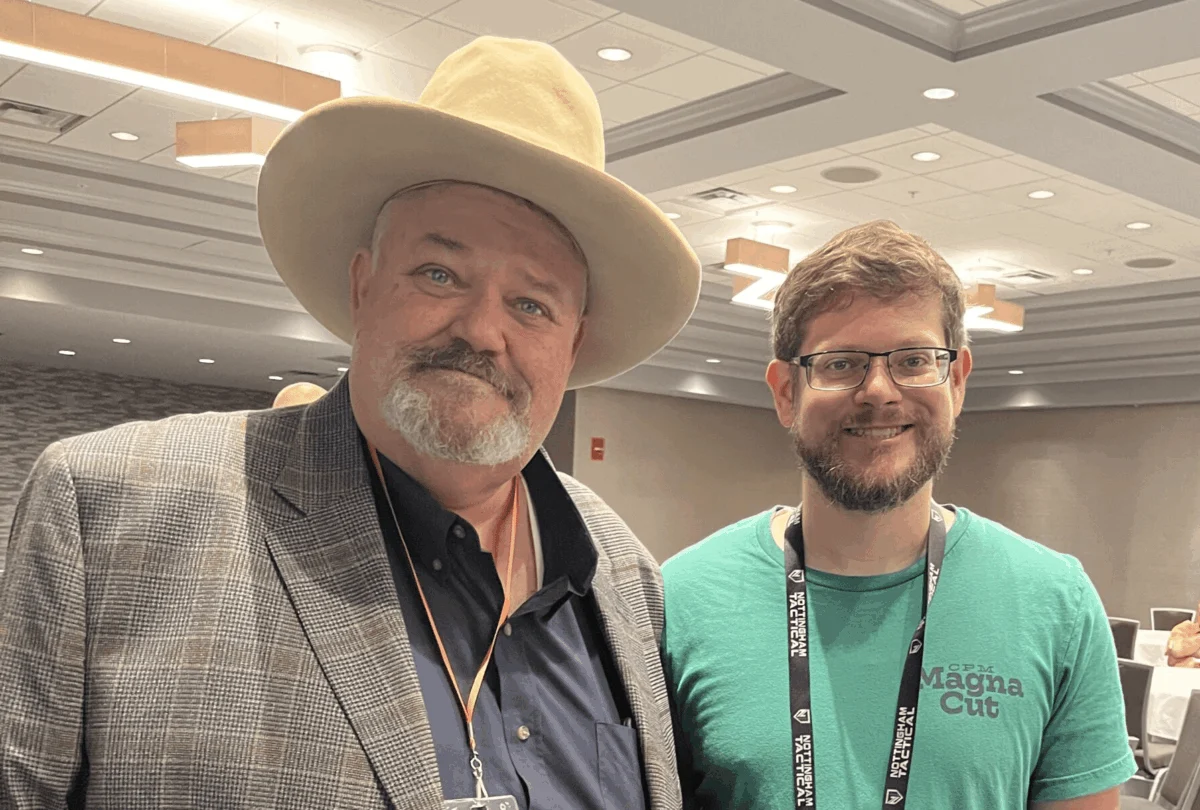
The relationship between professional metallurgy and the practical craft of knifemaking has long been characterized by a complex synergy of scientific theory and empirical observation. While the laboratory provides the framework for understanding the molecular behavior of steel, the workshop often serves as the ultimate proving ground where theoretical models meet the unpredictable demands of real-world application. Historically, the evolution of high-performance steel has not been a unidirectional flow of information from the scientist to the craftsman; rather, it has been a dialogue where the intuitive "feel" of a blacksmith has frequently identified material phenomena that formal scientific instruments initially failed to capture.

The Foundations of Practical Metallurgy and the Birth of Stainless Steel
The history of modern metallurgy is inextricably linked to the early 20th-century development of stainless steel, a breakthrough that highlights the necessity of collaboration between laboratory researchers and industrial practitioners. Harry Brearley, credited with inventing stainless steel between 1912 and 1914, developed what is now known as 420 stainless steel. While Brearley possessed the scientific acumen to identify the corrosion resistance of high-chromium alloys, he frequently acknowledged that the commercial and practical success of the material was due to the expertise of hands-on cutlery managers like Ernest Stuart of the Mosley Cutlery Company.

Stuart was not only responsible for the moniker "stainless steel," but he also spent years refining the manufacturing processes required to handle a material that was significantly more difficult to forge and heat treat than the carbon steels of the era. Brearley’s writings often reflected a deep respect for the "unscientific" worker. He famously noted that his own brother, a forge-bound workman, could often observe more with the naked eye regarding the quality of an ingot than a scientist could with a laboratory full of equipment. This acknowledgment underscores a recurring theme in the history of steel: the scientist measures what is known, while the craftsman often discovers what is yet to be measured.

The Evolution of Toughness Testing from Blacksmithing to the Izod Machine
One of the most significant instances of practical craft preceding scientific standardisation occurred in the realm of impact testing. For centuries, blacksmiths utilized a rudimentary but effective method for gauging the quality of a bar of steel. By nicking a bar and breaking it with a hammer, a smith could judge the material’s toughness based on the resistance felt in their muscles and the appearance of the fractured surface. Their qualitative scale ranged from "rotten" to "damned good stuff."

During the early 1900s, metallurgists relied almost exclusively on the tensile test. This procedure involves slowly pulling a steel specimen until it elongates and eventually fractures, providing data on yield strength, ultimate strength, and ductility. However, tensile testing failed to explain why certain steels that appeared ductile under slow-loading conditions would shatter like glass when subjected to a sudden shock.

It was Edwin Izod, a young engineer in Rugby, England, who bridged this gap by codifying the blacksmith’s intuitive test into a quantitative mechanical process. By creating a pendulum hammer to strike a notched specimen, Izod developed what became the Izod impact test. This revealed that the "strain rate"—the speed at which a load is applied—drastically alters the behavior of steel. A knife edge might flex harmlessly under slow pressure (a tensile-like load) but chip or snap when hitting a hard knot in wood or being dropped (an impact load). The blacksmiths had identified this "standard brittleness" centuries before the science of fracture mechanics could explain the role of strain rates and notch sensitivity.

The Legend of Frank J. Richtig and the Paradox of Secret Heat Treatment
In the mid-1930s, an American blacksmith and knifemaker named Frank J. Richtig became a national sensation for performing seemingly impossible feats with his cutlery. Richtig’s demonstrations involved hammering a kitchen knife through railroad spikes, cold chisels, and steel axles, then immediately using the same knife to slice through delicate newspaper. His knives were featured in Ripley’s Believe It or Not!, and he attributed his success to a "secret" tempering process.

For decades, the metallurgical community remained skeptical yet intrigued. In 2000 and 2015, formal research papers attempted to reverse-engineer Richtig’s methods. The 2000 study proposed that Richtig had independently discovered "austempering," a process that creates a bainite microstructure—a tougher alternative to the standard martensite found in most knives. This theory suggested that Richtig was decades ahead of industrial science.

However, a deeper analysis conducted by modern metallurgists, including Dr. Larrin Thomas, suggests a different conclusion. When Richtig’s knives were subjected to modern testing, their hardness was found to be highly variable, ranging from a soft 39 HRC to a more standard 57 HRC. The "miraculous" properties reported in scientific journals were likely the result of two factors: underhardened steel and testing discrepancies. The specimens used in the 2000 research were "sub-size," which artificially inflated the perceived ductility of the steel.

Ultimately, Richtig’s "secret" was not a revolutionary molecular discovery but a combination of expert showmanship and practical geometry. He ground the edges of his demonstration knives thicker to withstand the impact of steel-on-steel contact and relied on thirty years of manual practice to ensure the strikes were perfectly aligned. While Richtig may have "bamboozled" later scientists into looking for a super-steel, his career remains a testament to how a craftsman’s mastery of application can exceed the expectations of material theory.

The Questek Ferrium M60S Case: When Computer Models Fail the Field Test
The limits of theoretical metallurgy were again tested in 2003 with the announcement of Questek Ferrium M60S. This steel was designed using Integrated Computational Materials Engineering (ICME), a process where computer simulations predict the optimal alloy composition for specific properties. M60S was touted as the ultimate knife steel, designed by high-level metallurgists to provide unprecedented toughness and hardness.

Despite the advanced computer modeling, the steel never successfully reached the consumer market. Field testing by experienced knifemakers, such as Jerry Hossom, revealed a critical flaw: the edges deformed and dented easily, even when heat-treated to a high Rockwell hardness of 60 HRC. In comparative tests, standard steels like S30V and 154CM outperformed the computer-designed M60S in edge stability.

The failure was traced back to a metallurgical phenomenon known as "retained austenite." While the computer models predicted a high ultimate strength, they failed to account for a low "yield ratio." In simple terms, the steel was hard, but it began to permanently deform at a much lower stress level than expected because a portion of the steel had failed to transform into hard martensite during quenching. Professor Greg Olson, one of the inventors, later acknowledged that the "early yielding" identified by knifemakers was a result of this microstructural oversight. This case serves as a modern reminder that even the most advanced simulations require the validation of a craftsman’s "chopping test" to ensure practical viability.

Synergy in Modern Metallurgy: The Wootz Mystery and Damascus Innovations
The most productive relationship between the two fields occurs when the scientist and craftsman work as equals. A landmark example is the collaboration between bladesmith Al Pendray and metallurgy professor John Verhoeven. For years, the secret to making "Wootz" Damascus—the legendary patterned steel of ancient swords—had been lost. While scientists could analyze the chemical composition of museum artifacts, they could not replicate the specific "watered" pattern.

Pendray, through trial and error in his forge, discovered that specific trace elements and precise forging temperatures were the keys to unlocking the pattern. Verhoeven provided the scientific framework to explain that these trace elements (like vanadium) were causing carbides to align in sheets during the forging process. This partnership solved a centuries-old mystery that neither could have cracked alone. Verhoeven famously remarked that Pendray possessed an intelligence and patience that would have easily earned him a PhD, while Pendray credited Verhoeven with providing the "why" behind his "how."

Similarly, recent studies into pattern-welded Damascus have challenged scientific assumptions about edge retention. Many metallurgists long dismissed the "Damascus cutting effect"—the idea that a combination of hard and soft steels creates a micro-serrated edge—as a myth. However, controlled testing using CATRA (Cutlery Allied Trades Research Association) machines has recently proven that certain combinations, such as 1095 carbon steel layered with pure nickel, significantly out-cut homogenous steels. This research was prompted by the insistence of veteran knifemakers who observed the effect in the field, leading to a new scientific understanding of how alternating material hardness affects slicing mechanics.

Broader Impact and the Future of Tool Steel Development
The ongoing dialogue between metallurgists and knifemakers continues to drive innovation in the tool steel industry. Today, professional metallurgists frequently engage with the knifemaking community to test new powder metallurgy alloys, recognizing that bladesmiths provide a level of extreme-use feedback that is difficult to replicate in a standard industrial lab.

The implications of this synergy extend beyond cutlery. The lessons learned from knifemakers regarding toughness, edge stability, and heat treatment cycles are applied to industrial cutting tools, aerospace components, and automotive engineering. By acknowledging the value of the craftsman’s empirical observations, the scientific community can refine its models to be more resilient and practical.

In conclusion, the history of steel is not merely a timeline of laboratory discoveries but a chronicle of a shared journey. The metallurgist provides the map of molecular possibilities, but the knifemaker explores the terrain, discovering the cliffs and valleys that the map-maker might have missed. As long as there are people pushing steel to its limits in the forge, the science of metallurgy will continue to be enriched by the practical wisdom of the craft.