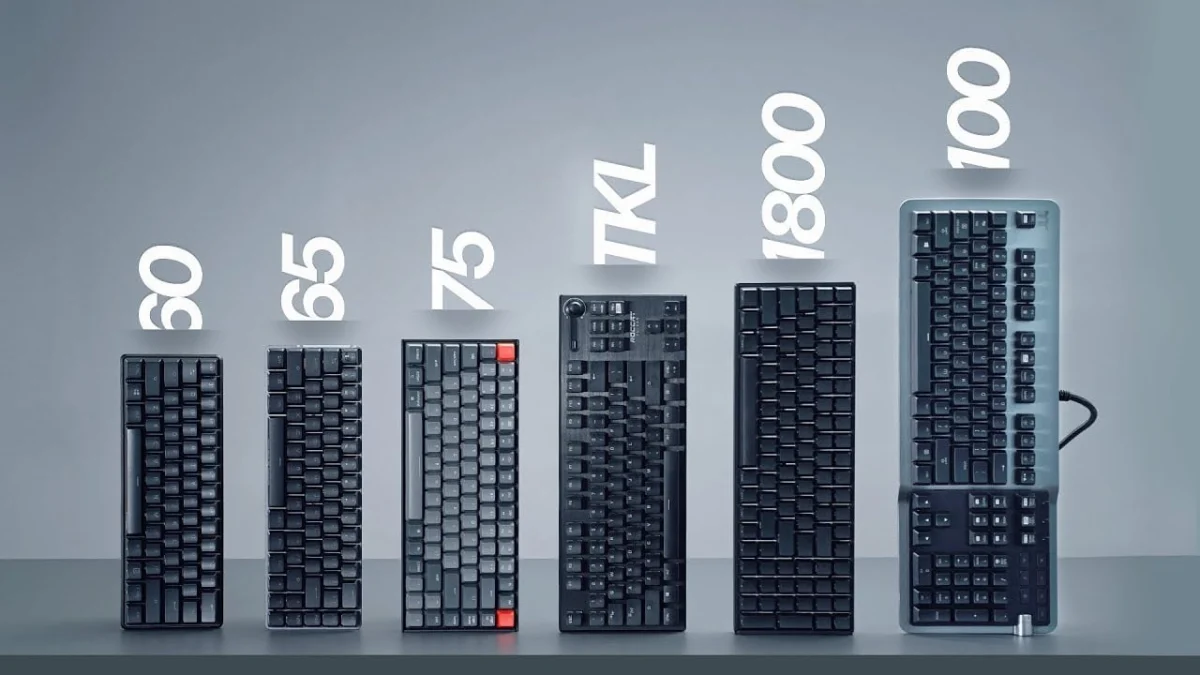
The modern computing landscape presents an unprecedented array of keyboard sizes, moving far beyond the traditional full-sized layout that dominated early personal computing. This evolution is driven by diverse user needs, from professional data entry and intensive gaming to ergonomic considerations and minimalist desk aesthetics. Understanding the nuances of each form factor—from the expansive 100% to the ultra-compact 40%—is crucial for making an informed purchasing decision that aligns with individual workflows and preferences. This article delves into the characteristics, advantages, disadvantages, and typical use cases of prominent keyboard sizes, providing a comprehensive guide for consumers navigating this increasingly complex market.
The Evolution of Keyboard Form Factors and User Demands
The standard QWERTY keyboard layout has been a cornerstone of digital interaction for over a century, yet its physical manifestation has undergone significant transformations. Early computer keyboards, often integrated into terminals, were largely utilitarian, prioritizing a complete set of keys for diverse computing tasks. The advent of the personal computer in the 1980s cemented the 100% or full-size layout as the de facto standard, complete with a dedicated number pad, function row, and navigation cluster. This design reflected the prevailing needs of the era, where extensive data entry, accounting tasks, and complex software operation demanded a full complement of physical keys.
However, as computing evolved, so did user demands and technological capabilities. The late 1990s and early 2000s saw a growing emphasis on ergonomics, with studies highlighting potential issues related to repetitive strain injuries (RSIs) and discomfort from extended mouse reach on larger keyboards. Simultaneously, the burgeoning gaming community began seeking compact designs that maximized desk space for mouse movement, recognizing that a smaller keyboard could offer a competitive advantage. The rise of portable computing also fueled demand for more compact and travel-friendly peripherals. Concurrently, advancements in firmware and key mapping technologies, such as QMK (Quantum Mechanical Keyboard) and VIA, allowed for multi-layered functionality, enabling smaller keyboards to perform the tasks of their larger counterparts through sophisticated key combinations. This confluence of ergonomic awareness, gaming performance needs, portability requirements, and technological innovation has led to the proliferation of specialized keyboard sizes, each catering to distinct segments of the market.
Full Size (100%) Keyboards: The Traditional Workhorse
The 100% or full-size keyboard represents the quintessential layout, typically featuring 104 to 108 keys in most standard configurations, depending on the region (e.g., ANSI vs. ISO layouts). This robust design incorporates a full alphanumeric section, a dedicated number pad, a complete F-row (F1-F12), and a comprehensive navigation cluster including arrow keys, Home, End, Page Up, Page Down, Insert, and Delete. Historically, this layout emerged as the standard for business and general computing, where data entry and extensive document navigation were paramount.
Advantages and Use Cases:
The primary advantage of a full-size keyboard lies in its completeness and versatility. The dedicated number pad is indispensable for professionals in finance, accounting, data analysis, or anyone frequently inputting numerical data. For instance, a financial analyst working with spreadsheets can achieve significantly faster data entry speeds using the numpad compared to using the top-row number keys. The dedicated function keys (F1-F12) provide immediate access to system commands and application-specific shortcuts without requiring modifier keys, a convenience appreciated by power users across various software suites, from CAD programs to development environments. Furthermore, the extensive navigation cluster allows for precise cursor control and document scrolling, enhancing productivity in word processing, programming, and web browsing.
Full-size keyboards also typically offer the widest range of features and design innovations. Manufacturers often introduce cutting-edge technologies—such as advanced per-key RGB lighting systems, programmable macro keys, dedicated media controls, digital control dials, integrated USB and audio passthroughs, and sophisticated polling rates (