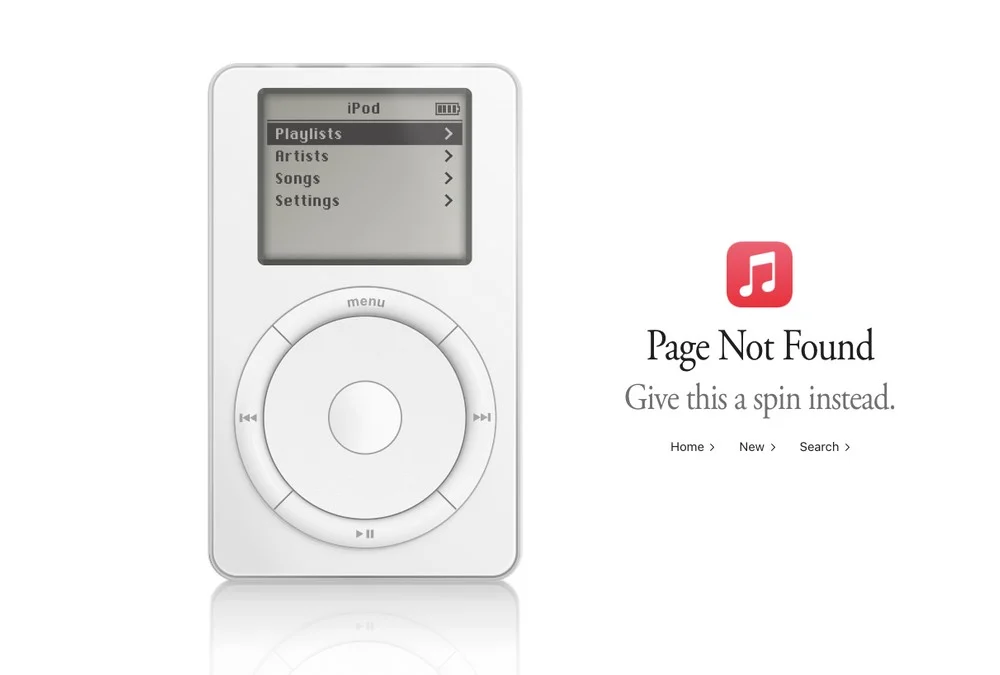
The landscape of personal audio was fundamentally altered on October 23, 2001, when Steve Jobs took to a stage in Cupertino to unveil a device that promised to put "1,000 songs in your pocket." Two and a half decades later, Apple is paying homage to that revolutionary milestone by embedding a fully functional, interactive digital recreation of the original iPod within its web infrastructure. This hidden tribute, accessible via a specific URL redirect on the company’s music portal, serves as a poignant reminder of the device that transitioned the world from physical media to the digital age.
The interactive easter egg is triggered by navigating to the music.apple.com domain followed by a non-existent directory, such as /ipod. Upon reaching the standard "Page Not Found" error screen, visitors are not met with a broken link, but with a meticulously rendered, clickable model of the first-generation iPod. The interface replicates the device’s signature aesthetic—complete with its monochromatic display and the tactile, iconic scroll wheel. By using a mouse to click and drag, users can simulate the physical navigation of the 2001 software, complete with the familiar, menu-driven interface that defined the early 2000s tech aesthetic.
A Chronology of the iPod Revolution
To understand the weight of this anniversary, one must look at the trajectory of the iPod since its 2001 inception. At the time of its launch, the device faced significant skepticism; critics questioned why consumers would pay $399 for a standalone music player when CD players were ubiquitous and cheaper. However, the integration of a 5GB hard drive and the intuitive FireWire-based synchronization with iTunes proved to be a watershed moment for Apple.
The product line expanded rapidly over the following years. By 2004, the iPod mini introduced the Click Wheel, a design innovation that moved the navigation buttons onto the wheel itself, streamlining the user experience. The release of the iPod nano in 2005 replaced the hard drive with flash memory, making the device thinner and more durable. The iPod shuffle followed, stripping away the screen entirely to create an affordable, ultra-portable entry point for the Apple ecosystem.
The zenith of the hardware’s influence occurred between 2005 and 2007, when Apple began incorporating video capabilities, leading to the eventual launch of the iPod touch—a device that effectively served as a bridge to the iPhone. By the time Apple discontinued the final iteration of the iPod, the iPod touch, in May 2022, the transition to streaming services like Apple Music was complete. The hardware had fulfilled its primary mission: democratizing access to music libraries and laying the groundwork for the modern smartphone.
Technical Specifications and Nostalgic Integration
The digital easter egg currently hosted on Apple’s servers is more than a static image. It is a functional web-based simulation that highlights the software architecture of the original device. The web interface includes a library of audio tracks curated from artists who were at the height of their influence in 2001. When a user navigates the menu and selects a track, the web player provides a ninety-second audio preview.
This inclusion of audio is significant because it mimics the "Music Store" experience that Apple would later refine into the iTunes Store. By allowing users to interact with the scroll wheel—a component that required precise mechanical engineering in the original hardware—the web interface bridges the gap between modern browser-based interaction and the tactile satisfaction of early 2000s electronics. It serves as a masterclass in skeuomorphic design, a philosophy that Apple championed for over a decade, where digital interfaces mimicked the look and feel of their physical counterparts.
Data and Market Impact
The impact of the iPod on the music industry cannot be overstated. When the iPod launched, the music industry was grappling with the rise of digital piracy, exemplified by platforms like Napster. Apple’s solution provided a legal, user-friendly, and high-capacity alternative.
Between 2001 and 2011, Apple sold more than 300 million iPod units. This massive installed base provided the company with the leverage required to negotiate with record labels, leading to the creation of the iTunes Store in 2003. According to market data from the mid-2000s, the iPod accounted for nearly 70% of the portable music player market at its peak. More importantly, the iPod served as the "halo" product that brought millions of Windows users into the Apple ecosystem, significantly bolstering the sales of Macintosh computers during a period when the company was struggling to regain market share.
From a financial perspective, the iPod shifted Apple’s primary revenue stream from personal computers to consumer electronics. In the fiscal year 2006, iPod sales accounted for nearly 40% of Apple’s total revenue. This capital infusion provided the research and development budget necessary to pursue the "Project Purple" initiative, which ultimately resulted in the unveiling of the iPhone in 2007.
Institutional Perspective and Cultural Legacy
While Apple has not issued an official press release regarding this hidden easter egg, the company’s decision to maintain such a feature aligns with its broader corporate strategy of celebrating its design heritage. Apple has frequently utilized its "Page Not Found" or experimental web pages to house subtle tributes to its history. This specific tribute is designed to resonate with the "original" generation of Apple users—those who grew up with white earbuds and the distinct, circular motion of the scroll wheel.
Industry analysts note that this gesture is also a strategic move to reinforce the brand identity of Apple Music. By reminding users of the simplicity of the original iPod interface, Apple is positioning its current streaming service not merely as a modern utility, but as the direct successor to the hardware that defined a generation of music listening.
The shift from the iPod to the iPhone marked a permanent change in consumer behavior. The modern user no longer carries a separate device for music, as smartphones have become multi-purpose hubs for communication, photography, and streaming. However, the nostalgic value of the iPod remains high, as evidenced by the growing market for vintage, refurbished units among collectors and audiophiles who prefer the dedicated, distraction-free experience of a non-connected audio player.
The Broader Implications of the Digital Tribute
The existence of this interactive easter egg underscores a growing trend in digital preservation. As hardware becomes obsolete, the software and user interfaces that once defined the human-computer interaction of the early 21st century risk being lost. By embedding this simulation into its live web infrastructure, Apple is effectively archiving a piece of its own history.
This move also highlights the tension between legacy and modernity. As Apple continues to push the boundaries of spatial computing and high-fidelity streaming, returning to the simplicity of a 2001 interface provides a moment of clarity for the user. It allows the audience to contrast the complexity of modern operating systems with the elegant, singular purpose of the original iPod.
For the tech industry, the 25th-anniversary easter egg serves as a reminder that successful product design is often rooted in a singular, well-executed concept. The scroll wheel was not merely a navigation tool; it was a physical manifestation of an interface that allowed users to feel in control of their entire music library.
As the world continues to move toward cloud-based, algorithm-driven consumption, this small, hidden page on Apple’s website stands as a quiet monument to the era of ownership and curation. It invites visitors to pause, click through a familiar menu, and remember a time when the act of listening to music was a conscious, tactile, and deeply personal experience. Whether intended as a permanent fixture or a limited-time celebration, the interactive iPod serves as a bridge between the company’s storied past and its current, ubiquitous digital presence.