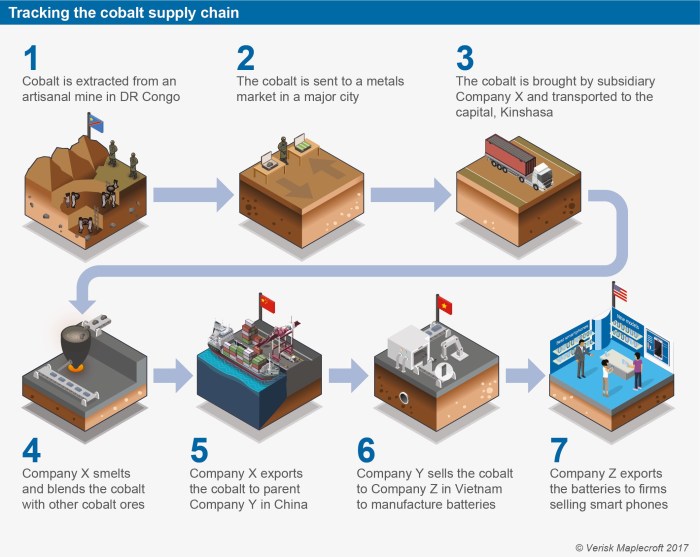
Lithium ion battery supply chain human rights abuses are a pressing concern, casting a shadow over the clean energy transition. From the cobalt mines of the Congo to the sprawling factories of Asia, the journey of these batteries is often paved with exploitation, environmental degradation, and human suffering.
The demand for lithium-ion batteries is soaring, driven by the rapid adoption of electric vehicles, smartphones, and other electronic devices. This surging demand, however, has fueled a race for resources, leaving vulnerable communities and workers exposed to the harsh realities of the industry.
The Global Lithium-Ion Battery Supply Chain
The global lithium-ion battery supply chain is a complex and interconnected network that spans multiple continents and involves a wide range of actors, from mining companies to manufacturers and recyclers. Understanding the intricate workings of this chain is crucial for addressing human rights concerns and ensuring ethical sourcing of materials.
Get the entire information you require about eu ai act deal regulation artificial intelligence inside on this page.
Stages of the Lithium-Ion Battery Supply Chain
The lithium-ion battery supply chain encompasses several key stages, each with its own set of challenges and potential for human rights abuses.
- Mining:This stage involves extracting raw materials such as lithium, nickel, cobalt, manganese, and graphite. Mining operations often occur in developing countries with weak environmental regulations and labor protections.
- Refining:Extracted materials undergo refining processes to transform them into usable forms for battery production.
This stage typically takes place in countries with established metallurgical industries, such as China and South Korea.
- Battery Manufacturing:The refined materials are then assembled into lithium-ion batteries, which are used in a wide range of applications, including electric vehicles, consumer electronics, and grid storage.
China currently dominates battery manufacturing, followed by South Korea and Japan.
- Recycling:As batteries reach the end of their lifespan, they must be recycled to recover valuable materials and minimize environmental impacts. Battery recycling is still in its early stages of development, with China leading in terms of capacity.
Geographic Distribution of the Lithium-Ion Battery Supply Chain
The lithium-ion battery supply chain is geographically dispersed, with different stages concentrated in various regions:
- Mining:Lithium mining is concentrated in South America (Chile, Argentina, Bolivia), Australia, and China. Cobalt mining is largely concentrated in the Democratic Republic of Congo (DRC), which accounts for over 70% of global production.
- Refining:China, South Korea, and Japan are major refining centers for battery materials.
- Battery Manufacturing:China is the world’s largest battery manufacturer, followed by South Korea and Japan. The United States and Europe are also developing their own battery manufacturing capabilities.
- Recycling:China is the leading country in battery recycling, followed by South Korea and Japan.
Major Players and Corporations
A wide range of corporations play a significant role in the lithium-ion battery supply chain, including:
- Mining:Major mining companies involved in lithium extraction include Albemarle, SQM, Livent, and Ganfeng Lithium. Glencore and Eurasian Resources Group (ERG) are major players in cobalt mining.
- Refining:Companies like LG Chem, Samsung SDI, and SK Innovation are major players in the refining of battery materials.
- Battery Manufacturing:Leading battery manufacturers include CATL, LG Energy Solution, Samsung SDI, Panasonic, and BYD.
- Recycling:Companies like Redwood Materials, Li-Cycle, and American Manganese are emerging players in the battery recycling sector.
Ethical and Legal Frameworks for Addressing Human Rights Abuses
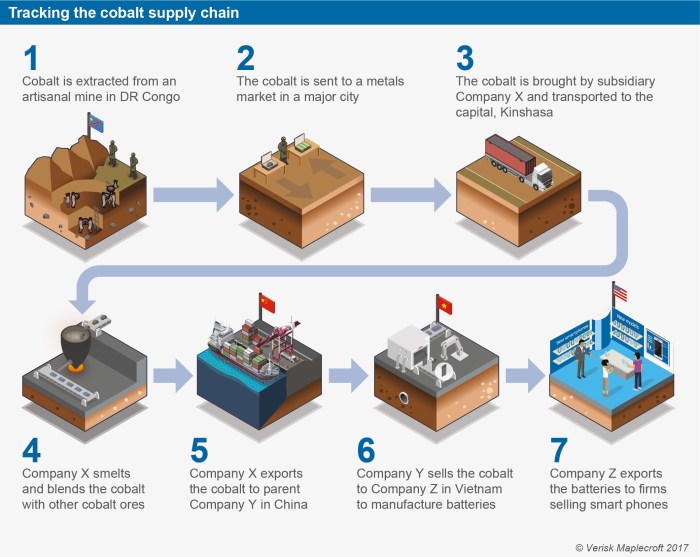
The lithium-ion battery supply chain is complex and spans multiple countries, raising concerns about human rights abuses. To address these issues, a robust framework of international legal instruments and ethical guidelines has emerged. These frameworks aim to promote responsible sourcing and production practices, ensuring that the pursuit of technological advancement does not come at the expense of human dignity.
International Legal Frameworks, Lithium ion battery supply chain human rights abuses
International legal frameworks play a crucial role in establishing minimum standards for human rights protection in global supply chains.
- The United Nations Guiding Principles on Business and Human Rights (UNGPs)provide a comprehensive framework for businesses to prevent and address human rights abuses within their operations and supply chains. They emphasize the responsibility of businesses to respect human rights, conduct due diligence, and provide for remedies for victims of abuses.
- The International Labour Organization (ILO)Conventions, particularly Convention 169 on Indigenous and Tribal Peoples, are relevant to the lithium-ion battery supply chain, as many mining operations are located in areas inhabited by indigenous communities. These conventions aim to protect the rights of indigenous peoples, including their right to free, prior, and informed consent regarding projects affecting their lands and resources.
- The OECD Guidelines for Multinational Enterprisesprovide non-binding principles for businesses to adhere to when operating in foreign countries. These guidelines cover a range of human rights issues, including labor standards, environmental protection, and responsible business conduct.
Ethical Guidelines
Beyond legal frameworks, various ethical guidelines and initiatives aim to promote responsible sourcing and production practices in the lithium-ion battery industry.
- The Responsible Minerals Initiative (RMI), formerly known as the Responsible Minerals Assurance Process (RMAP), is a multi-stakeholder initiative that promotes responsible sourcing of minerals, including cobalt, lithium, and nickel, used in battery production. It provides a certification system for companies that meet its standards for ethical and sustainable sourcing practices.
- The Global Battery Alliance (GBA)is a multi-stakeholder platform that brings together governments, industry leaders, and civil society organizations to promote sustainable and ethical battery value chains. It aims to develop and implement best practices for responsible sourcing, recycling, and manufacturing of batteries.
- The Fair Tradecertification, while primarily focused on agricultural products, can also be applied to minerals and other materials used in battery production. Fair Trade certification ensures that producers receive fair prices for their products, work in safe and ethical conditions, and have access to community development programs.
Effectiveness of Frameworks
While these frameworks and guidelines provide valuable tools for promoting human rights in the lithium-ion battery supply chain, their effectiveness remains a subject of debate.
- A key challenge is the enforcementof these frameworks. Many international legal instruments are non-binding, and enforcement mechanisms are often weak or lack adequate resources.
- Another challenge is the complexityof global supply chains. It can be difficult to track the origin of materials and ensure compliance with human rights standards throughout the entire chain.
- There is also a need for greater transparencyand accountability from companies operating in the lithium-ion battery industry. This includes disclosing their sourcing practices, conducting due diligence, and providing information about their efforts to address human rights risks.
Role of Stakeholders
Addressing human rights abuses in the lithium-ion battery supply chain requires a collaborative effort from various stakeholders.
- Governmentshave a crucial role to play in setting strong legal frameworks, enforcing regulations, and promoting ethical sourcing practices. They can also provide financial and technical support to developing countries to improve their capacity to protect human rights.
- Corporationsmust take responsibility for their supply chains, conduct due diligence to identify and address human rights risks, and implement robust policies and procedures to ensure compliance with ethical and legal standards.
- Non-governmental organizations (NGOs)play a vital role in monitoring human rights abuses, raising awareness, and advocating for change. They can provide independent oversight of corporate practices and hold companies accountable for their actions.
Strategies for Mitigating Human Rights Abuses: Lithium Ion Battery Supply Chain Human Rights Abuses
The global lithium-ion battery supply chain is a complex web of interconnected industries, each with its own set of challenges and opportunities when it comes to human rights. To ensure a truly sustainable and ethical future for this industry, proactive strategies are crucial.
This section will delve into specific strategies that can be implemented to mitigate human rights abuses, emphasizing the role of due diligence and transparency, and showcasing best practices and initiatives already underway.
Due Diligence and Transparency in Supply Chain Management
Due diligence and transparency are fundamental to addressing human rights abuses within the lithium-ion battery supply chain. These principles allow companies to identify, assess, and mitigate risks associated with human rights violations throughout their supply chains.
- Risk Assessment and Mapping:Companies should conduct thorough risk assessments to identify potential human rights risks at each stage of the supply chain. This involves mapping the supply chain, identifying key suppliers, and understanding the potential for labor exploitation, environmental damage, and other human rights abuses.
- Independent Audits and Verification:Regular, independent audits and verification processes are essential to ensure that suppliers are adhering to ethical and legal standards. These audits should be conducted by reputable third-party organizations and should cover areas such as working conditions, wages, health and safety, and environmental practices.
- Data Collection and Disclosure:Companies should collect and disclose relevant data on their supply chains, including information about their suppliers, sourcing practices, and efforts to address human rights risks. This transparency helps stakeholders hold companies accountable and allows for better monitoring of progress.
Best Practices and Initiatives
Numerous companies and organizations are taking steps to improve labor conditions and environmental sustainability within the lithium-ion battery supply chain.
- Responsible Sourcing Initiatives:Several initiatives, such as the Responsible Minerals Initiative (RMI) and the Global Battery Alliance (GBA), provide frameworks and tools for companies to implement responsible sourcing practices. These initiatives promote transparency, traceability, and due diligence in the sourcing of critical minerals.
- Collaboration and Partnerships:Collaboration between companies, governments, and civil society organizations is crucial to addressing complex human rights issues. This includes working with local communities, NGOs, and labor unions to develop and implement sustainable solutions.
- Investment in Technology and Innovation:Technological advancements, such as blockchain and artificial intelligence, can enhance transparency and traceability in supply chains. Companies are exploring innovative solutions to improve worker safety, reduce environmental impact, and ensure ethical sourcing.
Examples of Best Practices
Several companies are demonstrating leadership in addressing human rights challenges within the lithium-ion battery supply chain.
- Tesla:Tesla has implemented a comprehensive human rights policy and has committed to sourcing cobalt from ethical and sustainable sources. The company has also partnered with organizations like the RMI to promote responsible sourcing practices.
- BMW:BMW has established a code of conduct for its suppliers that includes specific provisions on human rights and environmental protection. The company also conducts regular audits of its suppliers to ensure compliance with these standards.
- Apple:Apple has been a leader in promoting responsible sourcing of minerals, particularly tin, tantalum, tungsten, and gold (3TG). The company has partnered with NGOs and industry groups to improve transparency and accountability in its supply chain.
Future Directions and Recommendations
The lithium-ion battery supply chain faces significant challenges in ensuring ethical and sustainable practices. This section explores potential solutions and recommendations for addressing human rights abuses and promoting responsible sourcing.
Technological Advancements for Sustainable Production
Technological advancements hold significant promise for mitigating environmental and social concerns associated with lithium-ion battery production. Advancements in battery technology, such as solid-state batteries, could reduce reliance on cobalt and other critical minerals, minimizing the risk of human rights abuses in mining.
Additionally, innovations in recycling and resource recovery technologies can significantly reduce the environmental footprint of battery production and contribute to a more circular economy.
Framework for Responsible Sourcing and Ethical Production
A comprehensive framework is crucial for promoting responsible sourcing and ethical production of lithium-ion batteries. This framework should encompass the following key elements:
- Due Diligence and Transparency:Implementing robust due diligence processes to identify and mitigate human rights risks throughout the supply chain is essential. This includes conducting audits, verifying ethical sourcing practices, and ensuring transparency in supply chain information.
- Collaboration and Partnerships:Fostering collaboration among governments, industry stakeholders, and civil society organizations is critical for effective human rights protection. This includes establishing multi-stakeholder platforms for dialogue, sharing best practices, and developing joint initiatives.
- Standards and Certifications:Developing and promoting internationally recognized standards and certifications for responsible lithium-ion battery production can provide a framework for ethical sourcing and sustainable practices. This can incentivize companies to adopt responsible practices and enable consumers to make informed choices.
- Policy and Regulatory Frameworks:Governments play a crucial role in creating enabling policy and regulatory frameworks that promote human rights and environmental sustainability in the lithium-ion battery supply chain. This includes enacting legislation on responsible sourcing, labor rights, and environmental protection, as well as providing incentives for companies to adopt ethical practices.