

Immutable operating systems future – Immutable operating systems are poised to revolutionize the way we think about software and system security. Imagine a world where operating systems are inherently resistant to vulnerabilities and attacks, where updates are seamless and rollbacks are instantaneous. This is the promise of immutable operating systems, where the core system files are unchangeable, ensuring a stable and secure environment.
By adopting a “write-once, read-many” approach, immutable operating systems eliminate the risk of accidental or malicious modifications to the core system. Instead of patching vulnerabilities, immutable systems simply create a new, updated version, leaving the old one untouched. This fundamentally changes how we approach system security and opens up new possibilities for reliable and efficient computing.
Immutable Operating Systems
The world of operating systems is evolving, with a growing focus on security, reliability, and efficiency. Immutable operating systems are emerging as a promising solution to address these challenges.
Immutable Operating Systems: A Definition, Immutable operating systems future
Immutable operating systems are a new breed of operating systems that are designed to be inherently unchangeable after they are built. This means that once an immutable operating system is deployed, its core components, including the kernel, libraries, and applications, cannot be modified directly.
Instead, any changes or updates are applied by creating entirely new, immutable versions of the system.
Comparison with Traditional Operating Systems
Traditional operating systems are mutable, meaning they can be modified directly. This flexibility allows for quick fixes and updates, but it also introduces vulnerabilities. For example, installing a new application or updating a driver can introduce bugs or security flaws that could compromise the system.
- Traditional Operating Systems:Mutable, allowing direct modifications, which can lead to vulnerabilities and inconsistencies.
- Immutable Operating Systems:Unchangeable after deployment, requiring new versions for updates, ensuring consistency and reducing vulnerabilities.
Examples of Immutable Operating Systems
Several real-world examples of immutable operating systems are available. These systems demonstrate the practical implementation and benefits of this approach.
- NixOS:A Linux distribution that uses a purely functional approach to system configuration, ensuring that every change results in a new, immutable system state.
- CoreOS:A lightweight Linux distribution designed for containerized applications, emphasizing immutability and rapid deployment.
- Docker:While not an operating system itself, Docker uses containerization, a concept closely aligned with immutability, to create isolated and immutable environments for applications.
Advantages of Immutable Operating Systems
Immutable operating systems offer a unique approach to system management, where changes are made by creating new system snapshots instead of modifying the existing one. This approach brings several advantages, significantly impacting security, stability, and ease of management.
Security Benefits
Immutable operating systems provide a robust defense against various security threats due to their inherent design.
- Reduced Attack Surface:Since the operating system is immutable, attackers cannot modify the core system files, significantly reducing the attack surface. Any malicious attempts to modify the system will be ineffective, as the system will revert to its original state.
- Protection Against Malware:Malware typically relies on modifying system files to gain persistence and control. Immutable operating systems prevent malware from making these modifications, significantly reducing the risk of infection.
- Simplified Security Auditing:Immutable systems provide a clear and consistent history of changes. This makes it easier to track and audit system modifications, helping identify and investigate potential security breaches.
System Stability and Reliability
The immutability principle contributes to a more stable and reliable system environment.
- Elimination of Configuration Drift:Immutable systems eliminate configuration drift, a common problem in traditional systems where changes over time can lead to inconsistencies and unexpected behavior. Each new snapshot represents a known and consistent configuration.
- Improved System Consistency:By ensuring that the system remains in a known state, immutability improves system consistency and predictability. This reduces the risk of unexpected errors and system failures.
- Enhanced Resilience:Immutable systems can be easily rolled back to a previous working state in case of a failure or unexpected behavior. This simplifies system recovery and reduces downtime.
Simplified System Updates and Rollbacks
Immutable systems simplify system updates and rollbacks, streamlining the management process.
- Atomic Updates:Updates are applied by creating a new snapshot, ensuring that the system is always in a consistent and working state. This eliminates the risk of partial updates or system inconsistencies.
- Instant Rollbacks:If an update introduces issues, rolling back to a previous working snapshot is quick and easy. This minimizes downtime and reduces the impact of update failures.
- Simplified Patch Management:Applying security patches and updates becomes a straightforward process of creating a new snapshot with the updated system. This simplifies patch management and ensures consistent security.
Challenges of Immutable Operating Systems
Immutable operating systems, while offering significant advantages in terms of security and stability, also present unique challenges that need to be addressed for widespread adoption. These challenges primarily revolve around data management, compatibility with existing software, and the need for efficient resource utilization.
Data Management and Storage
Immutable operating systems treat the operating system as a read-only system. This implies that any changes, including updates, require creating a new, complete system image, rendering the previous one obsolete. This approach raises questions about data management and storage.
- Data Persistence:Traditional operating systems allow for modifications to files and configurations directly on the system. However, in immutable systems, data persistence becomes a challenge. To ensure data integrity and availability, a mechanism is required to store and manage data separately from the immutable operating system.
This can involve utilizing persistent storage volumes or employing techniques like containerization to separate data from the operating system.
- Storage Efficiency:Creating a new system image for every update can lead to significant storage consumption, especially in scenarios involving frequent updates. To address this, techniques like differential updates or using a versioning system for system images can help optimize storage usage.
Differential updates only store the changes between versions, reducing the storage footprint.
- Data Backup and Recovery:Since updates involve creating new system images, backing up data becomes essential. Regular backups of the persistent storage volumes or the containerized data are crucial for disaster recovery and data integrity. Strategies for backup and recovery need to be carefully planned and implemented to ensure data protection.
Compatibility with Existing Software
Another challenge with immutable operating systems is compatibility with existing software.
- Software Dependencies:Many applications rely on specific versions of libraries, drivers, or other system components. Immutable systems, with their read-only nature, might not always provide the necessary compatibility for these dependencies. This could lead to application failures or compatibility issues.
- Legacy Software:Older applications might not be designed to work with immutable systems. Adapting these applications to function in a read-only environment can be challenging and require significant modifications.
- Software Updates:While immutable systems excel at system updates, managing software updates for individual applications within a read-only environment can be complex. Mechanisms for updating applications without compromising the immutability of the system need to be established. This might involve techniques like containerization, where applications and their dependencies are packaged together, or using virtualization to create isolated environments for applications.
Expand your understanding about scottish startup found new way to harness power of waves with the sources we offer.
The Future of Immutable Operating Systems
Immutable operating systems are still in their early stages of development, but they hold immense potential to revolutionize how we build, deploy, and manage software. As these systems gain traction, we can expect to see a dramatic shift in the landscape of software development and deployment.
A Hypothetical Future Scenario
Imagine a world where software updates are as simple as downloading a new file. Every time a new feature or security patch is released, you simply download the latest immutable image, and your system is instantly updated without any downtime or risk of configuration errors.
This is the vision of immutable operating systems, and it is a vision that is rapidly becoming a reality.
Impact on Various Industries
The impact of immutable operating systems will be felt across various industries, from cloud computing and cybersecurity to embedded systems and mobile devices.
Cloud Computing
Immutable operating systems are already making waves in the cloud computing industry. Companies like Amazon Web Services (AWS) and Google Cloud Platform (GCP) are embracing immutability as a core principle for building and managing their cloud infrastructure. This is because immutable systems offer several advantages for cloud providers, including:
- Improved security:Immutable systems are inherently more secure because they are resistant to malware and other attacks. Once an image is created, it is never modified, which means that attackers cannot exploit vulnerabilities in the operating system. This makes immutable operating systems ideal for running sensitive workloads in the cloud.
- Faster deployment:Immutable systems can be deployed much faster than traditional systems because they don’t require any configuration or patching. This is because the entire operating system is contained within a single image, which can be easily copied and deployed to multiple servers.
This can significantly reduce the time it takes to roll out new applications or updates.
- Simplified management:Immutable systems are much easier to manage than traditional systems because there is no need to track changes or roll back updates. This is because every change is captured in a new image, which means that you can always revert to a previous version by simply switching to a different image.
This makes it much easier to maintain a consistent and predictable environment.
Cybersecurity
Immutable operating systems are also a game-changer for cybersecurity. They provide a strong defense against malware and other cyberattacks by making it much more difficult for attackers to exploit vulnerabilities in the operating system.
- Reduced attack surface:Immutable systems have a smaller attack surface than traditional systems because they are not constantly being modified. This makes it much harder for attackers to find and exploit vulnerabilities.
- Simplified incident response:In the event of a security breach, it is much easier to recover from an immutable system because you can simply revert to a previous image. This eliminates the need to spend time and resources trying to identify and patch vulnerabilities.
- Improved compliance:Immutable systems can help organizations comply with regulatory requirements, such as those related to data privacy and security. This is because they provide a verifiable audit trail of all changes to the system, which can be used to demonstrate compliance with regulations.
Embedded Systems
Immutable operating systems are also finding their way into the world of embedded systems. This is because they offer several advantages for embedded systems developers, including:
- Improved reliability:Immutable systems are more reliable than traditional systems because they are less prone to errors. This is because they are not constantly being modified, which means that there is less chance of introducing bugs or other errors.
- Reduced development time:Immutable systems can help to reduce the time it takes to develop and deploy embedded systems. This is because they simplify the process of managing updates and patches.
- Enhanced security:Immutable systems can help to improve the security of embedded systems by making them more resistant to attacks.
Evolution of Immutable Operating Systems
Immutable operating systems are still evolving, and we can expect to see several new features and capabilities emerge in the years to come.
Containerization
Containerization is already playing a major role in the adoption of immutable operating systems. Containers provide a lightweight and portable way to package and deploy applications, and they are often used in conjunction with immutable operating systems.
Containers allow developers to package their applications and dependencies into a single, isolated environment, which can then be easily deployed to any server. This makes it much easier to manage applications and ensure that they are running consistently across different environments.
Serverless Computing
Serverless computing is another trend that is likely to have a significant impact on the future of immutable operating systems. Serverless computing allows developers to run code without having to manage any servers. This makes it possible to build and deploy applications much faster and more efficiently.
Serverless computing is often used in conjunction with immutable operating systems because it allows developers to easily deploy and manage applications without having to worry about the underlying infrastructure.
Edge Computing
Edge computing is a growing trend that is bringing computation and data storage closer to the users. This is making it possible to provide faster and more responsive services.
Edge computing is likely to drive the adoption of immutable operating systems because it requires a highly reliable and secure infrastructure. Immutable operating systems are well-suited for edge computing because they offer several advantages, such as improved security, reliability, and manageability.
Use Cases and Applications
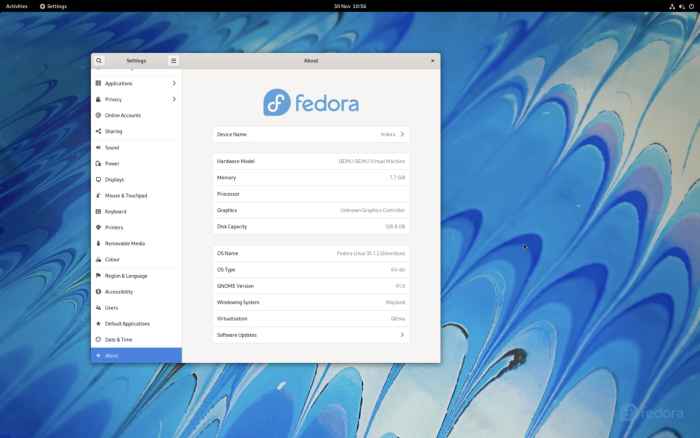
Immutable operating systems, with their unique approach to system updates and security, present a compelling set of use cases across diverse industries. Their inherent resistance to modifications and predictable behavior make them particularly attractive for scenarios demanding high reliability, security, and consistency.
Use Cases and Applications
Immutable operating systems offer a unique approach to system updates and security, making them ideal for specific scenarios demanding high reliability, security, and consistency. Here’s a table highlighting key use cases, their benefits, and challenges:
| Use Case | Description | Benefits | Challenges | Example Implementations |
|---|---|---|---|---|
| Serverless Computing | Immutable operating systems are well-suited for serverless environments where functions are executed in isolated containers. This ensures consistency and prevents unexpected behavior due to changes in the underlying operating system. | – Improved security through isolation and immutability
|
– Potential for increased resource consumption due to containerization
|
AWS Lambda, Google Cloud Functions, Azure Functions |
| Cloud Infrastructure | Cloud providers can leverage immutable operating systems to ensure consistent and reliable environments for their customers. Updates are rolled out in a predictable manner, minimizing downtime and potential disruptions. | – Enhanced security by minimizing attack surface
|
– Requires careful planning for migration and updates
|
Amazon EC2, Google Compute Engine, Microsoft Azure |
| Internet of Things (IoT) | Immutable operating systems can provide a secure and reliable platform for IoT devices. Their inherent resistance to changes helps prevent malicious modifications and ensures consistent operation. | – Improved security against attacks and unauthorized modifications
|
– Limited resources and processing power on some IoT devices
|
OpenWrt, Contiki, RIOT-OS |
| Cybersecurity | Immutable operating systems can be used to create secure and hardened environments for critical systems. Their inherent resistance to changes makes them less susceptible to attacks. | – Enhanced security through immutability and limited attack surface
|
– Requires careful planning and implementation to ensure security
|
NixOS, CoreOS, OpenBSD |
Industries Impacted
Immutable operating systems have the potential to significantly impact various industries. Their inherent benefits in security, reliability, and consistency make them attractive for critical systems and applications. Here are some key industries where immutable operating systems could have a significant impact:
- Financial Services:Immutable operating systems can provide a secure and reliable platform for financial transactions and data management. Their resistance to changes helps prevent unauthorized access and manipulation of sensitive information.
- Healthcare:In healthcare, immutable operating systems can ensure the integrity and security of patient data and medical devices. Their consistent behavior helps prevent errors and ensures reliable operation of critical systems.
- Manufacturing:Immutable operating systems can be used to create reliable and secure control systems for industrial processes. Their resistance to changes helps prevent disruptions and ensures consistent operation of manufacturing lines.
- Transportation:Immutable operating systems can enhance the security and reliability of transportation systems, such as autonomous vehicles and traffic management systems. Their consistent behavior helps prevent accidents and ensures smooth operation.
- Government:Immutable operating systems can provide a secure and reliable platform for government data and systems. Their resistance to changes helps prevent unauthorized access and manipulation of sensitive information.
Key Technologies and Concepts

Immutable operating systems are built on a foundation of technologies and concepts that enable their unique characteristics. These technologies work together to ensure the system’s integrity and resilience, making them ideal for applications demanding high reliability and security.
Containerization
Containerization is a key technology that plays a vital role in immutable operating systems. Containers are lightweight, self-contained units that package an application and its dependencies, allowing them to run consistently across different environments. The container image, containing the application and its dependencies, is immutable.
This immutability ensures that the application’s behavior remains consistent regardless of the environment it runs in, contributing to the overall stability and predictability of the system.
Virtualization
Virtualization is another crucial technology that complements immutable operating systems. Virtualization enables the creation of virtual machines (VMs) that run on a physical host machine. VMs provide a layer of isolation, allowing multiple operating systems to run simultaneously on a single physical machine.
This isolation further enhances security and stability, as changes made to one VM do not affect other VMs or the host system.
Version Control
Version control systems are essential for managing the lifecycle of immutable operating systems. Version control systems track changes to files and code, allowing developers to revert to previous versions if necessary. In the context of immutable systems, version control ensures that every change to the system is recorded and traceable, making it easier to identify and fix problems.
Examples
- Docker: A popular containerization platform that uses immutable images to ensure consistency and reproducibility of applications. Each Docker image is a snapshot of the application and its dependencies at a specific point in time, ensuring that the application behaves predictably across different environments.
- Kubernetes: An open-source container orchestration platform that leverages immutable containers to manage and deploy applications at scale. Kubernetes ensures that every deployment is consistent and reproducible, minimizing the risk of errors and ensuring the stability of the application.
- Git: A widely used version control system that tracks changes to code and files. Git is used in the development of immutable operating systems to manage the lifecycle of the system’s components and ensure that every change is recorded and traceable.
Impact on Security and Reliability
Immutable operating systems significantly enhance security and reliability by minimizing attack surfaces and reducing system vulnerabilities. This approach ensures that the core system remains untouched, preventing malware from permanently altering critical components.
Minimizing Attack Surfaces
Immutable operating systems reduce the attack surface by eliminating the possibility of modifying the core system files. Since these files are read-only, attackers cannot inject malicious code or alter system configurations, effectively limiting their ability to exploit vulnerabilities.
An attack surface refers to the areas of a system that are vulnerable to attack.
This approach minimizes the potential for attackers to gain unauthorized access or control over the system.
Reducing System Vulnerabilities
The inherent immutability of the system ensures that any vulnerabilities present in the initial build are fixed by deploying a new, updated version of the operating system. This eliminates the need for patching or updating the existing system, which could introduce new vulnerabilities or errors.
Vulnerabilities are weaknesses in a system that can be exploited by attackers.
Furthermore, by using immutable operating systems, administrators can isolate and contain vulnerabilities to specific applications or services, preventing them from affecting the entire system.
System Stability and Resilience
Immutable operating systems enhance system stability and resilience by preventing accidental or malicious modifications to the core system files. This ensures that the system remains consistent and predictable, reducing the likelihood of unexpected crashes or errors.
Resilience refers to the ability of a system to withstand failures and recover quickly.
In case of a failure, the immutable system can be quickly restored to a known good state by rolling back to a previous version, minimizing downtime and ensuring business continuity.
Impact on System Stability and Resilience
The immutability principle also contributes to system resilience by minimizing the impact of attacks and failures. If a system is compromised, the attacker cannot modify the core system files, preventing permanent damage. Additionally, the ability to revert to a previous version of the system allows for quick recovery from attacks or failures, minimizing downtime and disruption.
System stability refers to the ability of a system to operate reliably and consistently over time.
This approach ensures that the system remains stable and reliable even in the face of external threats or internal failures.
Developer Experience and Adoption: Immutable Operating Systems Future
The shift towards immutable operating systems presents both challenges and opportunities for developers. Understanding these nuances is crucial for developers to embrace this paradigm shift effectively and build applications that thrive in immutable environments.
Challenges of Immutable Operating Systems for Developers
Developers accustomed to traditional operating systems with mutable file systems may face initial challenges when transitioning to an immutable environment. Here’s a breakdown of key hurdles:
- Limited Control Over System Files:Immutable systems restrict direct modifications to the operating system files. This can feel restrictive to developers used to customizing their environments.
- Dependency Management:Managing dependencies becomes more critical in immutable systems. Any changes to dependencies require rebuilding and redeploying the entire system, which can be time-consuming.
- Debugging and Troubleshooting:Debugging can be more complex in immutable environments. Since the system is essentially read-only, traditional debugging techniques like inspecting system files might not be readily available.
- Learning Curve:Adopting immutable operating systems requires developers to learn new tools, practices, and workflows, which can be a learning curve.
Opportunities for Developers in Immutable Environments
While there are challenges, immutable operating systems also open up exciting opportunities for developers:
- Enhanced Security:The immutable nature of the system makes it significantly harder for attackers to exploit vulnerabilities or inject malicious code. This inherent security advantage can lead to more robust and reliable applications.
- Simplified Rollbacks:Rolling back to a previous version of the system is significantly easier in immutable environments. Since the system is immutable, developers can simply revert to a previous snapshot, eliminating the risk of introducing errors during rollbacks.
- Improved Reproducibility:Immutable systems ensure that the entire system state is consistent across deployments. This makes it easier to reproduce application behavior and debug issues.
- Automation and CI/CD:Immutable systems are inherently well-suited for automated deployments and continuous integration/continuous delivery (CI/CD) pipelines. This can significantly speed up development and deployment processes.
Best Practices for Developing in Immutable Environments
To navigate the challenges and capitalize on the opportunities of immutable operating systems, developers should adopt these best practices:
- Embrace Containerization:Containerization technologies like Docker provide a natural fit for immutable environments. Containers encapsulate applications and their dependencies, making them easily portable and reproducible.
- Leverage Immutable Infrastructure:Utilize infrastructure-as-code tools like Terraform to manage and define immutable infrastructure configurations. This ensures consistency and reduces the risk of manual errors.
- Implement Configuration Management:Use configuration management tools like Ansible or Puppet to manage system configurations and ensure consistency across deployments.
- Adopt DevOps Practices:Embrace DevOps principles like continuous integration, continuous delivery, and automated testing to streamline development and deployment processes in immutable environments.
- Utilize Version Control:Employ version control systems like Git to track changes to applications and infrastructure configurations. This facilitates rollbacks and allows for collaboration among developers.
Impact of Immutable Operating Systems on Developer Workflows
The adoption of immutable operating systems is likely to significantly impact developer workflows in the following ways:
- Shift Towards Infrastructure-as-Code:Developers will increasingly rely on infrastructure-as-code tools to define and manage immutable infrastructure configurations.
- Emphasis on Automation:Automation will become even more crucial for tasks like deployments, updates, and rollbacks in immutable environments.
- Increased Focus on Security:Developers will need to be more mindful of security considerations and best practices when building applications for immutable systems.
- New Tools and Techniques:Developers will need to learn and adopt new tools and techniques specifically designed for immutable environments.
Comparison with Other Operating System Models
Immutable operating systems represent a significant shift in how we approach system design and security. To understand their place in the landscape, it’s crucial to compare them with other emerging operating system models. This comparison will shed light on the unique strengths and limitations of each approach, helping us identify the most suitable model for specific use cases.
Comparison with Traditional Operating Systems
Traditional operating systems are characterized by their mutable nature. This means that they are constantly changing as software is installed, updated, and removed. This mutability can lead to security vulnerabilities, as attackers can exploit these changes to gain access to the system.
- Advantages of Traditional Operating Systems:
- Flexibility and customization: Users have the freedom to install and remove software as needed, tailoring the system to their specific requirements.
- Backward compatibility: Traditional operating systems are designed to support a wide range of legacy software, ensuring continuity for users.
- Well-established ecosystem: A vast ecosystem of applications, drivers, and tools is available for traditional operating systems.
- Disadvantages of Traditional Operating Systems:
- Security vulnerabilities: Constant changes introduce potential attack vectors, making the system more susceptible to compromise.
- Configuration drift: As changes accumulate, the system configuration can become inconsistent and difficult to manage.
- Rollbacks and recovery: Restoring the system to a previous state can be challenging and time-consuming.
Comparison with Container-Based Systems
Containerization has emerged as a popular approach for packaging and deploying applications. Container-based systems, like Docker and Kubernetes, leverage lightweight virtual environments to isolate applications and their dependencies.
- Advantages of Container-Based Systems:
- Portability: Containers can be easily moved between different environments, ensuring consistent application behavior.
- Scalability: Containers can be scaled up or down quickly and efficiently to meet changing demands.
- Resource efficiency: Containers share the host operating system’s kernel, reducing resource overhead.
- Disadvantages of Container-Based Systems:
- Security concerns: Container images can contain vulnerabilities, and attacks can exploit these vulnerabilities to compromise the host system.
- Complexity: Managing containers and their dependencies can be complex, requiring specialized tools and expertise.
- Limited flexibility: Container environments are typically designed for specific applications, limiting flexibility and customization.
Comparison with Microkernel Operating Systems
Microkernel operating systems, such as L4 and MINIX 3, separate the core operating system functionality into small, independent modules. This modularity improves security and reliability by isolating critical components.
- Advantages of Microkernel Operating Systems:
- Enhanced security: Isolating core components reduces the attack surface, making the system more resistant to compromise.
- Improved reliability: Failures in one module are less likely to affect other modules, increasing system stability.
- Flexibility and extensibility: New features can be added as separate modules, simplifying development and maintenance.
- Disadvantages of Microkernel Operating Systems:
- Performance overhead: Communication between modules can introduce performance penalties, especially for resource-intensive applications.
- Complexity: Managing and coordinating multiple modules can be challenging, requiring specialized skills and tools.
- Limited ecosystem: Microkernel operating systems typically have a smaller ecosystem of applications and tools compared to traditional systems.
Hybrid Models Combining Immutability and Traditional Features
The future of operating systems may involve hybrid models that combine the benefits of immutability with the flexibility of traditional systems. This approach could involve using immutable containers or virtual machines to run applications while allowing for a limited degree of mutability in the host operating system for specific tasks.
- Advantages of Hybrid Models:
- Enhanced security: Immutable components provide a strong security foundation, while traditional features offer flexibility for specific needs.
- Improved reliability: Immutable components reduce the risk of configuration drift and system instability.
- Flexibility and customization: Traditional features allow for customization and integration with existing systems.
- Disadvantages of Hybrid Models:
- Complexity: Managing hybrid environments can be challenging, requiring a deeper understanding of both immutable and traditional technologies.
- Potential for conflict: Conflicts may arise between immutable components and traditional features, requiring careful planning and coordination.
- Performance overhead: Communication between immutable and mutable components can introduce performance penalties.