The modern smartphone era has given billions of people unprecedented computational power and high-definition video capabilities right in their pockets. Yet, alongside this pursuit of hyper-realism and 4K resolution, a counter-cultural movement among consumers and software developers has emerged, seeking to recapture the imperfect, tangible charm of analog media. Entering this growing ecosystem of retro-inspired utilities is Flipcorder, a new independent application designed to replicate the workflow, limitations, and aesthetic of vintage camcorders on iOS devices. Developed for modern mobile hardware while honoring decades-old recording formats, Flipcorder offers a unique approach to digital cinematography by restricting users to a virtual cassette workflow that prioritizes spontaneous, unedited moments over polished, modern productions.
Main Facts and Core Functionality
At its technical core, Flipcorder reimagines how video is captured, stored, and consumed on an iPhone. Rather than functioning as a standard video camera that outputs individual, easily shareable files to a device’s camera roll, Flipcorder mimics the physical mechanics of a traditional analog camcorder.
When users open the application and begin recording, footage is written to a virtual tape rather than saved as standalone clips. Each recording session is captured in short, 20-second bursts, echoing the deliberate and sparing nature of shooting on physical film or magnetic tape when storage space and media costs were primary concerns. A single virtual tape can hold up to 30 minutes of accumulated footage before it is considered full, encouraging users to document everyday life organically throughout the day without the pressure of achieving cinematic perfection.
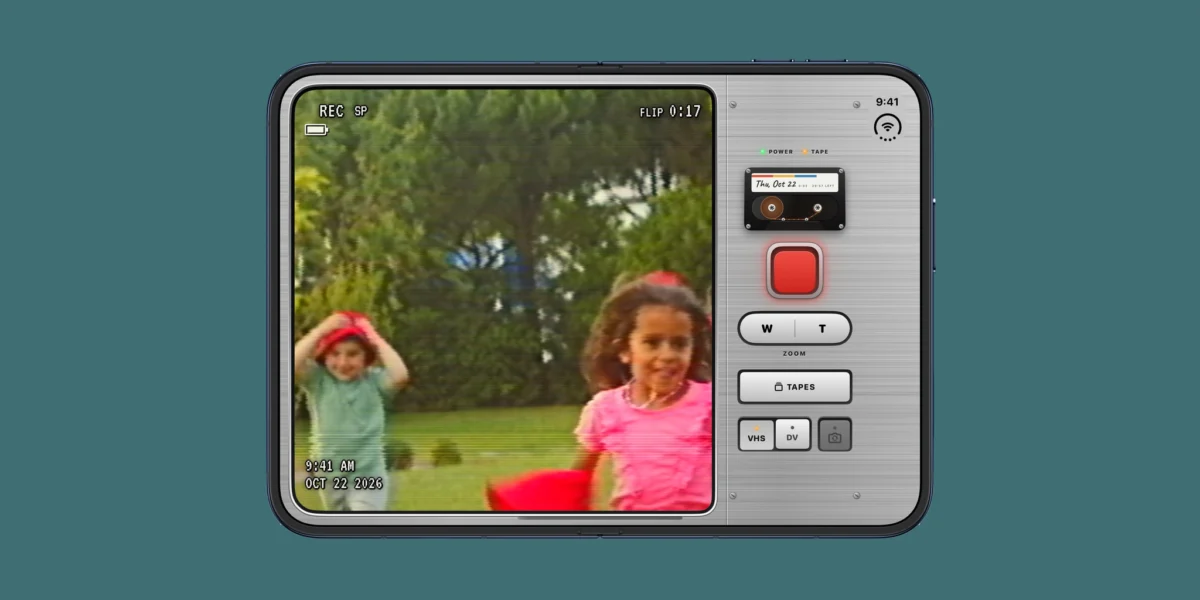
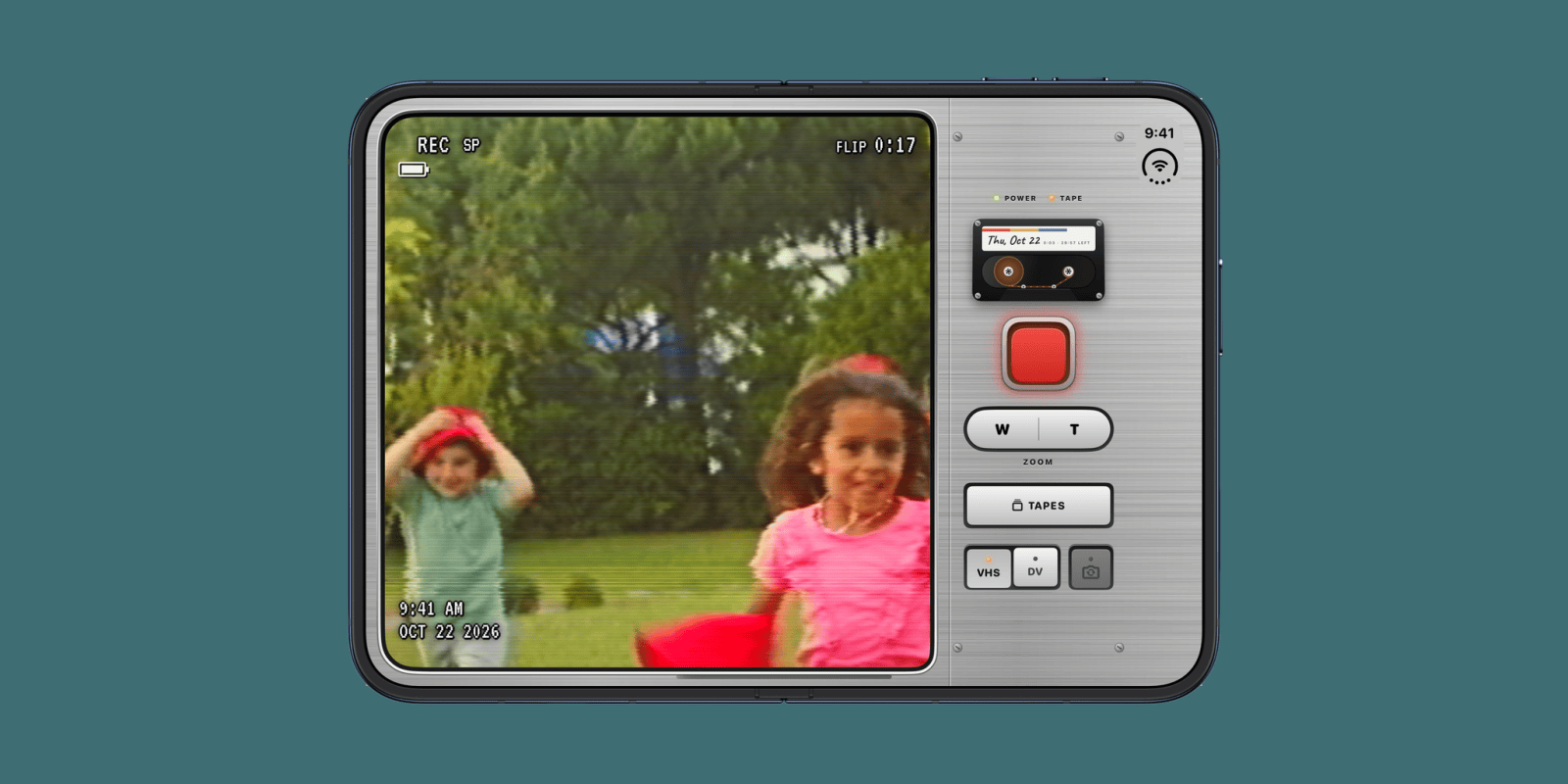
The application features a deliberately nostalgic user interface that mimics the physical hardware of historical recording devices. While Flipcorder is fully compatible with all modern iPhone models running current iOS software, it is specifically optimized to take advantage of dual-screen hardware such as the iPhone Duo. On these specialized devices, the application utilizes the larger internal display to provide a viewfinder experience alongside tactile-seeming controls, enhancing the illusion of operating a vintage piece of audiovisual equipment.
Despite its strong commitment to retro aesthetics, Flipcorder does not completely lock users into low-resolution output. While the application offers authentic video filters mimicking classic formats such as VHS and MiniDV—complete with tracking lines, color bleeding, and soft focus—it also provides the option to record clean, high-definition video while still leveraging the unique cassette-style compilation and single-tape workflow. This dual approach allows users to archive memories with modern clarity while organizing them through a nostalgic structural framework.
Chronology and the Rise of the Indie App Ecosystem
The launch of Flipcorder arrives at a time of significant maturation within the independent iOS developer community. Over the past several years, the App Store has seen a noticeable shift away from feature-bloated, subscription-heavy utilities toward specialized, single-purpose micro-applications designed to solve specific creative problems or evoke particular emotional responses.
The resurgence of retro digital media is not an isolated phenomenon. For nearly a decade, consumers have gravitated toward vintage aesthetics across multiple mediums, from the explosive market demand for point-and-shoot digital cameras from the early 2000s to the vinyl record revival in the music industry. In the software space, this trend materialized initially through photography apps that simulated disposable cameras, instant film, and analog grain. As mobile processing power expanded, developers naturally turned their attention to video, introducing tools that degraded digital footage in controlled, artistic ways to mimic the warmth and texture of magnetic tape.
Flipcorder’s development reflects this iterative cycle of software design. By focusing on the psychological aspect of recording—specifically, the restriction of 20-second clips and a 30-minute ceiling per tape—the application addresses modern smartphone fatigue. Users are frequently overwhelmed by gigabytes of unorganized, unedited 4K video sitting untouched in their cloud storage. By forcing curation at the point of capture, Flipcorder mimics the psychological friction of physical media, where every second recorded carried a tangible value.
Supporting Data and Market Context
The market for retro-styled media applications occupies a distinct and increasingly lucrative niche within the broader digital economy. According to recent mobile application analytics, utility and photography/videography apps that offer distinct aesthetic transformations consistently rank high in consumer engagement, often benefiting from word-of-mouth marketing on social media platforms like TikTok, Instagram, and X.
Flipcorder is distributed through the Apple App Store as a straightforward, one-time purchase priced at $4.99, requiring iOS 26 or later. In an era where software monetization is dominated by recurring subscription models that often frustrate consumers, Flipcorder’s flat-fee pricing structure sets it apart. By offering a complete feature set without additional in-app purchases, recurring subscription fees, or third-party advertisements, the app appeals directly to users suffering from subscription fatigue.
Furthermore, hardware integration statistics indicate that applications optimized for specialized form factors—such as foldable devices and dual-screen iPhones like the iPhone Duo—achieve significantly higher retention rates among early adopters. By tailoring its user interface to take full advantage of dual-display real estate, Flipcorder bridges the gap between hardware innovation and software nostalgia.

Developer Intent and Industry Implications
While independent developers rarely command the massive marketing budgets of Silicon Valley tech giants, their creations frequently dictate broader design trends that major corporations later adopt. Applications like Flipcorder highlight a growing desire among consumers for intentional digital friction.
In a technological landscape defined by instant gratification, infinite cloud storage, and flawless algorithmic enhancement, tools that intentionally introduce limitations resonate deeply. By restricting recording length, simulating tape degradation, and consolidating daily clips onto a single virtual cassette, Flipcorder transforms the act of video recording from a passive archiving task into an active creative ritual.
The success and reception of apps like Flipcorder suggest several implications for the future of mobile software design:
- Rejection of Infinite Storage Fatigue: Consumers are increasingly fatigued by the administrative burden of managing massive digital libraries. Software that imposes artificial constraints to encourage curation and mindfulness is likely to see continued adoption.
- The Sustainability of One-Time Purchases: While software-as-a-service (SaaS) remains the industry standard for enterprise and productivity tools, consumer-facing creative apps may find a competitive advantage by rejecting subscriptions in favor of transparent, upfront pricing.
- Hardware-Specific Software Optimization: As mobile hardware continues to diversify—incorporating folding screens, dual displays, and advanced spatial sensors—developers who build bespoke interfaces tailored to these unique form factors will capture high-value user segments seeking premium, hardware-aware experiences.
Broader Impact on Digital Preservation and Memory Culture
Beyond its technical specifications and aesthetic appeal, Flipcorder touches on deeper questions regarding how contemporary society documents and remembers lived experiences. Traditional smartphone video recording encourages exhaustive documentation; users routinely film entire events, concerts, and family gatherings in high definition, often with the intention of editing them later—a task that is frequently deferred indefinitely.
By enforcing a 20-second recording limit per burst and capping tapes at 30 minutes, Flipcorder shifts the user’s focus from exhaustive documentation to selective impressionism. This mirrors the historical reality of home video recording in the late 20th century, where physical tape scarcity meant that operators had to be selective about what moments deserved preservation. The resulting compilation tape is not an exhaustive archive, but a stylized, impressionistic collage of a day’s highlights.
As digital native generations increasingly romanticize the analog era they may not have directly experienced, tools that translate the tactile qualities of physical media into digital code will likely remain a vibrant sector of the app economy. Flipcorder demonstrates that the future of mobile innovation does not always lie in adding more features, higher resolutions, or complex algorithms, but sometimes in the thoughtful application of creative constraints.