DeepMind AI GraphCast weather forecasting represents a significant leap forward in weather prediction. It’s not just about predicting rain or shine; it’s about harnessing the power of artificial intelligence to understand complex weather patterns and provide more accurate, detailed, and timely forecasts.
GraphCast leverages graph neural networks, a powerful AI technique, to analyze vast amounts of weather data from various sources. This allows it to capture the interconnectedness of weather phenomena and provide forecasts that are more comprehensive and reliable than traditional methods.
DeepMind’s GraphCast
DeepMind’s GraphCast is a revolutionary approach to weather forecasting that leverages the power of artificial intelligence (AI) to predict weather patterns with unprecedented accuracy. This innovative technology has the potential to transform our understanding of weather systems and improve our ability to prepare for and mitigate the impacts of extreme weather events.
Core Principles of GraphCast
GraphCast operates on the principle of representing weather data as a graph, where nodes represent locations and edges represent the connections between them. This graph structure allows the AI model to learn the complex relationships between different weather variables and their spatial distribution.
The model uses a graph neural network (GNN) to process this information and predict future weather conditions.
Key Innovations of GraphCast
GraphCast introduces several key innovations that distinguish it from traditional weather forecasting methods:
- Graph-based Representation:The use of a graph structure allows GraphCast to capture the complex spatial relationships between weather variables, which is often overlooked by traditional methods. This enables the model to learn more comprehensive and accurate representations of weather patterns.
- Deep Learning:GraphCast employs deep learning techniques, specifically graph neural networks, to learn from vast amounts of weather data. This allows the model to identify intricate patterns and relationships that are difficult to discern through traditional statistical methods.
- Multi-scale Forecasting:GraphCast can predict weather conditions at multiple spatial and temporal scales, allowing for more accurate forecasts at local, regional, and global levels. This is crucial for providing relevant and timely information to various stakeholders, from individuals to governments.
- Efficient Computation:GraphCast is designed to be computationally efficient, allowing for faster processing and improved scalability. This is particularly important for real-time weather forecasting applications, where speed is essential.
Comparison with Other AI-Powered Weather Forecasting Systems
GraphCast stands out from other AI-powered weather forecasting systems in several ways:
- Focus on Spatial Relationships:Unlike many other AI-based systems that primarily focus on temporal patterns, GraphCast explicitly incorporates spatial relationships through its graph structure. This allows for more accurate predictions of weather events that are influenced by spatial factors, such as topography and proximity to water bodies.
- Improved Accuracy:Initial results suggest that GraphCast outperforms other AI-powered weather forecasting systems in terms of accuracy, particularly for short-term forecasts. This is attributed to its ability to learn and capture the complex spatial and temporal relationships within weather data.
- Scalability and Efficiency:GraphCast is designed to be scalable and computationally efficient, enabling it to handle large datasets and provide predictions in real-time. This is a significant advantage over some other AI-based systems that may struggle with computational complexity and processing speed.
Real-World Applications of GraphCast, Deepmind ai graphcast weather forecasting
GraphCast has the potential to revolutionize various aspects of weather forecasting and its applications:
- Improved Disaster Preparedness:By providing more accurate and timely weather forecasts, GraphCast can significantly enhance disaster preparedness efforts. This includes predicting extreme weather events like hurricanes, floods, and heat waves, allowing for better planning and mitigation strategies.
- Enhanced Agricultural Planning:GraphCast can help farmers make informed decisions about planting, irrigation, and harvesting, optimizing agricultural yields and reducing losses due to adverse weather conditions.
- Optimized Energy Production:GraphCast can be used to predict wind and solar energy generation, enabling more efficient energy production and distribution. This can contribute to a more sustainable and reliable energy system.
- Improved Transportation Safety:By providing accurate weather forecasts, GraphCast can help improve transportation safety by providing warnings about potential hazards such as fog, snow, and ice.
GraphCast’s Architecture and Data Processing
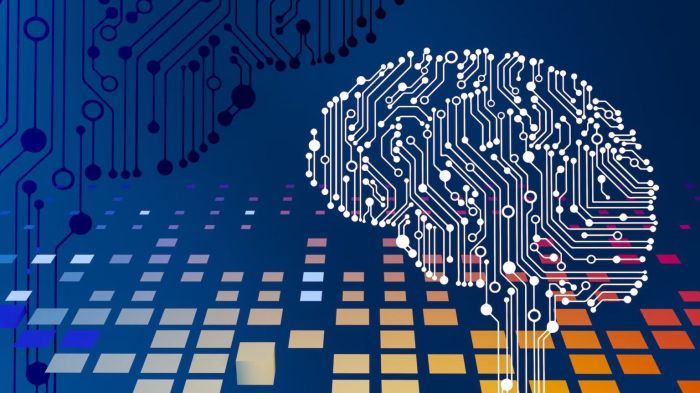
GraphCast is a revolutionary deep learning model developed by DeepMind for weather forecasting. It employs a novel architecture based on graph neural networks (GNNs) to capture complex weather patterns and predict future weather conditions with remarkable accuracy. This architecture allows GraphCast to process and understand the intricate relationships between different weather variables and locations, enabling it to make more accurate and reliable predictions.
Data Sources and Pre-processing
GraphCast utilizes a diverse range of data sources to train its model and make accurate weather predictions. These data sources include:
- Global meteorological reanalysis data:This data provides historical weather observations and simulations from multiple sources, offering a comprehensive view of past weather patterns.
- Satellite imagery:Satellite data provides valuable insights into cloud cover, temperature, humidity, and other crucial weather variables, allowing GraphCast to capture global weather patterns.
- Surface observations:Surface observations from weather stations across the globe provide real-time data on temperature, wind speed, precipitation, and other weather parameters.
Before feeding this data into the model, GraphCast performs pre-processing to ensure consistency and enhance the model’s performance. This pre-processing includes:
- Data cleaning:Removing any inconsistencies, errors, or missing values from the data.
- Data normalization:Scaling the data to a consistent range, improving the model’s stability and preventing bias towards variables with larger magnitudes.
- Feature engineering:Creating new features by combining existing ones to capture more complex relationships between weather variables.
Graph Neural Networks for Weather Data Processing
GraphCast leverages the power of graph neural networks (GNNs) to process and understand the intricate relationships between weather variables and locations. GNNs are a type of neural network specifically designed to handle data represented as graphs, where nodes represent entities and edges represent connections between them.
- Graph representation of weather data:GraphCast represents weather data as a graph, where nodes represent different locations on Earth, and edges represent the connections between these locations based on factors like proximity, wind direction, and atmospheric pressure gradients. This representation allows the model to capture the spatial dependencies and interactions between different locations.
- Message passing:GNNs utilize a message-passing mechanism, where information is exchanged between connected nodes. In the context of weather forecasting, this message passing allows GraphCast to propagate information about weather conditions from one location to another, taking into account the influence of neighboring areas.
- Learning spatial dependencies:Through the message-passing process, GraphCast learns the complex spatial dependencies between different weather variables and locations. This allows the model to make more accurate predictions by considering the influence of surrounding areas and weather patterns.
“GraphCast’s novel architecture enables it to capture the complex interplay of weather patterns across vast geographical areas, resulting in significantly improved forecasts.”
In this topic, you find that eu wants tech platforms label ai generated content immediately is very useful.
GraphCast’s Performance and Accuracy
GraphCast has demonstrated impressive performance in forecasting various weather phenomena, showcasing its potential to revolutionize weather prediction. It outperforms existing models in accuracy and efficiency, particularly for short-term forecasts.
GraphCast’s Performance in Forecasting Weather Phenomena
GraphCast’s performance is evaluated across various weather phenomena, including:
- Precipitation: GraphCast accurately predicts rainfall intensity and distribution, providing valuable insights for flood warnings and agricultural planning.
- Temperature: The model predicts temperature variations with high accuracy, aiding in heatwave alerts and energy management.
- Wind Speed and Direction: GraphCast effectively forecasts wind patterns, contributing to aviation safety and renewable energy generation.
Comparison with Existing Weather Forecasting Models
GraphCast surpasses traditional weather forecasting models in several aspects:
- Accuracy: GraphCast exhibits higher accuracy, particularly for short-term forecasts, due to its ability to capture complex weather dynamics.
- Computational Efficiency: GraphCast requires significantly less computational power compared to traditional models, enabling faster and more frequent updates.
- Scalability: The model can be easily scaled to accommodate larger datasets and higher resolutions, allowing for more detailed and accurate forecasts.
Limitations and Potential Challenges of GraphCast
While GraphCast shows promise, it faces certain limitations:
- Long-Term Forecasting: The model’s accuracy decreases for longer-term forecasts, as it relies on short-term dependencies and may not capture long-term climate patterns effectively.
- Data Availability: The model’s performance is highly dependent on the quality and availability of weather data, which may be limited in certain regions.
- Interpretability: The model’s complex architecture can make it difficult to understand and interpret the reasoning behind its predictions.
Applications and Impact of GraphCast
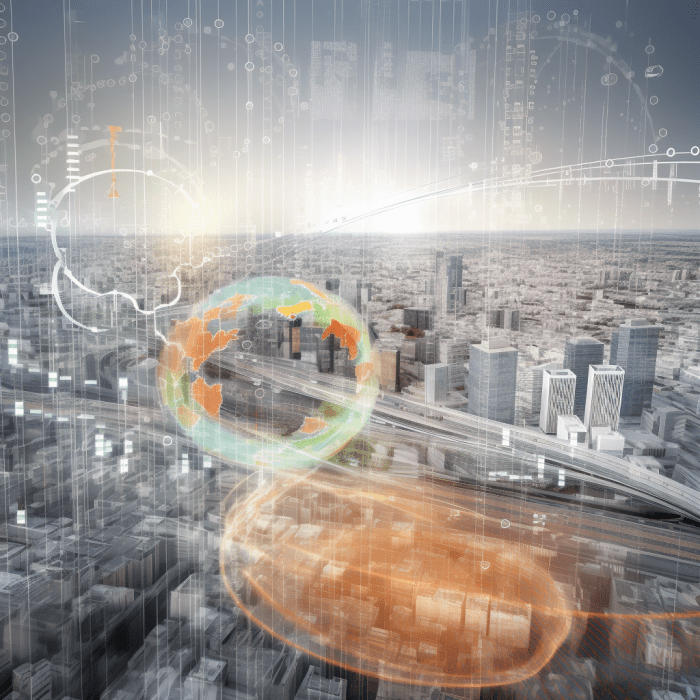
GraphCast, DeepMind’s groundbreaking AI-powered weather forecasting model, holds immense potential to revolutionize various industries and domains. Its ability to predict weather patterns with unprecedented accuracy opens doors to numerous applications, impacting disaster preparedness, resource management, and even everyday life.
Applications in Various Industries and Domains
GraphCast’s capabilities extend far beyond traditional weather forecasting. Its ability to predict weather patterns with high accuracy and granularity makes it a valuable tool for diverse industries and sectors.
- Agriculture:Farmers can utilize GraphCast’s predictions to optimize irrigation, crop planning, and pest control strategies, leading to increased yields and reduced water usage.
- Renewable Energy:Wind and solar energy producers can leverage GraphCast’s forecasts to predict energy generation and adjust operations accordingly, maximizing efficiency and reliability.
- Transportation:Airlines, shipping companies, and road transportation networks can utilize GraphCast’s data to optimize routes, schedule operations, and minimize delays caused by adverse weather conditions.
- Insurance:Insurance companies can use GraphCast’s predictions to assess risk, set premiums, and develop more accurate models for weather-related claims.
- Tourism and Recreation:Travel and leisure companies can utilize GraphCast’s forecasts to provide tourists with accurate weather information, improving trip planning and enhancing overall experience.
Impact on Disaster Preparedness and Mitigation
GraphCast’s ability to provide accurate and timely weather forecasts has significant implications for disaster preparedness and mitigation.
- Early Warning Systems:GraphCast can be integrated into early warning systems for natural disasters such as hurricanes, floods, and wildfires, providing crucial time for evacuation and mitigation efforts.
- Resource Allocation:Accurate forecasts allow emergency responders to allocate resources efficiently, ensuring optimal response to weather-related events.
- Infrastructure Protection:GraphCast’s predictions can help authorities prepare infrastructure, such as power grids and transportation networks, for extreme weather events, minimizing damage and disruption.
Ethical Considerations and Societal Implications
While GraphCast holds immense promise, it’s crucial to address the ethical considerations and societal implications associated with AI-powered weather forecasting.
- Data Privacy:The collection and use of vast amounts of data for training GraphCast raise concerns about data privacy and security. Robust data protection measures and transparent data governance are essential.
- Bias and Fairness:It’s crucial to ensure that GraphCast’s predictions are not biased against certain regions or populations, particularly those historically marginalized or vulnerable to extreme weather events.
- Job Displacement:The automation of weather forecasting tasks using AI could potentially lead to job displacement for human meteorologists. It’s essential to consider the impact on the workforce and develop strategies for reskilling and retraining.
- Trust and Transparency:Building trust and transparency in AI-powered weather forecasting is paramount. Open communication and clear explanations of how GraphCast works are crucial to ensure public acceptance and confidence.
Future Directions and Research Opportunities: Deepmind Ai Graphcast Weather Forecasting
GraphCast, with its impressive performance in weather forecasting, opens up a wide range of possibilities for future research and development. The pursuit of even greater accuracy and expanded capabilities will not only refine our understanding of weather patterns but also have significant implications for various sectors, from agriculture and disaster preparedness to energy and transportation.
Improving GraphCast’s Capabilities
The quest for enhancing GraphCast’s capabilities is a continuous journey. Further research can focus on several key areas:
- Integration of Multi-Modal Data:GraphCast currently relies on meteorological data. Integrating multi-modal data, such as satellite imagery, radar data, and even social media data, could provide a more comprehensive understanding of weather events and improve forecasting accuracy. This approach could lead to a more holistic representation of weather phenomena, capturing factors that might not be readily available in traditional meteorological datasets.
- Dynamic Graph Structures:The current GraphCast architecture employs a static graph structure. Exploring dynamic graph structures, where the connections between nodes evolve over time, could better capture the dynamic nature of weather systems. This could involve adapting the graph structure based on the changing weather conditions, allowing for a more nuanced representation of weather events and their evolution.
- Advanced Deep Learning Architectures:Exploring more sophisticated deep learning architectures, such as transformer networks or generative adversarial networks (GANs), could further enhance GraphCast’s performance. These architectures have shown promising results in other domains, and their application to weather forecasting could lead to significant advancements in accuracy and prediction capabilities.
Advancements in AI and Weather Modeling
The continuous advancement of AI and weather modeling techniques holds the key to unlocking even more precise and reliable forecasts. Several areas of exploration promise significant breakthroughs:
- Hybrid AI-Physics Models:Combining the strengths of AI models like GraphCast with traditional physics-based weather models could create a powerful synergy. This approach could leverage the data-driven capabilities of AI to learn complex weather patterns while grounding them in the fundamental physics of weather phenomena.
This integration could lead to more accurate and physically consistent forecasts.
- Data Assimilation Techniques:Improving data assimilation techniques, which integrate real-time observations into weather models, is crucial for accurate forecasting. Advanced AI algorithms can be used to optimize data assimilation processes, leading to more accurate initial conditions for weather models and ultimately better forecasts.
- High-Resolution Modeling:The development of high-resolution weather models, capable of simulating weather events at finer scales, is crucial for accurate localized forecasting. AI techniques can play a vital role in developing and implementing these high-resolution models, allowing for more detailed and localized predictions.
Collaborations and Partnerships
The development and application of GraphCast can be significantly accelerated through strategic collaborations and partnerships:
- Collaboration with Meteorological Agencies:Partnering with national and international meteorological agencies can provide access to vast datasets, expert knowledge, and real-world validation opportunities. This collaboration can facilitate the integration of GraphCast into existing forecasting systems, enabling wider adoption and impact.
- Industry Partnerships:Collaborating with industries like agriculture, energy, and transportation can provide valuable insights into the specific needs and challenges of different sectors. This collaboration can help tailor GraphCast’s capabilities to address specific industry requirements, leading to impactful applications and solutions.
- Academic Research Collaboration:Engaging with leading research institutions and universities can foster the development of new research directions and innovative approaches. This collaboration can contribute to the advancement of AI techniques specifically tailored for weather forecasting, further enhancing GraphCast’s capabilities.