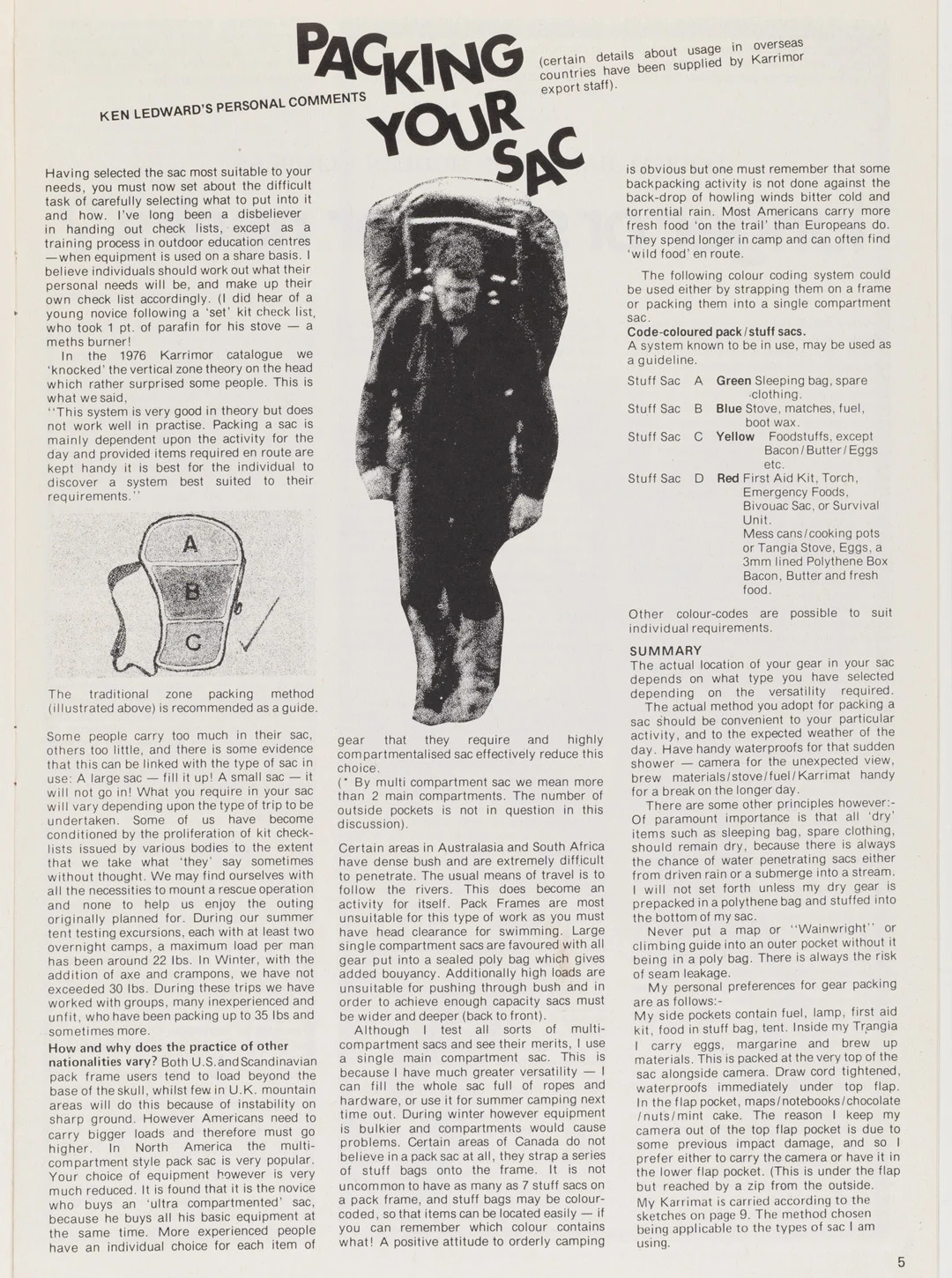
Few contemporary consumers recognize the name Karrimor, yet its imprint on the history of modern mountaineering is indelible. Long before technical outdoor apparel and equipment became a multi-billion-dollar global industry dominated by conglomerates, a small workshop in Lancashire, England, was quietly revolutionizing how humans interacted with the world’s most hostile environments. Born out of the economic devastation of the Great Depression and forged through personal adversity, the Karrimor narrative is a generational study in industrial tenacity, user-driven design, and the evolution of outdoor recreation from an elite gentleman’s pastime into a pursuit accessible to the working class.
The Crucible of the Great Depression
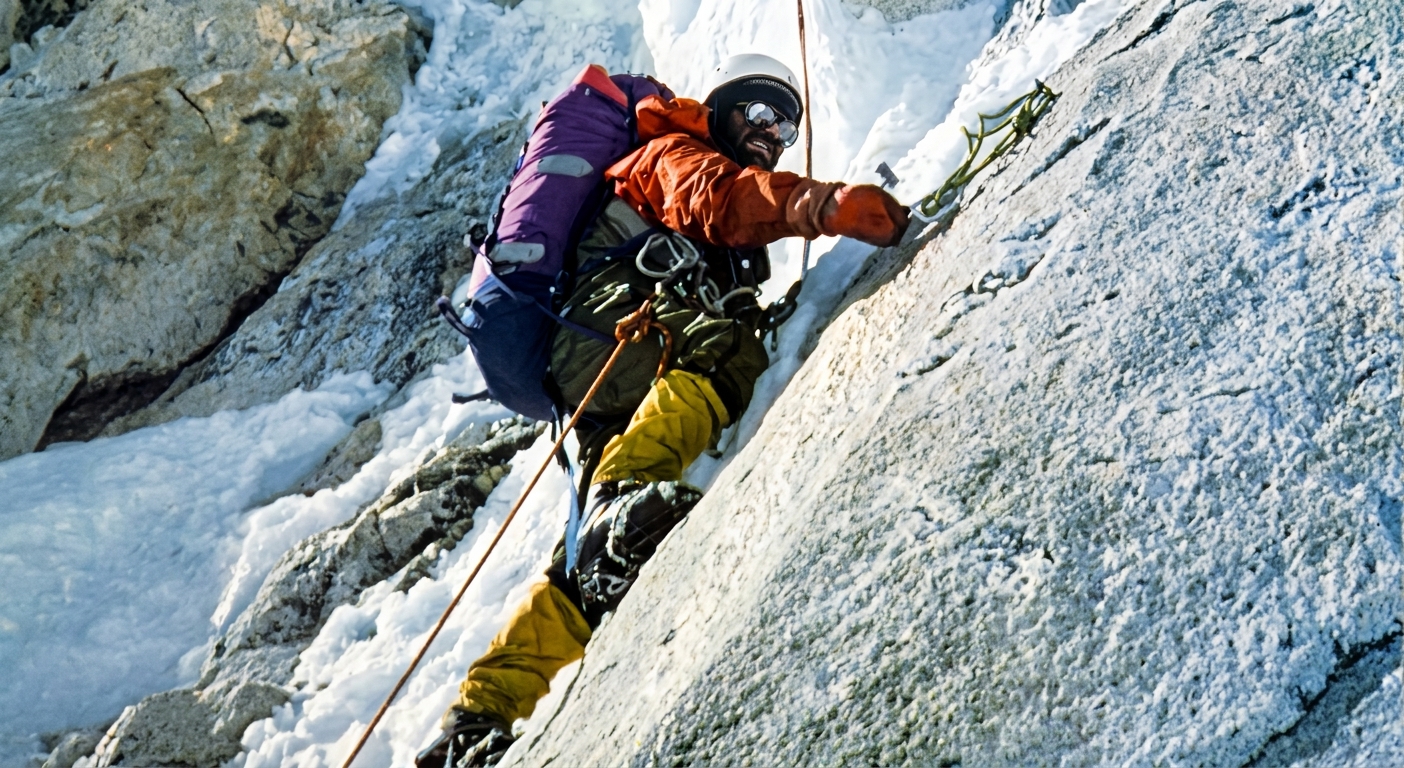
The genesis of Karrimor lies in the industrial North of England during the 1930s. Lancashire, historically renowned as the beating heart of the global cotton textile industry—processing more than three-quarters of the world’s cotton at its peak across thousands of mills—was suffering profoundly. The region was gripped by intense poverty, mass unemployment, and widespread destitution.
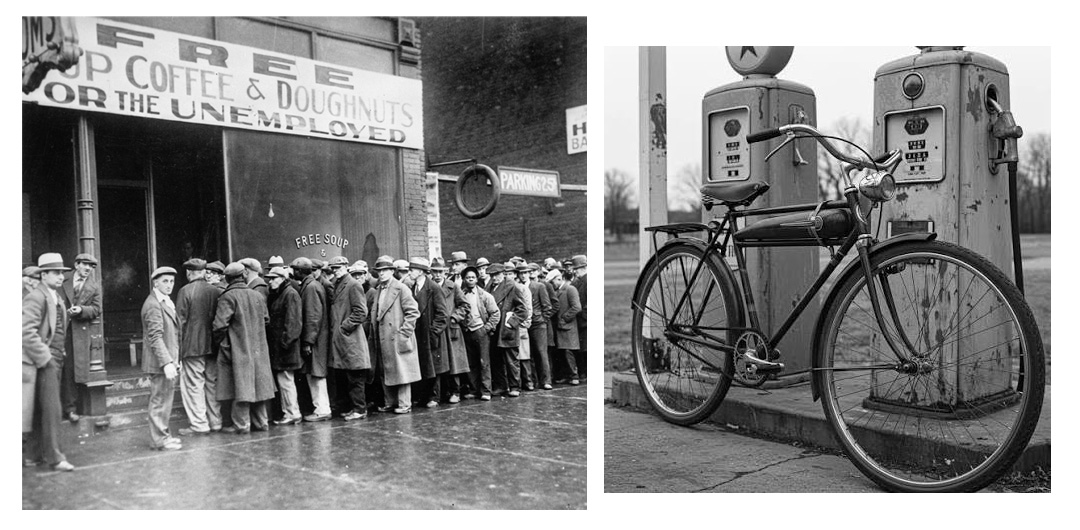
Amidst this economic bleakness, Charles Parsons demonstrated a resilient entrepreneurial spirit. Driven by a diehard passion for cycling, Parsons partnered with a fellow enthusiast to open a modest bicycle shop in the mill town of Waterfoot. Their arrangement was straightforward: his partner managed the daytime hours, while Parsons worked evenings, tinkering late into the night on mechanical repairs.
The partnership dissolved when a customer mentioned finding the shop locked during morning hours. Unwilling to be hindered by unreliability, Parsons severed ties and established his own independent shop just down the street. This early display of self-reliance established a foundational corporate ethos centered on independence, personal accountability, and uncompromising product dedication.
Wartime Adversity and the Attic Workshop
As World War II unfolded, tragedy struck Charles Parsons. While working late in his workshop, he suffered a severe accident when hydrochloric acid splashed into his eyes. Years later, during the war, he underwent a hopeful surgical procedure in London to restore his vision. However, the intervention was catastrophically interrupted by German air raids, leaving him with severe, multi-year complications that eventually led to total blindness by the 1950s.
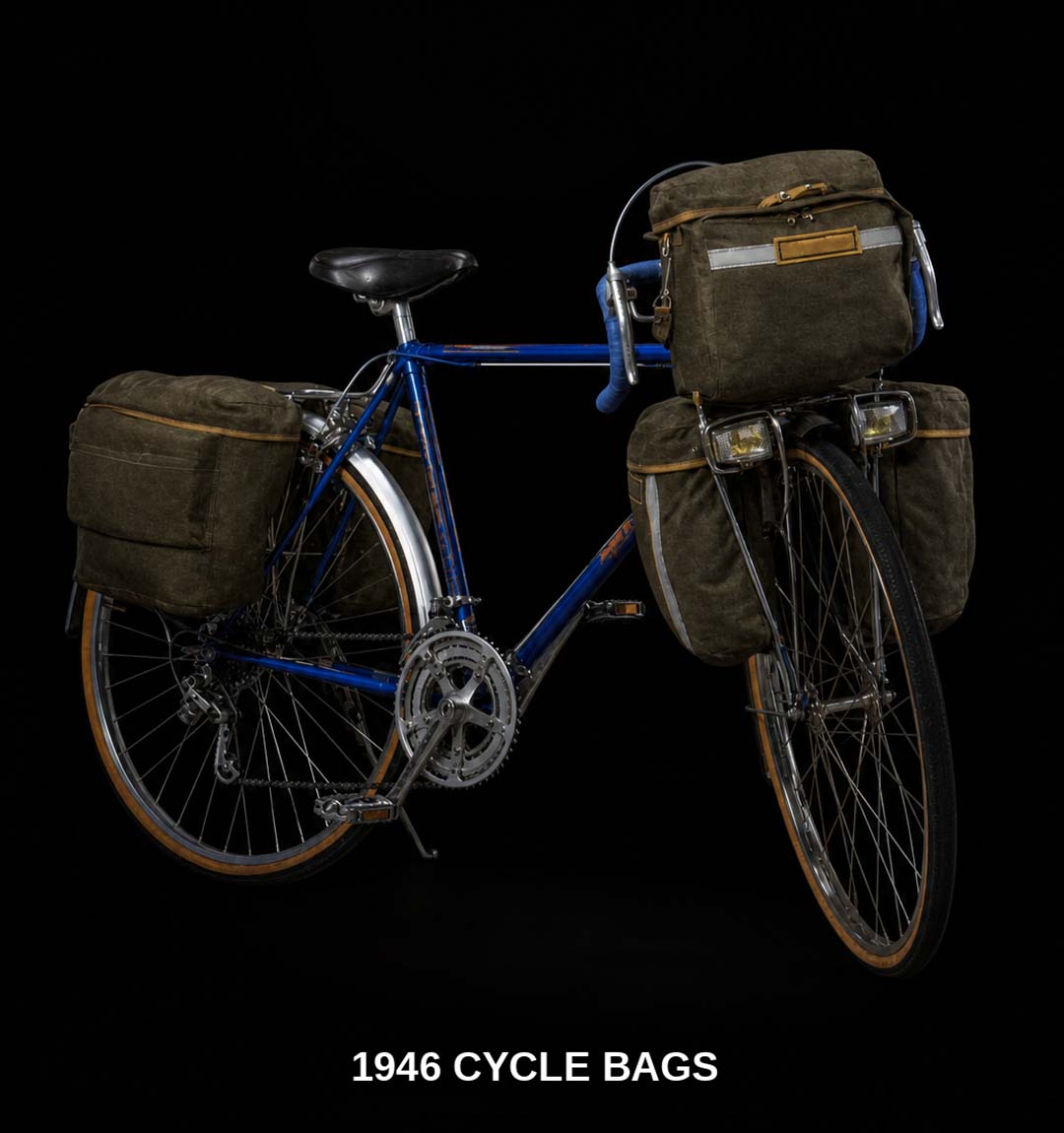
Confronted with wartime scarcity and dwindling access to commercial goods, Charles and his wife, Mary, resolved to manufacture what they could not purchase. Mary and her sister Grace, both skilled seamstresses, began hand-sewing bicycle panniers and saddlebags using durable, raw cotton-duck cloth available in the local market. Operating out of a cramped attic above the bicycle shop, they laid the conceptual framework for one of the most successful outdoor equipment manufacturers of the twentieth century. In 1946, the enterprise was formally christened Karrimor—a portmanteau explicitly communicating its core functional promise: "carry more."
The Shift from Cycling to Alpinism
By the late 1940s and early 1950s, Karrimor had transitioned from a localized workshop into a formal commercial enterprise, competing alongside established British firms like Dunlop and Carradice. However, rapid socio-economic shifts in post-war Britain threatened the company’s viability. The bicycle market experienced a sharp decline as automobiles, public transit, and walking gained cultural dominance. Concurrently, mountaineering and skiing democratized, transitioning rapidly from an exclusive sport for the wealthy elite to an accessible pursuit for the working class.
This democratization was catalyzed by historical milestones, notably the successful British ascent of Mount Everest in 1953, and the establishment of the British Mountaineering Council (BMC) in 1944. Schools increasingly integrated outdoor education into their curricula, driving an unprecedented surge in domestic and international alpinism.
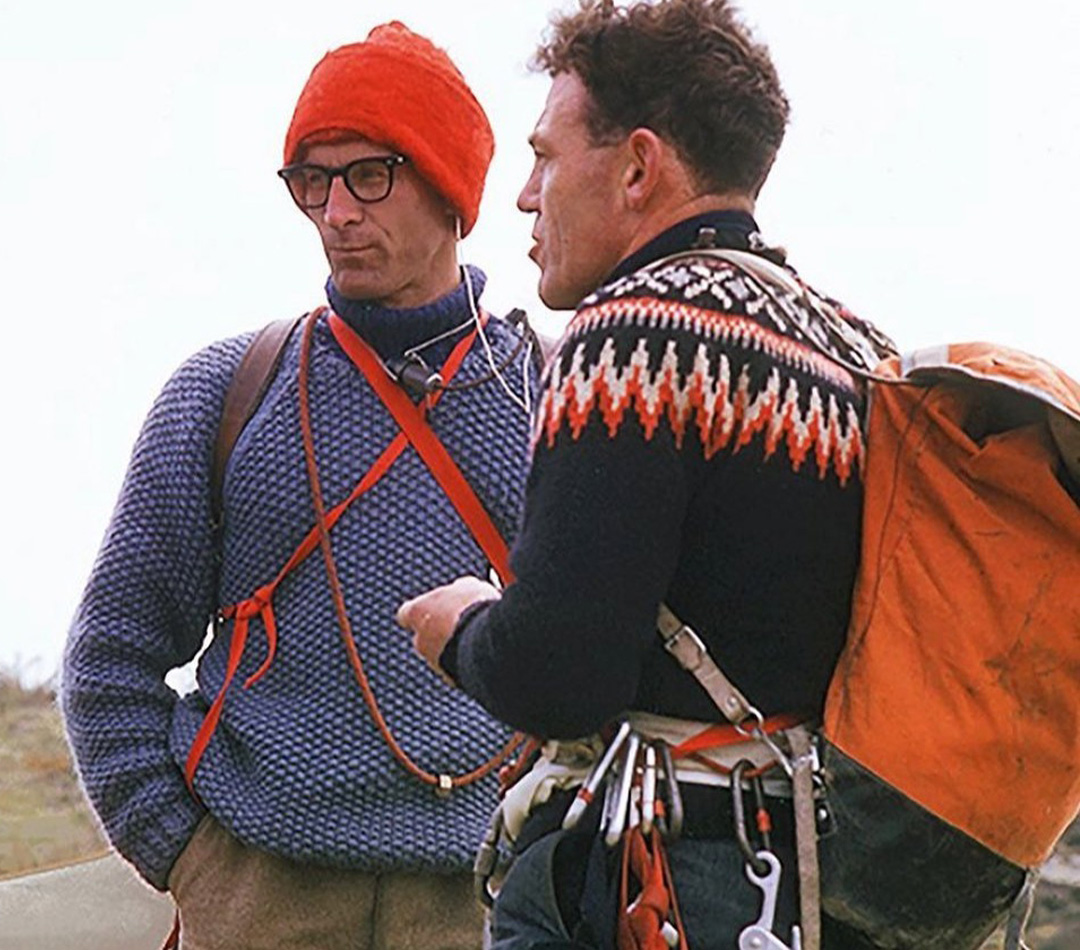
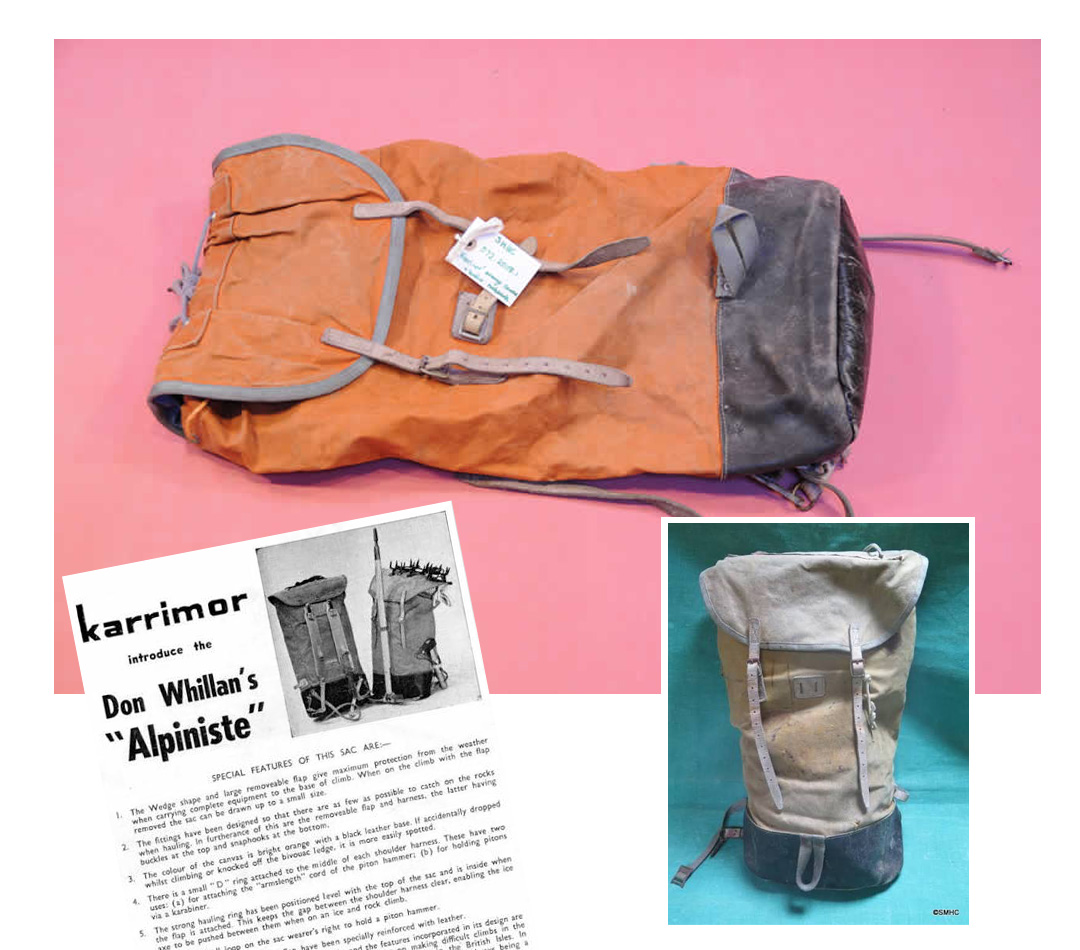
Recognizing that the demand for bicycle bags was evaporating, Karrimor executed a strategic pivot. Capitalizing on a broader European camping boom inspired by the introduction of paid statutory leave, the company began fielding custom requests from working-class climbers. Among the earliest was legendary mountaineer Don Whillans, who requested a custom pack modeled after gear produced for his peer, Joe Brown. This grassroots interaction inaugurated Karrimor’s defining rucksack era.
The Golden Age and the Mike Parsons Era
As Charles Parsons’s vision deteriorated, his young son, Mike Parsons, stepped into the business. Entering the workshop in his late teens, Mike spent foundational years mastering mechanical engineering fundamentals—such as wheel-building and cotter-pin handling—before moving directly onto the factory floor with machinists.
Mike Parsons rejected the separation of design from application. Rather than relying on traditional market research or distant drafting tables, he embedded himself within the burgeoning community of British climbers—a cohort later celebrated as the "Vector Generation" of mountaineers who dominated British crags between 1960 and 1990. By actively soliciting feedback from elite athletes pushing the limits of technical climbing in the UK and European Alps, Mike transformed user critique into immediate design iteration.
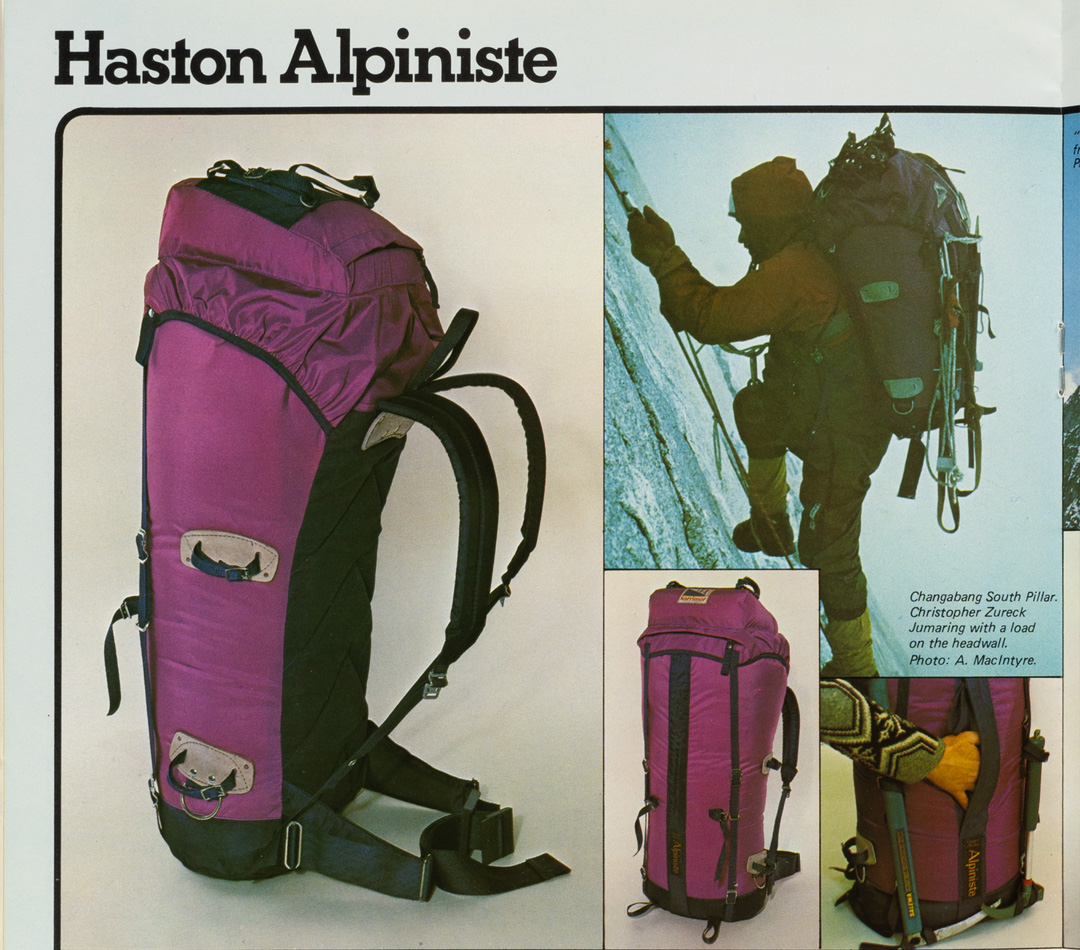
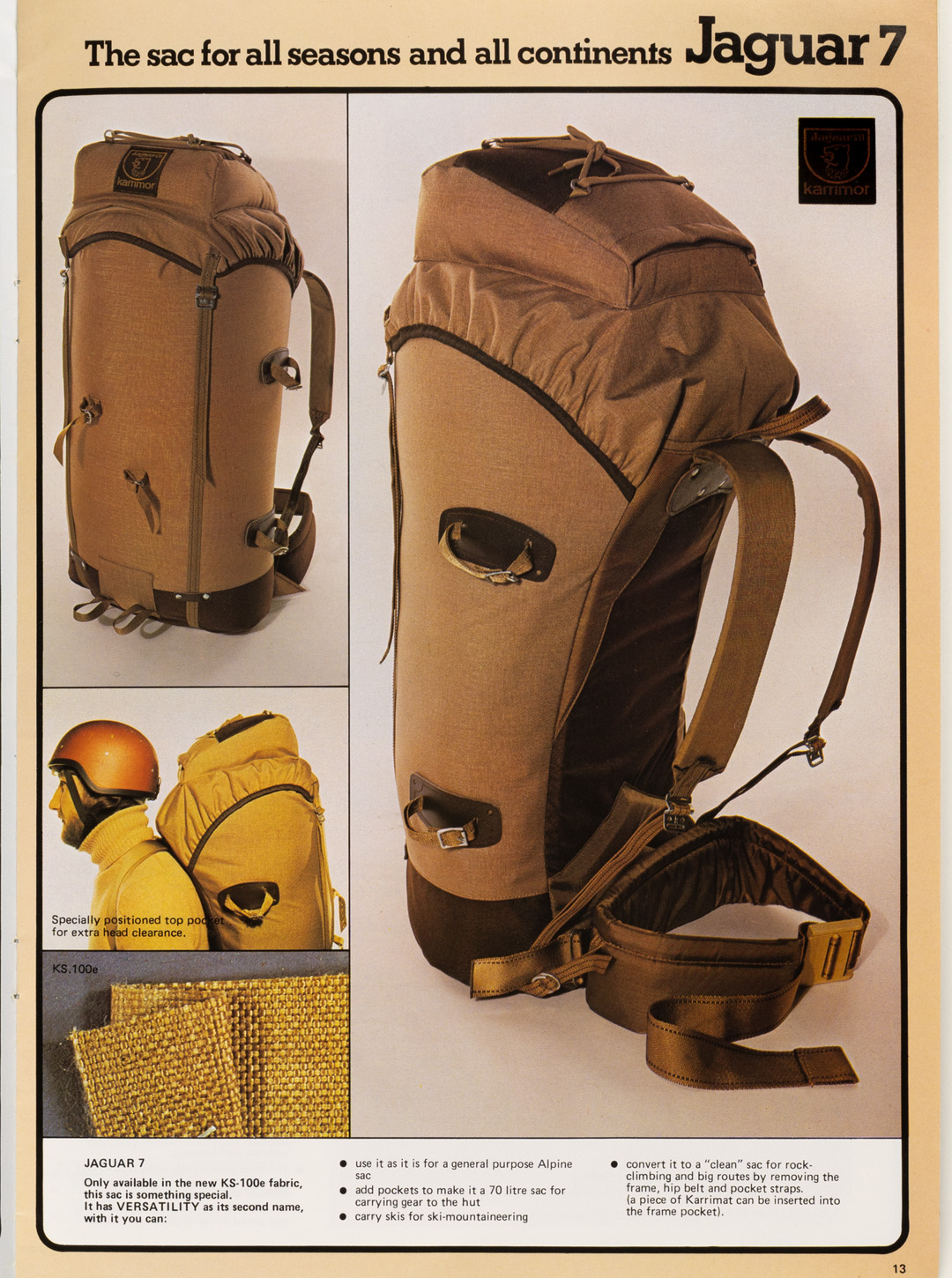
This collaborative methodology elevated Karrimor to market dominance. Iconic products emerged from these partnerships, such as the Whillans Alpiniste backpack, developed alongside Don Whillans. Constructed from canvas with a suede base, the 1300-gram pack offered a slim, lightweight profile optimized for technical climbing. It was later superseded in the 1970s by the Haston Alpiniste rucksack, engineered with Scottish mountaineer Dougal Haston. Utilizing high-tenacity Cordura nylon, twin ice-axe loops, an extended snow collar, and an integrated removable sleeping mat/back pad, the Haston pack set a new global benchmark for alpine rucksack design.
Technological Innovation: The Karrimat and KS-100e
Karrimor’s commercial dominance was further secured through groundbreaking material science and product inventions. In the mid-1960s, Mike Parsons developed the Karrimat, a closed-cell foam sleeping pad designed to repel water and retain thermal insulation in extreme cold. The product achieved such pervasive market penetration that "Karrimat" became the genericized eponym for all foam camping bed-rolls, much like "Hoover" became synonymous with vacuum cleaners.
Leveraging Lancashire’s deep textile manufacturing heritage, Karrimor achieved another major industry breakthrough with the invention of KS-100e. This proprietary elastomer-nylon and polymer-coating process waterproofed fabrics without imposing excessive weight or degrading the underlying structural integrity of the gear. By anchoring a silicone and polymer blend onto a textured, thick nylon core and integrating a fluorocarbon Durable Water Repellent (DWR) finish, Karrimor produced fabric that was simultaneously lighter, tougher, and more water-resistant than conventional wax-proofed cotton canvases. This innovation forced international competitors to spend years attempting to replicate British technical fabric standards.
Expedition Legacy: Everest and Beyond
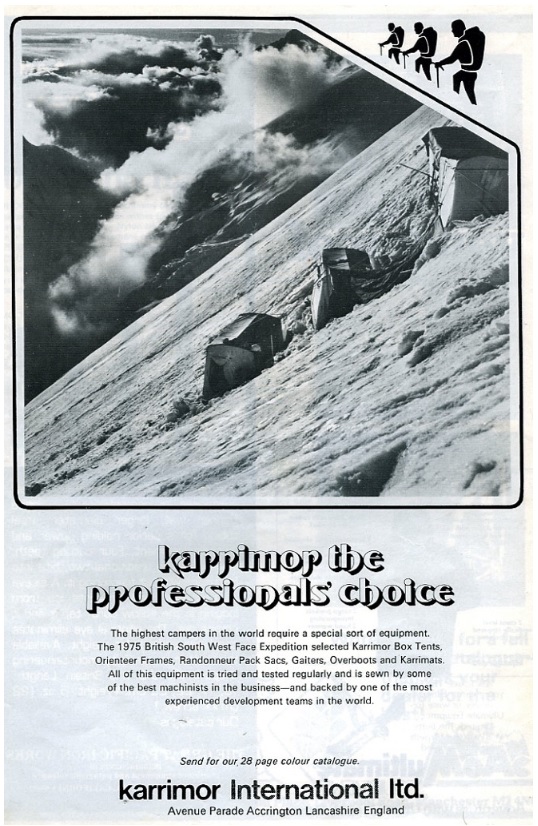
Karrimor’s engineering credibility reached its zenith during the 1975 British Everest Southwest Face Expedition led by Chris Bonington. The expedition utilized advanced Karrimor packs, specialized tents—including the Whillans Box Tent, a lightweight nylon-and-canvas shelter optimized for high-altitude environments—and support frames. That same year, Japanese mountaineer Junko Tabei utilized a Karrimor pack frame when she became the first woman to reach the summit of Mount Everest.
These high-profile deployments cemented Karrimor’s reputation among global expeditions, establishing the brand as the premier choice for extreme-weather mountaineering equipment.
Market Shifts, Acquisition, and Global Legacy
Despite decades of technological leadership, external economic pressures ultimately reshaped Karrimor’s corporate destiny. During the 1990s, the outdoor equipment market experienced an influx of lower-cost Asian manufacturing imports and intense competition from rising global brands such as The North Face and domestic rival Berghaus.
Mike Parsons officially departed the company in 1996. Following years of financial restructuring, Karrimor entered administration in 2004, after which the brand name was acquired by Sports Direct (now Frasers Group). While the UK iteration transitioned primarily into a mass-market, entry-level sporting goods label, the brand’s technical heritage found a distinct continuation through Karrimor Japan, which maintained the design philosophies and premium ethos established during the company’s mid-century golden years.
The legacy of Charles and Mike Parsons endures within the annals of industrial design and mountaineering history. From an attic workshop operating under the constraints of wartime deprivation to outfitting historic first ascents on the world’s highest peaks, Karrimor demonstrated how uncompromising product dedication, combined with active engagement with end-users, can permanently alter the trajectory of an entire industry.