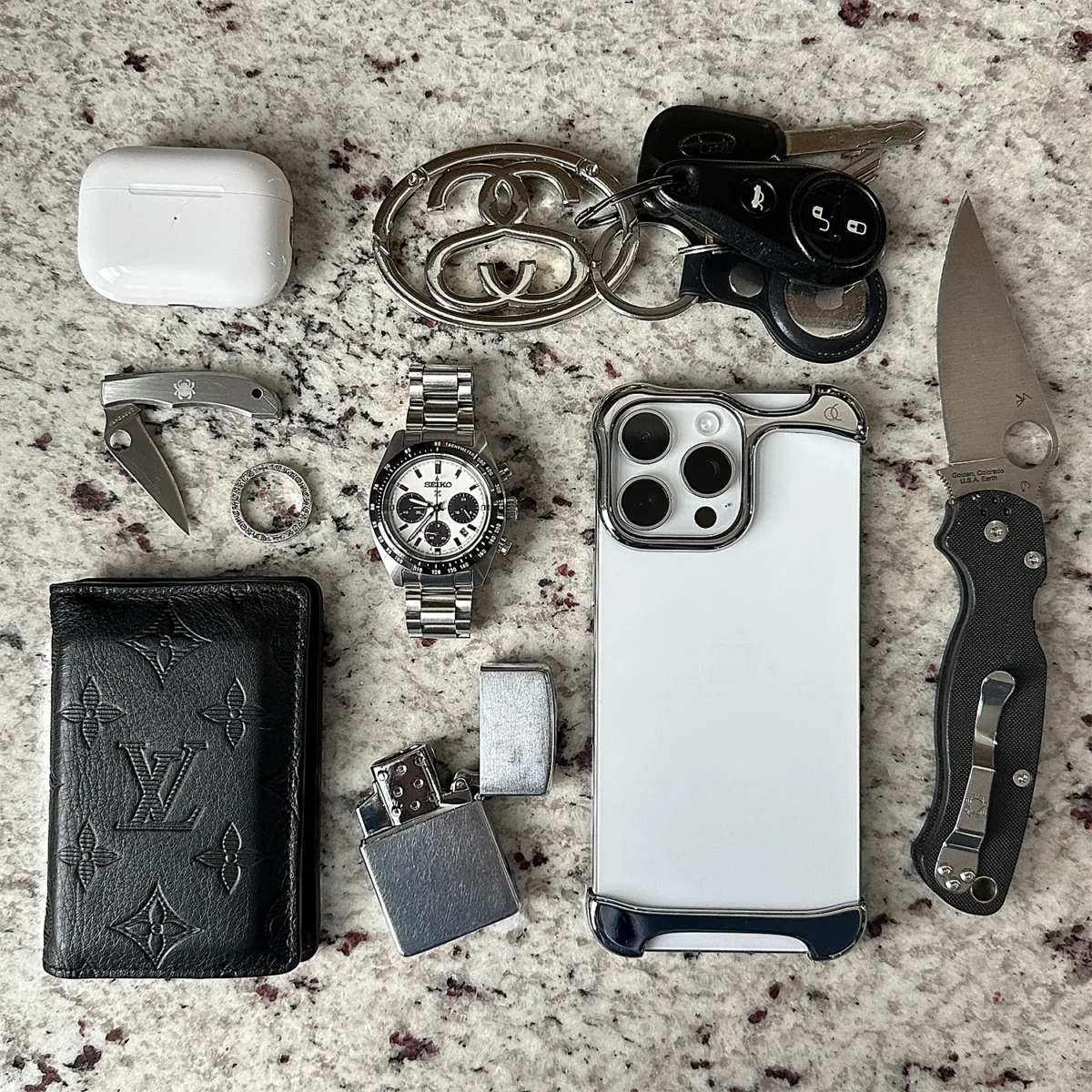
The contemporary landscape of personal organization, commonly referred to as Everyday Carry (EDC), has undergone a significant transformation from a niche hobby focused on survivalist utility to a sophisticated intersection of high-end fashion, precision engineering, and personal branding. This shift is exemplified by the recent emergence of curated gear sets that prioritize not only the mechanical reliability of tools but also a cohesive visual identity. Central to this movement is the synergy between utilitarian hardware, such as the Spyderco Paramilitary 2, and luxury lifestyle accessories, including Chrome Hearts jewelry and specialized horological pieces like the Seiko Prospex "Panda" Speedtimer.
The Intersection of Utility and Personal Style
For decades, the EDC community was defined primarily by the "tactical" aesthetic—matte black finishes, heavy-duty nylon, and oversized multi-tools designed for extreme environments. However, market data from the last five years indicates a pivot toward "urban EDC," where the form factor is as critical as the function. This evolution is driven by a demographic that demands professional-grade tools capable of fitting into a corporate or high-fashion environment without appearing out of place.
The integration of chrome-accented technology cases and high-fashion jewelry, such as the Chrome Hearts ring, represents a departure from the purely utilitarian roots of the movement. Chrome Hearts, founded in 1988 by Richard Stark, has transitioned from a biker-culture staple to a global luxury powerhouse. Its inclusion in a daily carry setup signals a move toward "functional luxury," where the durability of precious metals and high-quality leather meets the daily requirements of modern life. This trend is mirrored in the tech sector, where smartphone cases are no longer merely protective shells but are designed to complement the metallic finishes of high-end watches and keychains.
Technical Excellence in Specialized Hardware: The Left-Handed Spyderco Paramilitary 2
A cornerstone of any serious EDC collection is the folding knife, and few models hold as much prestige as the Spyderco Paramilitary 2 (PM2). Manufactured in Golden, Colorado, the PM2 is widely regarded by industry experts as a benchmark for ergonomic design and locking reliability. However, a recurring challenge within the cutlery industry has been the accommodation of left-handed users.
The PM2 utilizes Spyderco’s proprietary Compression Lock mechanism. While the standard right-handed version is celebrated for its strength and ease of one-handed operation, the geometry of the lock can be cumbersome for left-handed individuals, often requiring awkward finger placement that compromises safety. The production of a dedicated left-handed version of the PM2 is a response to a specific market demand for inclusivity in tool design. By mirroring the lock and the pocket clip orientation, Spyderco has addressed a significant ergonomic gap, allowing left-handed users to access the same level of rapid deployment and structural integrity as their right-handed counterparts. This attention to detail reflects a broader industry trend where manufacturers are increasingly catering to specialized user needs rather than relying on "ambidextrous" compromises that often fail to satisfy either group.
Horological Significance: The Seiko Prospex Speedtimer "Panda"
In the realm of timekeeping, the inclusion of the Seiko Prospex Speedtimer Solar Chronograph, frequently nicknamed the "Panda" due to its white dial and black sub-dials, highlights a preference for heritage-inspired reliability. The SSC813 model, part of the Prospex line, draws its design cues from Seiko’s 1969 Speedtimer, which was among the world’s first automatic chronographs.
The modern iteration utilizes Seiko’s Caliber V192 solar-powered movement, which boasts an accuracy of +/- 15 seconds per month and a power reserve of approximately six months on a full charge. From a journalistic perspective, the popularity of the "Panda" Seiko in EDC circles can be attributed to its "tool watch" pedigree. It offers the aesthetic appeal of high-end Swiss chronographs—such as the Rolex Daytona—at a fraction of the cost, while maintaining a level of ruggedness suitable for daily wear. The sapphire crystal and 100-meter water resistance ensure that the watch remains functional in various environments, bridging the gap between a dress watch and a field instrument.
The Logistics of Organization: Luxury Card Wallets and Minimalism
The transition from traditional bi-fold wallets to minimalist card carriers is a response to the "slim-carry" movement. Modern consumers are increasingly moving toward digital payments and away from physical cash, leading to a demand for wallets that provide optimal organization without adding bulk.
Luxury card wallets, often crafted from exotic leathers or high-grade calfskin, present a unique challenge for the EDC enthusiast. While many luxury brands prioritize branding over utility, a subset of the market has begun to focus on "discerning organization." This involves the strategic placement of card slots and RFID-blocking technology to ensure that the user can access essential items quickly while maintaining security. The effort required to find a luxury wallet that fits the specific spatial requirements of a multi-item carry—including keys, knives, and tech—is a testament to the level of curation now present in the hobby.
Market Analysis and Economic Implications
The global EDC market, which encompasses knives, flashlights, watches, and personal organizers, has seen a steady Compound Annual Growth Rate (CAGR) of approximately 5.4% over the last decade. Analysts attribute this growth to the "preparedness" culture that intensified during the global pandemic, as well as the rise of social media platforms like Instagram and Reddit, where "pocket dumps" (photos of one’s daily gear) have become a popular form of digital expression.
The economic impact is twofold. First, traditional tool manufacturers are seeing increased revenue from high-margin, "sprint run" releases—limited edition versions of popular tools using premium materials like titanium or CPM-CruWear steel. Second, the luxury sector is finding a new customer base in the EDC community. Brands that once focused solely on fashion are now marketing toward the "tactical chic" demographic, recognizing that there is a significant overlap between consumers who value a well-made mechanical watch and those who value a precision-engineered pocket knife.
Chronology of the EDC Movement
To understand the current state of EDC, one must look at the timeline of its development:
- Pre-2000s: EDC was largely the domain of tradespeople, military personnel, and outdoor enthusiasts. Gear was chosen strictly for its ability to perform specific tasks.
- 2000-2010: The "Tactical Boom." Following global events, there was a surge in the popularity of military-grade gear for civilian use. Brands like Spyderco, Benchmade, and SureFire became household names in the community.
- 2010-2018: The Rise of Minimalism. As technology shrunk the size of essential items (e.g., the smartphone replacing the camera, map, and flashlight), the "minimalist carry" became the ideal.
- 2019-Present: The Era of Curation. The focus shifted to the "aesthetic synergy" of items. The goal is no longer just to be prepared, but to have a carry that reflects one’s personal style, combining luxury goods with high-performance tools.
Official Responses and Community Impact
Industry leaders have noted the shift in consumer behavior. In statements regarding product development, representatives from major knife and watch manufacturers have emphasized the importance of "pocket jewelry"—items that are beautiful to look at but remain fully functional. The community’s reaction to these trends has been largely positive, though a debate remains between "purists" who believe tools should be used and "collectors" who keep items in pristine condition.
The impact of this curation extends to the secondary market. Limited edition EDC items often appreciate in value, much like rare sneakers or vintage watches. A left-handed PM2 or a specific Seiko "Panda" variant can fetch prices well above retail on the secondary market if they are part of a discontinued or highly sought-after run.
Future Outlook and Broader Implications
The trajectory of the EDC movement suggests a continued blurring of the lines between utility and luxury. As 3D printing and CNC machining become more accessible, we may see a rise in bespoke EDC items, where individuals can commission tools that are custom-fitted to their hands and their specific style preferences.
Furthermore, the emphasis on high-quality, long-lasting items reflects a growing consumer rejection of "disposable culture." By investing in a high-end watch, a premium knife, and a luxury wallet, the modern EDCer is opting for products that can theoretically last a lifetime with proper maintenance. This shift toward "buy it for life" (BIFL) products has broader implications for sustainability and consumer ethics, suggesting that the future of personal carry lies in the perfect balance of aesthetic beauty and mechanical endurance.
In conclusion, the modern EDC setup is more than a collection of objects; it is a carefully orchestrated ensemble of engineering and art. Whether it is the left-handed ergonomics of a Spyderco knife or the solar-powered precision of a Seiko watch, each item serves as a data point in the broader story of how we navigate the complexities of the 21st century. The synergy between chrome accents, luxury leather, and tactical hardware is not merely a stylistic choice—it is a reflection of a world where the tools we carry define who we are as much as what we do.