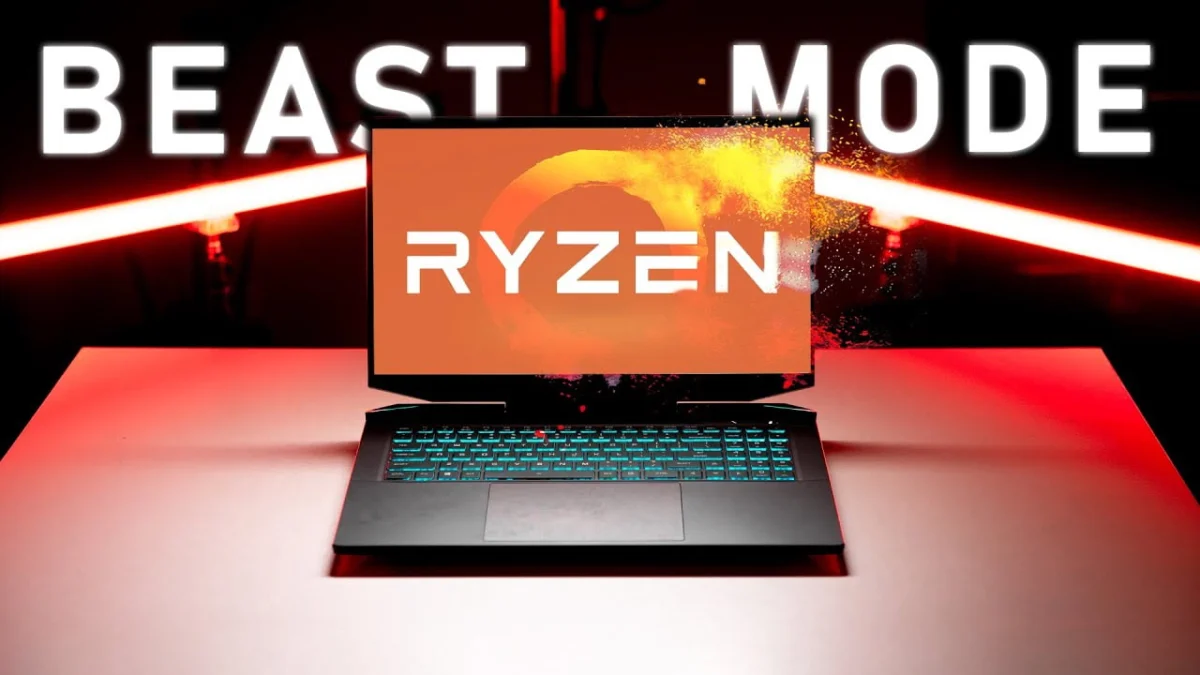
Eluktronics, a distinctive player in the performance laptop market, has launched the Prometheus XVII Ultra, a formidable gaming machine designed to bridge the gap between niche boutique manufacturers and mainstream giants like Dell, HP, ASUS, and MSI. Following the success of their RP-15, which garnered attention approximately six months prior for its raw Ryzen performance, the Prometheus XVII Ultra aims to elevate the mobile gaming experience further, albeit with a focus on unadulterated power over refined aesthetics. The nomenclature itself, a blend of Greek mythology’s "Prometheus" (God of Fire) and the modern marketing term "Ultra," signifies a commitment to delivering peak performance.
Eluktronics’ Strategic Position in the Gaming Laptop Landscape
Eluktronics has carved a unique niche by offering powerful, customizable laptops that often push hardware specifications beyond what major manufacturers provide in their standard configurations. This strategy, particularly evident in their adoption of high-performance AMD Ryzen CPUs early on, has positioned them as a go-to for enthusiasts prioritizing raw computational and graphical power. The RP-15, released in late 2020, served as a testament to this philosophy, delivering some of the fastest Ryzen-powered laptop performance observed at the time, despite some acknowledged compromises in chassis design and overall polish. This prior release established Eluktronics’ reputation for extracting maximum performance from components, setting the stage for the Prometheus XVII Ultra.
The introduction of the Prometheus XVII Ultra comes at a pivotal time, coinciding with the launch of AMD’s Ryzen 5000H series mobile processors and NVIDIA’s RTX 30-series Laptop GPUs. These components ushered in a new era of mobile gaming, offering desktop-class performance in a portable form factor. Eluktronics’ approach with the Prometheus XVII Ultra, particularly its "Beast Mode" which allows the RTX 3080 GPU to operate at higher wattages, is a direct response to the demand for uncompromised gaming performance. This commitment to maximizing power delivery distinguishes them in a market often constrained by thermal limits and design choices.
Pricing, Availability, and Component Scarcity in Early 2021
The launch of the Prometheus XVII Ultra was set against a challenging backdrop of global component shortages, particularly affecting high-end Ryzen CPUs and NVIDIA RTX 30-series GPUs in early to mid-2021. Eluktronics, acknowledging these market conditions, communicated expectations of production delays and a focus on fulfilling backorders to the best of their abilities. This transparency was crucial for consumers navigating a turbulent hardware market.
The Prometheus XVII Ultra begins at an approximate price of $1,700 USD. This base configuration includes a Ryzen 7 4800H CPU, 16GB of RAM, a 512GB NVMe SSD, and an NVIDIA RTX 3060 GPU. A subsequent tier, priced around $400 higher, curiously offers an Intel 10th Gen Core i7-10875H CPU paired with an RTX 3070, indicating the availability and strategic component sourcing decisions made by the company. The top-tier configuration, which represents the review sample, adds an additional $500, featuring AMD’s then-latest Ryzen 7 5800H CPU and a powerful RTX 3080 with 16GB of VRAM. With upgrades such as double the memory and storage, the total cost for the review unit ascended to approximately $2,800 USD.
While this price point positions the Prometheus XVII Ultra as a significant investment, Eluktronics argued for its value proposition, especially when compared to competing models offering high-wattage RTX 3080 GPUs. At the time, similar configurations from more established brands often commanded higher prices, making the Prometheus XVII Ultra a potentially attractive "bargain" for those prioritizing raw performance per dollar. As an added incentive, Eluktronics offered a gaming bundle for purchases exceeding $2,500, including a gaming mouse pad, lightweight gaming mouse, gaming headset, and a 10-foot HDMI cable, enhancing the perceived value for serious gamers.
Design and Build: Functional Over Flashy
The exterior design of the Prometheus XVII Ultra leans towards a clean, minimal aesthetic, departing from the often aggressive and angular designs prevalent in gaming laptops. The chassis is constructed from a combination of plastic and aluminum components, striking a balance between durability and cost-effectiveness. For users seeking a more distinct visual identity, an optional black matrix skin from dbrand was available for an additional $10, offering a custom look without altering the fundamental structure. Subtle RGB light bars integrated around the edges provide customizable accent lighting, controllable via the included software.
As a 17-inch laptop, portability is inherently a consideration. Weighing approximately 6 pounds and just under an inch thick, the Prometheus XVII Ultra is substantial, positioning it more as a desktop replacement than an ultra-portable companion. Its dimensions necessitate a larger backpack for transport. A notable point of feedback regarding the build quality centered on the hinge mechanism. Positioned centrally, the hinge exhibited some flexing when opening the laptop with one hand, particularly from the corners, and occasional wobbling was observed during lap use. This characteristic, attributed to the use of a generic chassis shared by other manufacturers, underscores a design philosophy that prioritizes component integration and cost efficiency over bespoke chassis engineering.
User Interface: Keyboard, Trackpad, and Essential Peripherals
The interior of the Prometheus XVII Ultra presents a clean keyboard layout complemented by a generously sized trackpad. The inclusion of a numpad is a practical feature for a 17-inch form factor, though its integration faced minor ergonomic critiques. Specifically, the arrow keys, being the same size as standard keys and positioned somewhat awkwardly, occasionally led to accidental presses of adjacent keys. The absence of a secondary Enter key on the numpad was also noted as a potential inconvenience for users engaged in extensive data entry.
Despite these minor layout quirks, the keyboard itself garnered positive remarks for its tactile feedback and build quality. The keys exhibit minimal wobble, providing a rigid and satisfying typing experience with an optimal travel distance. This quality was favorably compared to keyboards found on premium devices like the ASUS ROG Zephyrus G15, making it suitable for both avid typists and gamers. The keys are individually LED backlit with RGB lighting, offering single-zone customization and sufficient brightness for low-light gaming sessions.
The trackpad on the Prometheus XVII Ultra is exceptionally large, surpassing even the dimensions of trackpads found on devices like the Dell XPS 17. Its glass surface ensures smooth navigation of Windows. However, its expansive size introduced challenges related to palm rejection. Users reported instances where placing a hand over the primary left and right buttons while attempting to move a window would render the action unresponsive. While a software option exists to disable the right zone of the trackpad, this compromise was deemed impractical, effectively halving usability and highlighting the need for more refined software tuning. Comparisons to industry-leading trackpads on devices like the Razer Blade 15 or Dell XPS 17 underscored the area for improvement. Furthermore, the palm rest area’s depth meant users with smaller hands might experience discomfort reaching for the keys, although those with larger hands found it comfortable.
In terms of communication and audio, the Prometheus XVII Ultra features a webcam whose quality was described as adequate but not exceptional, a common characteristic for many gaming laptops. However, the audio capture quality from the microphone was surprisingly robust, outperforming some higher-priced competitors like the Razer Blade 15 Advanced. The speakers, positioned at the bottom of the chassis, delivered a performance typical of such placement: limited bass response and harsh treble, making external headphones a recommended accessory for an optimal audio experience during gaming or media consumption. The hinge’s flexibility also occasionally caused the webcam to wobble during video calls if the laptop was moved or typed upon.
Connectivity and Display Specifications
Eluktronics provided a comprehensive and well-distributed port selection on the Prometheus XVII Ultra, spreading connectivity options across the left, right, and rear edges. The left side hosts a USB 3.1 Gen2 Type-A port and separate audio jacks. The right side includes two USB Type-A ports (Gen1) and a full-size UHS-I SD card reader, a welcome inclusion despite its UHS-I speed limitations. The rear panel, ideal for cable management in a desktop setup, features power-in, a gigabit Ethernet port, an HDMI 2.1 output, and a USB Type-C port with DisplayPort passthrough. This thoughtful layout minimizes cable interference for external peripherals, particularly mice.
The display on the Prometheus XVII Ultra comes in a single configuration: a 17-inch matte finish IPS-type panel with a Quad HD (2560×1440) resolution and a 165Hz refresh rate. This resolution is considered an excellent choice for a 17-inch laptop, offering sharp visuals and ample screen real estate without excessive scaling. The panel demonstrated strong color reproduction, covering 99% sRGB, 76% Adobe RGB, and 79% DCI-P3. While sufficient for general photo and video editing, gaming, and productivity, the color gamut coverage was noted as potentially falling short of expectations for a device in its price range when compared to competition offering wider gamuts. Furthermore, the display’s peak brightness of approximately 350 nits was deemed somewhat dim, potentially hindering outdoor visibility.
Internal Accessibility and Software Control
A significant feature for performance enthusiasts is the integrated MUX switch, which allows users to toggle between NVIDIA’s Optimus technology (for battery efficiency) and directly driving the display from the discrete GPU (for maximum gaming performance). This flexibility is highly valued in high-end gaming laptops. In terms of upgradeability, the Prometheus XVII Ultra provides easy access to two RAM slots, both of which are typically occupied in standard configurations. The primary NVMe SSD offered good, though not class-leading, read and write speeds, with an additional M.2 slot available for storage expansion.
Eluktronics has historically been praised for its robust control software, particularly for power management. The Prometheus XVII Ultra features three primary power profiles: Office Mode, Balanced Mode, and Beast Mode. These modes allow users to further fine-tune performance through fan curves and overclocking settings for both the CPU and GPU. For instance, in Beast Mode, users can increase CPU power levels up to 80W, overclock the GPU, set target temperatures, and disable/enable Dynamic Boost. Disabling Dynamic Boost notably allows the GPU to be pushed up to an impressive 150W. However, the software interface itself was described as clunky, particularly in saving profiles, representing a perceived regression in user-friendliness compared to the company’s previous, more intuitive solutions on models like the RP-15.
Battery Life and Performance Metrics
Given its 17-inch form factor, powerful CPU and GPU, and a relatively modest 62Wh battery, the Prometheus XVII Ultra exhibited limited battery life, even in power-saving modes. This characteristic firmly positions it as a desktop replacement, designed for primary use while connected to a power source. While "Beast Mode" did not significantly alter battery performance under light loads compared to "Balanced Mode," primarily due to both operating at lowest possible frequencies for web browsing, "Office Mode" also offered negligible improvement. This underscores the device’s design intent, where portability is secondary to sustained performance.
CPU Performance: Power, Temperatures, and Frequencies
The distinct power modes played a critical role in the Prometheus XVII Ultra’s performance. "Office Mode" significantly throttled performance, making it unsuitable for demanding tasks. "Balanced Mode" and standard "Beast Mode" showed close performance, separated by approximately 10W of CPU power. The "Beast Mode Maxed" setting, with custom sliders, unlocked a new level of performance. While CPU power sliders were set to 80W, the laptop typically settled to a sustained 73W after an initial burst. This power delivery translated to frequencies across Balanced, Beast, and Beast Maxed modes remaining within 350MHz of each other, while Office Mode drastically reduced speeds. Despite the increased power in Beast Mode Maxed, it led to a substantial increase in CPU temperatures, causing the CPU to reduce clock speeds to maintain thermal stability, which was noted as a minor disappointment for a thick 17-inch chassis. Other modes exhibited better thermal behavior. Performance benchmarks showed the Ryzen 7 5800H in the Prometheus XVII Ultra trading blows with the Ryzen 9 in the Zephyrus G15 and occasionally losing to the older RP-15, but overall remaining among the fastest laptops tested.
GPU Performance: Unlocking the RTX 3080’s Potential
The GPU power management on the Prometheus XVII Ultra was a key differentiator. The NVIDIA RTX 3080 could be boosted from an already high 135W TGP to 150W with custom settings. Interestingly, the GPU did not consistently hit its maximum power limits across all settings. In "Office Mode," the GPU behaved like a slim-and-light laptop’s GPU. "Balanced" and standard "Beast Mode" presets hovered around 125W. This discrepancy, where set power targets were not consistently met, even with Dynamic Boost disabled and sliders maxed, was puzzling. Thermal management for the GPU was excellent, with temperatures rarely approaching the 87°C maximum, suggesting that the power behavior might be influenced by other internal limits not directly controllable via software. Nevertheless, pushing the GPU power slider to its maximum still yielded a noticeable boost in frequencies over "Balanced" and regular "Beast Mode" presets.
Gaming Benchmarks and Performance Scaling
In-game performance firmly established the Prometheus XVII Ultra as an "absolute beast." It consistently ranked among the fastest laptops in most tests. With power sliders maxed, it significantly outpaced competitors. At its native 1440p resolution, it maintained a strong lead, though the Razer Blade 15 Advanced, with its lower-wattage RTX 3070, demonstrated impressive efficiency by staying competitive. The analysis highlighted a crucial point: throwing maximum power at a GPU does not always yield a linear increase in performance. For instance, the Prometheus XVII Ultra’s RTX 3080, consuming approximately 50% more power than the Blade 15’s RTX 3070, only achieved about 15% higher frame rates, illustrating diminishing returns on power for raw performance.
Acoustics and Thermal Management
Fan noise levels correlated directly with the selected power mode, with "Office Mode" being the quietest and "Beast Mode" being the loudest. "Balanced Mode" was suggested as the optimal compromise for acoustic performance and power. Surface temperatures remained generally good, though the sides of the laptop became notably warm during intense gaming, a factor to consider for users relying on external mice.
Conclusion: A Powerhouse with Practical Trade-offs
The Eluktronics Prometheus XVII Ultra presents a compelling proposition for a specific segment of the high-end gaming laptop market. Its primary strengths lie in its exceptional raw performance, both in gaming and demanding applications, driven by a powerful Ryzen 5000H CPU and a high-wattage RTX 3080 GPU. The granular control Eluktronics provides over CPU and GPU behavior, moving beyond simplistic presets to offer detailed power modification, is a significant advantage for enthusiasts. The comprehensive and well-organized port selection also enhances its utility as a desktop replacement. The keyboard, despite minor layout issues, delivers a satisfying typing and gaming experience.
However, the Prometheus XVII Ultra is not without its compromises. The use of a generic chassis, while potentially contributing to its competitive pricing and faster market entry, results in a design that lacks distinctiveness and introduces ergonomic challenges. The large trackpad, despite its smooth surface, suffers from inadequate palm rejection, hindering usability. The hinge mechanism, while functional, lacks the robustness expected of a premium device. Furthermore, the webcam quality is unremarkable, and the bottom-firing speakers offer a subpar audio experience. While the 1440p 165Hz display is functionally good, its color gamut and brightness levels fall short of expectations for a laptop in the nearly $3,000 price bracket, especially when compared to rivals offering more vibrant and brighter panels.
Ultimately, the Eluktronics Prometheus XVII Ultra is a highly specialized machine. For users whose sole priority is maximizing raw gaming performance and who value the ability to fine-tune hardware parameters, this laptop delivers in spades. It caters to a demographic willing to overlook certain aspects of design refinement and user experience in favor of unadulterated power. However, for consumers investing close to $3,000 who expect a more holistic premium experience encompassing design, ergonomics, and display quality alongside performance, the Prometheus XVII Ultra requires a careful consideration of its trade-offs. Its position in the market is clear: a performance-first beast, ideal for those who demand the utmost power from their mobile gaming rig and are comfortable with its practical compromises.