The concept of Everyday Carry (EDC) has transcended its origins as a niche hobbyist interest to become a critical discipline for professionals in high-stakes environments, particularly for emergency medical technicians (EMTs) operating in demanding regions like California. For first responders, the selection of gear is not merely a matter of personal preference but a calculated decision-making process where weight, utility, and reliability intersect to define operational readiness. A recent profile of a California-based EMT, known as Mando, highlights a sophisticated shift toward minimalist, high-performance equipment that serves a dual purpose: professional efficacy during medical calls and practical utility during domestic or recreational activities. This curated selection of tools, featuring brands such as Benchmade, Leatherman, and Nitecore, reflects broader trends in the tactical and medical industries where the "ounces equal pounds" philosophy dictates the modernization of field kits.
The Professional Context of California EMS Operations
Emergency Medical Technicians in California operate within one of the most diverse and demanding environments in the United States. From the dense urban centers of Los Angeles and San Francisco to the rugged terrain of the Sierra Nevada, the physical demands on a first responder’s body are significant. Carrying heavy medical bags, moving patients, and navigating cramped environments require that personal gear be as unobtrusive as possible.
The shift toward lightweight materials, such as carbon fiber and high-grade aluminum, is a direct response to the occupational hazards of "kit fatigue." Long shifts, often extending 12 to 24 hours, make every extra gram of weight a liability. Mando’s kit exemplifies this evolution, prioritizing "full-sized" capability within a "minimalist" footprint. This approach ensures that the responder is never without a necessary tool, yet is not burdened by the bulk traditionally associated with emergency services equipment.

Technical Analysis of Primary Tools
The Benchmade Bugout: Aerospace Materials in the Field
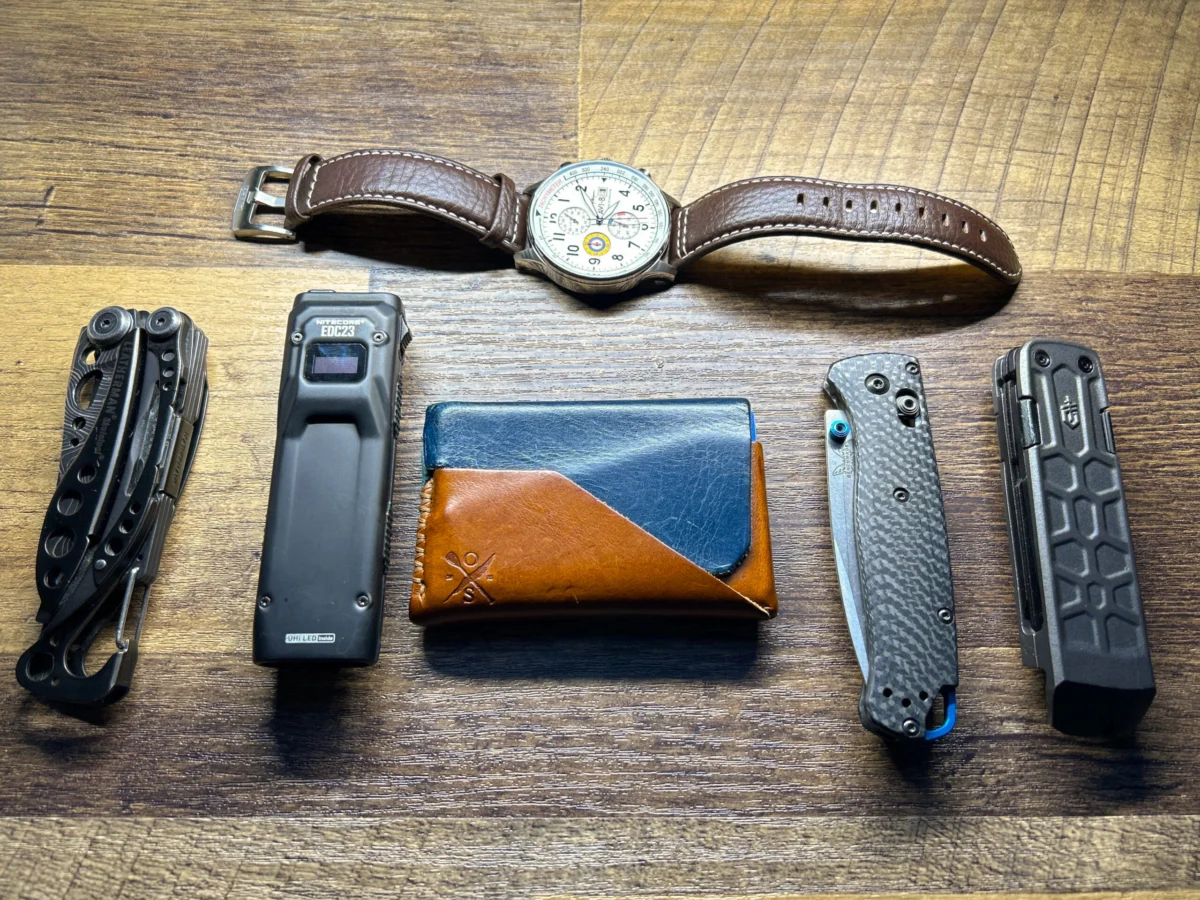
Central to this EDC lineup is the Benchmade Bugout, specifically the carbon fiber variant. Originally released in 2017, the Bugout was designed to meet the needs of the "ultralight" community. Its inclusion in an EMT’s kit is significant due to its weight-to-strength ratio. The carbon fiber handle scales provide immense rigidity and tensile strength while remaining significantly lighter than traditional G10 or steel handles.
From a technical standpoint, the Bugout typically utilizes S30V or S90V stainless steel, known for exceptional edge retention and corrosion resistance—vital for an EMT who may be exposed to various fluids or harsh weather conditions. The AXIS lock mechanism, a proprietary Benchmade feature, allows for ambidextrous, one-handed operation, which is a critical requirement when one hand is occupied with patient care or stabilization. The fact that this specific knife was a gift from the user’s wife adds a layer of psychological resilience, often cited by first responders as "sentimental anchors" that provide comfort during high-stress shifts.
The Leatherman Skeletool: Minimalist Multi-Utility
The Leatherman Skeletool represents a departure from the "everything-but-the-kitchen-sink" philosophy of traditional multi-tools. By stripping the tool down to its seven most essential functions—including pliers, wire cutters, a knife, and a bit driver—Leatherman created a tool that weighs only five ounces. For an EMT, the Skeletool provides the necessary leverage for minor mechanical tasks, such as adjusting a gurney or opening a stuck compartment, without the bulk of a heavy duty tool like the Leatherman Surge or Super Tool 300.
Nitecore EDC23: The Revolution of Flat-Form Illumination
One of the most notable gear highlights in this collection is the Nitecore EDC23. The flashlight industry has seen a rapid shift toward "flat" form factors, which sit more comfortably in a pocket than traditional cylindrical lights. Despite its slim profile, the EDC23 delivers a staggering 2,500 lumens. For first responders, high-output illumination is not just for searching; it is a safety tool used for scene size-up, identifying hazards in low-light environments, and signaling.
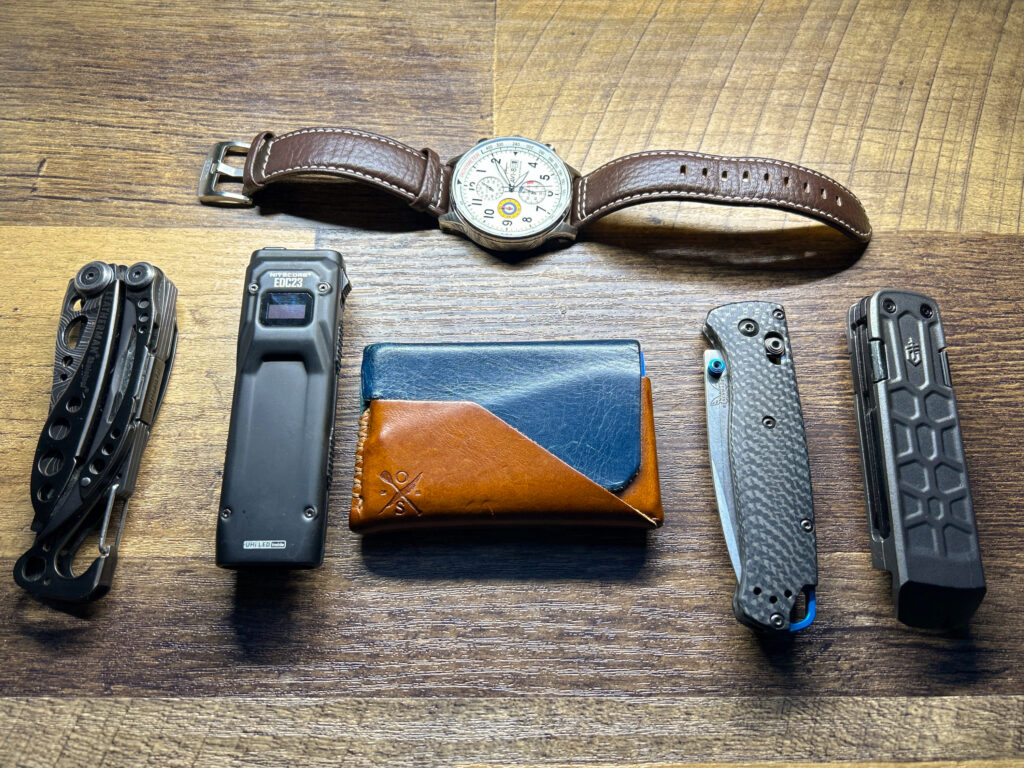
The integration of USB-C recharging marks a logistical improvement over disposable CR123A or AA batteries. In a professional setting, the ability to top off a light’s battery via a vehicle’s USB port between calls ensures that the tool is always at peak performance. The use of a multi-stage switch and an OLED display for real-time monitoring of battery voltage and remaining runtime reflects the increasing "digitization" of tactical gear.
The Role of Organic Materials and Aesthetic Contrast
While the primary tools in Mando’s kit are defined by synthetic high-performance materials, the inclusion of an OSL leather wallet and a leather watch strap introduces an "organic contrast." This is a growing trend in the EDC community, where users balance the "cold" feel of tactical steel and carbon fiber with the "warmth" of leather.
From a functional perspective, high-quality leather is prized for its durability and its ability to develop a "patina" over time, reflecting the history of the user’s service. In the context of an EMT’s life, these items represent the bridge between their professional identity and their personal life. The leather watch strap, likely attached to a reliable timepiece, is essential for "counting respirations" or "timing pulses"—fundamental clinical tasks that remain a staple of EMS despite the advent of digital monitors.
Chronology of Gear Evolution in Emergency Services
The transition to the gear seen in this profile did not happen overnight. A look at the timeline of EMS equipment reveals a steady march toward miniaturization:

- 1970s–1990s: The "Heavy Era." EMTs typically carried large, heavy-duty folding knives and bulky 2D-cell or 3D-cell flashlights (such as Maglites) on their belts.
- 2000s: The "Tactical Boom." The influence of military gear led to an influx of overbuilt, heavy tools. While durable, they added significant weight to the responder’s uniform.
- 2010s: The "Material Science Shift." The introduction of premium steels and polymers allowed manufacturers to maintain tool integrity while slashing weight.
- 2020s: The "Minimalist Integration." Current trends, as seen in Mando’s kit, focus on ultra-slim profiles, high-lumen outputs, and multi-functional capability that fits within standard trouser pockets rather than external pouches.
Industry Implications and Market Trends
The preference for high-end, lightweight gear among California first responders is reflective of a larger market trend. The global EDC market is projected to grow significantly as more professionals realize that consumer-grade "premium" tools often outperform "department-issued" standard equipment.
Market analysts note that the "prosumer" (professional consumer) segment is driving innovation. Companies like Benchmade and Nitecore are increasingly looking to the feedback of first responders to refine their designs. The emphasis on "minimalist" yet "full-sized" tools suggests that the future of professional carry lies in the optimization of geometry and the application of advanced metallurgy.
Expert Analysis: The Psychological Impact of Preparedness
Sociological studies into the "Everyday Carry" culture among first responders suggest that the act of curating a kit serves as a form of "pre-incident stress inoculation." By ensuring they have the best possible tools for "fixing things" or "calls on shift," responders like Mando cultivate a sense of agency and control over their environment.
The "Editor’s Note" accompanying the original content correctly identifies the kit as "super solid" due to its balance. In the field of emergency medicine, where chaos is the norm, the reliability of one’s personal equipment provides a necessary constant. The ability to transition seamlessly from "fixing things around the house" to "camping trips" and finally to "calls on shift" speaks to the versatility required of modern tools.
Conclusion
The everyday carry of a California EMT serves as a microcosm of the broader shifts in professional equipment standards. By prioritizing lightweight, high-output, and multi-functional tools, today’s first responders are able to maintain a high level of preparedness without the physical toll of traditional, heavy gear. As material science continues to advance, the line between "minimalist" and "heavy-duty" will continue to blur, allowing professionals to carry more capability with less effort. Mando’s kit—anchored by the Benchmade Bugout and the Nitecore EDC23—stands as a premier example of this modern philosophy, proving that in the world of emergency services, the most effective tool is the one that is light enough to always be at hand, yet strong enough to save a life.