
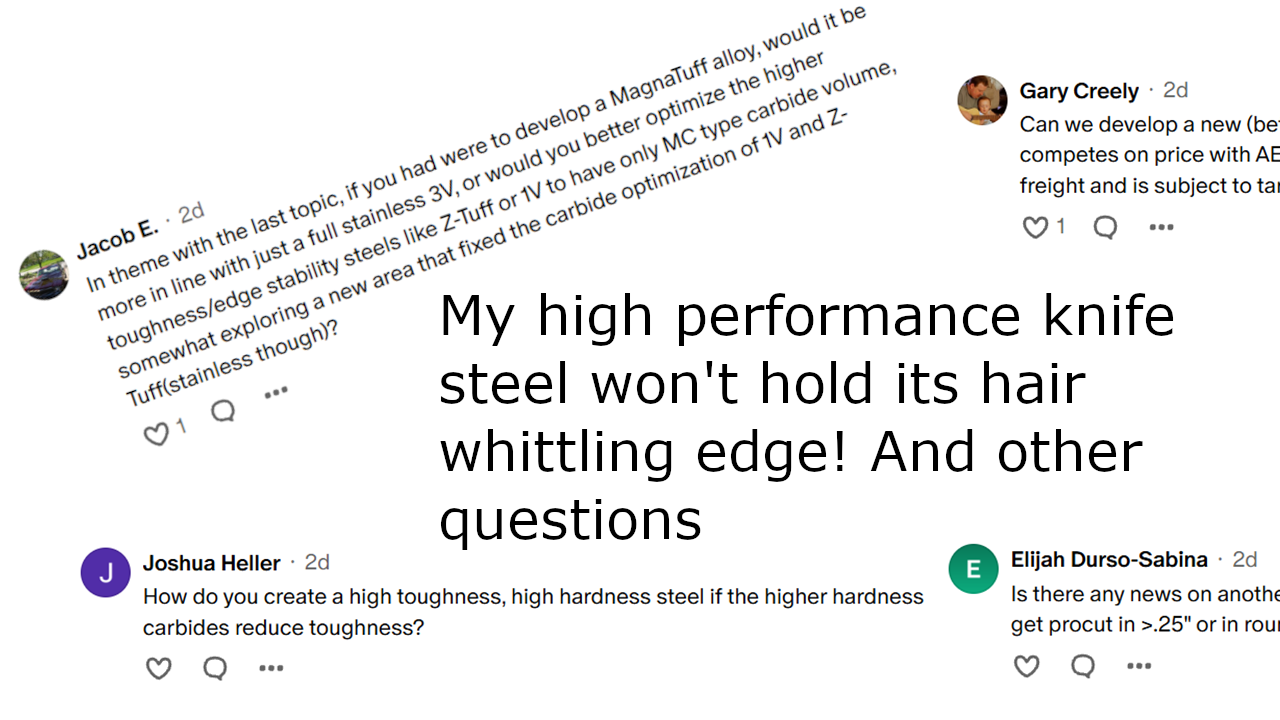
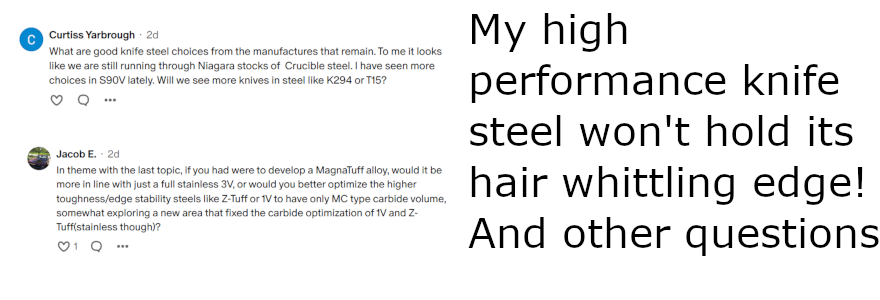
The global landscape of metallurgy, particularly concerning the specialized alloys utilized in high-performance cutlery, has recently come under intense scrutiny as both enthusiasts and industrial consumers express concerns regarding supply chain sustainability. On October 21, 2026, Dr. Larrin Thomas, a leading expert in knife steel metallurgy and the founder of Knife Steel Nerds, addressed these mounting anxieties in a comprehensive question-and-answer session. The discussion, derived from inquiries submitted by the platform’s Patreon supporters, centers on the viability of current "super steel" production, the limitations of raw material sourcing, and the future trajectory of material science in the blade industry.
The Myth of Resource Exhaustion
A primary concern raised by the community is whether the current high-demand for premium powdered metallurgy (PM) steels—such as CPM-MagnaCut, M390, and Magnacut’s contemporaries—is outpacing the availability of the base elements required to produce them. Contrary to widespread speculation, the "running out" of knife steel is a misconception based on a misunderstanding of industrial scale.
Premium knife steels are primarily composed of iron, chromium, vanadium, molybdenum, and tungsten. While these elements are subject to market volatility and geopolitical trade regulations, they are not currently facing absolute geological depletion. The actual bottleneck is not the raw ore, but rather the specialized infrastructure required for the production of high-alloy, atomized powders. The process of creating super steels requires vacuum induction melting and inert gas atomization, technologies that are capital-intensive and concentrated among a handful of global manufacturers, such as Crucible Industries, Carpenter Technology, and Bohler-Uddeholm.
Chronology of the Super Steel Era
To understand the current supply dynamics, one must look at the evolution of the market over the last decade. The 2010s marked a transition period where traditional ingot-cast steels were steadily eclipsed by the superior performance of PM steels.
- 2015–2018: The rise of "super steels" became the industry standard for high-end folding knives and fixed blades. Manufacturers began shifting their entire production lines to accommodate more abrasive, high-carbide materials.
- 2021–2023: The global supply chain crisis caused by pandemic-related logistics disruptions highlighted the fragility of relying on a limited number of specialized steel mills. This era saw the first significant wait times for popular alloys.
- 2024–2025: The introduction of next-generation steels, characterized by optimized nitrogen and carbon balance, allowed for better corrosion resistance and toughness. This further accelerated demand, outstripping the current production capacity of specialized powder facilities.
- 2026: As of October, the industry has moved into a state of "stabilized scarcity." While production is at an all-time high, the proliferation of knife brands has created a market where demand consistently presses against the ceiling of existing furnace capacity.
Analyzing the Supply Chain Bottlenecks
The tension in the knife steel market is largely an issue of capacity allocation rather than material shortage. Major steel producers operate on a multi-industry scale. For these corporations, the knife industry represents a small fraction of their total output. Aerospace, medical instrumentation, and automotive industries often command priority when production schedules are tight.
When a steel mill faces a backlog, it is rarely due to a lack of iron or alloying elements; rather, it is the result of the limited number of atomization towers capable of producing the ultra-clean, spherical powder required for modern knife steels. If a facility is tasked with producing medical-grade alloys, the production of knife-specific alloys is naturally deprioritized. This leads to the periodic "out of stock" cycles that consumers perceive as an existential threat to the availability of premium steels.
Supporting Data on Material Utilization
Metallurgical analysis indicates that the trend is moving toward steels that offer higher performance with lower alloying complexity. Historically, the pursuit of "super steel" status involved adding ever-increasing percentages of vanadium and niobium to create massive carbide volumes. However, recent data suggests that there are diminishing returns to this approach.

The industry is currently pivoting toward "balanced" alloys. These steels do not require exotic, rare-earth elements in quantities that would destabilize the supply chain. By optimizing the heat treatment process—specifically austenitizing temperatures and cooling rates—metallurgists are achieving properties that were previously thought to require significantly more expensive raw materials. This technical shift acts as a hedge against potential supply disruptions; by becoming more efficient with common alloying elements, the industry reduces its dependence on volatile, high-cost additives.
Perspectives from the Industry
The sentiment among industry insiders and researchers like Dr. Thomas is one of measured optimism. While there is no immediate danger of a total collapse in the availability of high-end cutlery materials, there is a clear warning regarding the fragility of the "niche" supply chain.
"The industry is currently experiencing a maturation phase," noted one industry analyst following the Q&A release. "Manufacturers are realizing that they cannot rely on a single source or a single ‘miracle’ alloy. Diversification of the steel portfolio is the only logical path forward."
Furthermore, official responses from major distributors suggest that they are actively increasing stockpiles to mitigate the impact of sudden market fluctuations. There is also a push toward standardized heat treatment protocols, which ensures that even when specific steels become temporarily scarce, the industry has a broader catalog of alternatives that can provide similar performance metrics to the end-user.
Broader Implications for the Future of Cutlery
The implications of this supply-demand tension extend to the end-user and the artisan knife maker. For the consumer, the immediate future will likely be defined by stable pricing but potential delays in the availability of specific, high-demand blade profiles. For the custom knife maker, the focus is shifting toward "steel literacy"—the ability to understand the metallurgical nuances of a broader range of alloys, allowing them to adapt when their preferred steel is unavailable.
Moreover, the research being conducted at institutions like Knife Steel Nerds is increasingly focused on how to maximize the potential of widely available, cost-effective steels. This democratizes high performance, reducing the reliance on the most expensive, supply-constrained materials. The transition from "exotic-is-better" to "optimized-is-better" represents a fundamental change in how the industry views material value.
Conclusion: A Sustainable Path Forward
The fear that the world is "running out" of premium knife steel is ultimately unfounded. The metallurgical industry is robust, and the global inventory of alloying elements remains sufficient to sustain the demand for high-performance knives for the foreseeable future. The challenges faced by the industry in 2026 are structural and logistical, rather than geological.
By focusing on more efficient alloy design, expanding the capacity of powder production, and fostering a deeper understanding of heat treatment science, the knife industry is positioning itself for a period of stability. As Dr. Thomas’s analysis suggests, the future of the field does not lie in the discovery of increasingly rare elements, but in the intelligent application of the materials already at our disposal. The "super steel" era is not ending; it is simply evolving into a more sustainable, performance-driven chapter.